Naturalistic Paganism
The HPedia: Archetype
Your help is needed! Please critique this entry from the HPedia: An encyclopedia of key concepts in Naturalistic Paganism. Please leave your constructive criticism in the comments below.
The archetype is perhaps the most common naturalistic interpretation employed by Neopagans. Halstead finds the concept notable in the work of such Neopagan figures as Vivianne Crowley, Margot Adler, Dion Fortune, Starhawk, and Janet and Stewart Farrar.
Although the term predated C. G. Jung (going as far back as Plato), it has become inseparably bound up with him, as well as with Joseph Campbell who was deeply influenced by him. Unlike most psychologists of his day, Jung did not conceive of the mind as a tabula rasa, but as an organ structured toward specific tendencies as the result of evolutionary pressures. Jung did not settle on one single definition of the archetype, as noted in John Ryan Haule’s Jung In the 21st Century, though it is “always some sort of structuring principle that lies outside of everyday consciousness and, when it emerges suddenly, exceeds all subjective expectations.” Jung conceived of archetypes as “typical modes of apprehension”, closely related to instincts, which he called “typical modes of action” (Collected Works 8, quoted in John Ryan Haule).
Haule notes that for Jung, an archetype is separate from an archetypal image. The former is an innate biological pattern empty of form, the latter a cultural image that gives the pattern form. Thus, the archetype of the anima may appear as Athena without implying that the two are one and the same. Both are necessary for an archetype to appear, but the two are distinct. Neopagans have often been guilty of blurring the lines between archetype and archetypal image, leading to some confusion.
John Ryan Haule has attempted to align Jung’s archetype with modern evolutionary understandings, linking it with notions of mental modularity, and describing it thus:
An archetype is a species-specific behavior pattern that recognizes and imagines the settings in which the behavior is an appropriate response. Inherited with our genes as an empty program, it becomes activated automatically when it encounters appropriate stimuli. The details of the inherited pattern are developed and refined through a socialization process that begins in earliest infancy, building neural connections through active engagement with caretakers and the world at large. When an archetype is constellated, our whole body is engaged and its emotional arousal focuses and motivates us with a force that is very difficult to resist.
The identification with mental modularity might seem problematic, however, and possibly inconsistent with Jung’s descriptions of archetypes (see “Modularity of Mind”). Haule responds to this criticism in his interview.
Halstead notes:
Jungian theorists may take issue with Neopagan usage of the term “Archetype”, which is ineffable, to refer to consciously constructed symbols. When Neopagans use the term Archetype, they mean that their experience of a symbol (or “sign” in Jungian parlance) is profound and one that they relate to the universal human experience of discovering meaning in life. (See Goldenberg, 1979.)
Waldron and Waldron have treated the history of Neopaganism and Jungian archetypes, which Halstead has incorporated into a three-part series on the history of American Neopaganism’s search for legitimacy. In another essay, Halstead laments how Neopagans have turned their back on Jungian interpretations after coming to perceive deities as “just” archetypes; instead, he urges we rediscover the archetypes as gods in their own right.
Check out other entries in our HPedia.
The Wheel of the Year for one Naturalistic Pagan, by Renee B.

So, how exactly does one practice Atheist Paganism?
I prefer to call it Naturalistic Paganism, but you can’t very well run from the fact that it’s basis is in atheism for me. This blog will be about day to day Naturalistic Paganism according to how it fits in my life.
I used to get pretty hung up on labels. A place for everyone and everyone in their place. Back then, I think, I tried a bit too hard to fit somewhere. Rather than forging my own path in life, I wanted one that was neatly worn down by other traffic. With Paganism, unless you can buy what someone else is selling, this just doesn’t work. Quite a lot of my opinions on all things Pagan had to come under scrutiny as a result.
I have never bought the concept of separate and sentient deities. I know I’m not alone. I just am not content to give up the lifestyle that I think fits me, and that’s where natural paganism comes in. In the last 20 years, I haven’t lived any other way but according to the Wheel. So, the Atheist Pagan is who I became.
So, how exactly does one practice Atheist Paganism? Well, probably much the same way as any other Pagan, just minus all the deities. This doesn’t mean that I don’t use their images, I mean, after all they are connected with the Wheel. It just means that I don’t expect these deities to hear me or otherwise pay any attention to me simply because I don’t believe they are capable of doing so. I don’t do elaborate rituals with all the fanfare that some Pagans do. In fact, it might be hard for outsiders to even tell that I do anything at all.
In this article, I’ll cover all 8 holy days according to Pagan Wheel of the Year. My spin on them in somewhat different, however. I used to get stuck during some of them and had to make them fit how I saw the Wheel and how it would pertain to my life, my location and my own craft.
Perseid meteor showers
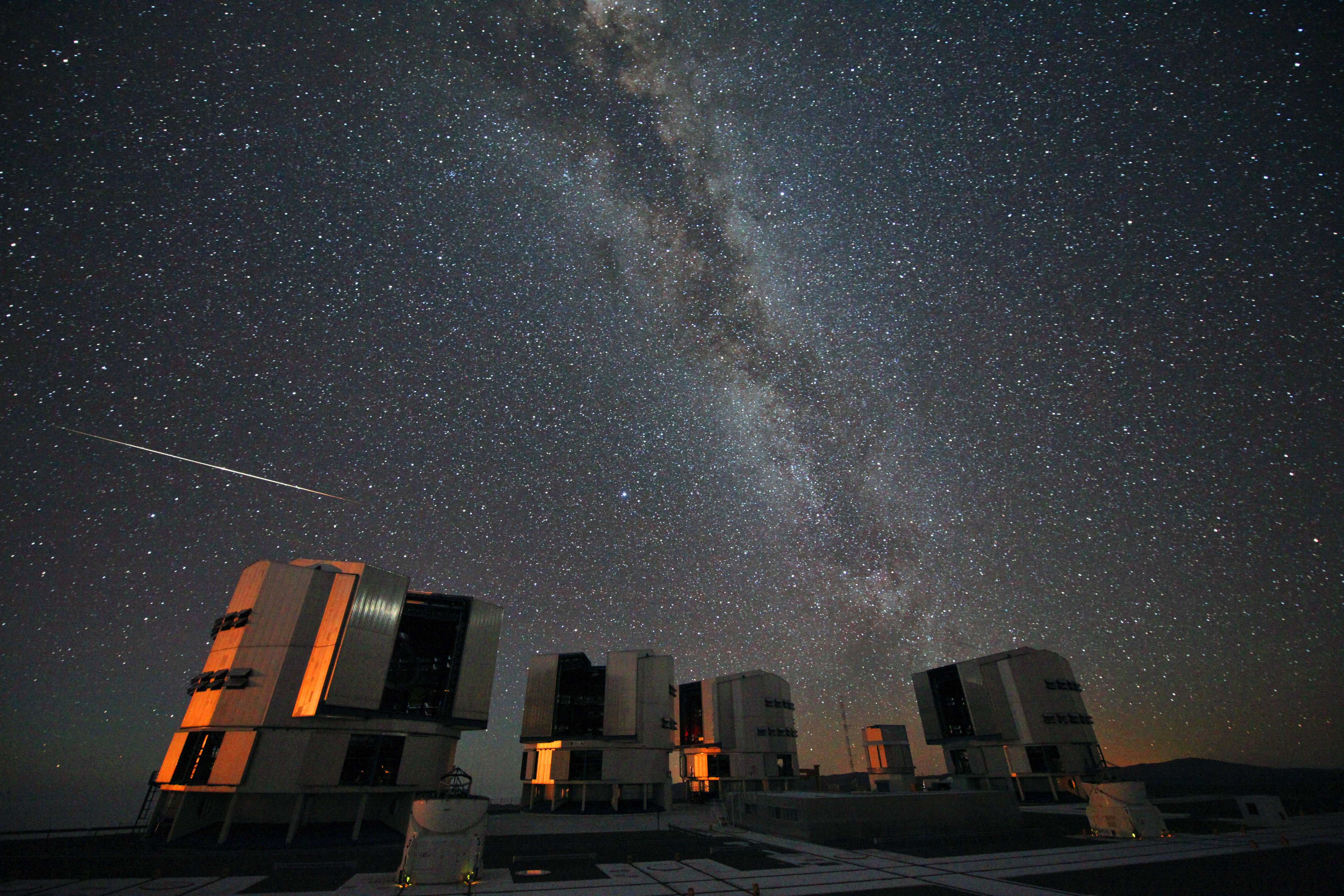 August 11th-12th is the peak of the Perseid meteor showers this year. Stardate recommends how to get the best viewing:
Get away from the glow of city lights and toward the constellation from which the meteors will appear to radiate.
For example, drive north to view the Leonids. Driving south may lead you to darker skies, but the glow will dominate the northern horizon, where Leo rises. Perseid meteors will appear to “rain” into the atmosphere from the constellation Perseus, which rises in the northeast around 11 p.m. in mid-August.
After you’ve escaped the city glow, find a dark, secluded spot where oncoming car headlights will not periodically ruin your sensitive night vision. Look for state or city parks or other safe, dark sites.
Once you have settled at your observing spot, lie back or position yourself so the horizon appears at the edge of your peripheral vision, with the stars and sky filling your field of view. Meteors will instantly grab your attention as they streak by.
The Pagan Practice Project
 Cultural anthropologist Kimberly Kirner is conducting a new survey of Pagan practices, as highlighted recently at the Wild Hunt. Notably, the survey includes a section on beliefs including archetypal and naturalistic-leaning views. It concludes with an important section on sustainability practices.
I recommend everyone check it out and make their voices heard. The more we participate in things like this, the more our style of Paganism will be recognized!
Here is the link:
International Day of the World’s Indigenous Peoples
 August 9th, is the International Day of the World’s Indigenous Peoples. This year’s theme is “Indigenous Media, Empowering Indigenous Voices”:
The theme aims to highlight the importance of indigenous media in challenging stereotypes, forging indigenous peoples’ identities, communicating with the outside world, and influencing the social and political agenda. (United Nations)
Given the inspiration many Pagans have drawn from various indigenous peoples, including the rediscovery of our own ancestral traditions, this day may be an opportunity for reverence, reflection, and activism. It may also be appropriate to engage with issues of cultural appropriation in our communities.
Buy Godless Paganism (paperback)

Buy Godless Paganism (ebook)


Pagan Coming Out Day – May 2nd