 Naturalistic Paganism
[Rotting Silver] “Parable of the Earth’s Lover” by B. T. Newberg

From the Earth’s embrace, her lover pulled away.
She asked, “What is wrong?”
He replied, “You kissed me once and it was warm. But when you kissed again, it was cold, like the lips of a corpse. What does this mean?”
She said, “It means I will be the one to kill you.”
“No, ” he said. “Surely it is not so.”
She replied, “Do you think you know me? Am I only love and life and pleasure? The milk of my left breast is medicine but my right suckles poison. When you press your body to me my lips shall become rose petals but my nipples thorns. When you enter my vulva you shall find a cloth of silk but also a razor. Or do you keep another mistress who dispenses your woes?”
He said, “You are all things to me.”
She said, “My body is this earth. From my womb flows all things seen and unseen, and all this is my creation. If you do not embrace my creation, you do not embrace me. Or would you rather have never lived than die in my arms?”
He said, “You know it is not so, but still I am afraid.”
She replied, “Your fear is a little bird. Keep it and care for it as you would your own child. In time it will fly you to me. With a kiss I give life and with another I take it away. Between these two kisses is my embrace.”
He said, “O Goddess, you are my lover!”
She said, “Mine are powers greater than you can imagine, but yours is the power to fulfill me. Come. Let us give body to our communion.”
And they embraced.
Rotting Silver is a column devoted to this Earth in all its tarnished radiance: poetry, prose, and parables of ugliness alloyed with joy.
A version of this piece was first published at The Witch’s Voice.
The Author

B. T. Newberg: Since the year 2000, B. T. has been practicing meditation and ritual from a naturalistic perspective. He currently volunteers as Education Director for the Spiritual Naturalist Society, where he is creating an online course in naturalistic spirituality. His writings can also be found at Patheos and Pagan Square, as well as right here at HP.
Professionally, he teaches English as a Second Language. After living in Minnesota, England, Malaysia, Japan, and South Korea, he currently resides in St Paul, Minnesota, with his wife and cat.
After founding HumanisticPaganism.com in 2011 and serving as managing editor till 2013, he now serves as advising editor, and feels blessed to be a part of this community.
“Are Humanistic Pagans building a temple in Iceland?” by John Halstead

If you haven’t heard, the heathen group, Ásatrúarfélagið, has announced that it is building the first pagan temple in that country in 1000 years*. Ásatrúarfélagið is the the Icelandic Asatru Association and you can find their page translated by Google here. You can read The Wild Hunt’s complete coverage of the temple building here. This is newsworthy for a couple of reasons. First, Scandinavia was late to convert to Christianity, centuries after the rest of Europe, and is still predominately Christian. Second, contemporary Pagans have had a very difficult time building temples and community centers. (See Cara Shulz’s 2-part series at The Wild Hunt on “Building Pagan Temples and Infrastructures”.)
We’re off to Pantheacon!

If you’re in the Bay Area this weekend, then don’t miss out on Pantheacon, the largest indoor Pagan conference in the U.S., which runs From Friday through Monday (Feb 13 – 16) at the San Jose Doubletree Hotel. And if you’re not in the area, then hop on a plane with some of HP’s staff and come anyway, because this year, there will be events specifically for Humanistic and Naturalistic Pagans!
Mark Green of the Atheopaganism group has organized a panel on Atheism in Paganism entitled “Godless Bless”, featuring Mark, John Halstead, Jon Cleland Host, Aine Xenon, and Esther Bamberg, and moderated by Lupa Greenwolf. The panel will take place in the Pagan Scholars Suite (Suite 967) on Sunday at 1:30-3:00. There will also be an Atheopagan mixer/open house on Saturday 12-3 and a workshop and ritual on Sunday 3:30-5.
This is a step toward getting on Pantheacon’s official scheduling, which is our goal for next year. To that end, we need a good turnout for these event. So please come by and support Atheopaganism and HP.
HP’s Managing Editor, John Halstead (aka “Johnny Humanist”), will also be on the Patheos Pagan Bloggers panel entitled “The Good, The Bad, & The Blogging”. It’s first thing on Friday, at 1:30 p.m., right after the opening ritual.
We look forward to seeing you there!
Review of Crosby’s Mind and Cosmos, by Crafter Yearly
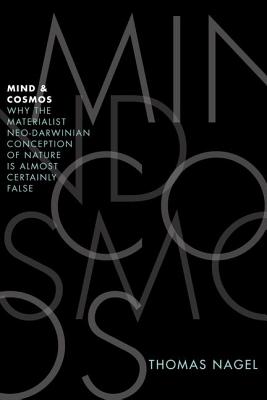
Thomas Nagel’s most recent book, Mind and Cosmos: Why the Materialist Neo-Darwinian Conception of Nature Is Almost Certainly False is an important new work that speaks to a wide range of audiences: theists, atheists, scientists, and philosophers. In it, he takes up the question of how to explain the existence of the universe and human life as well as the place and purpose of human life in the universe. While most authors taking up this very big question write from one of two diametrically opposed positions (i.e., religious theism or mechanistic scientism), Nagel adopts a naturalistic-teleological position that may be of special interest or importance for Naturalistic Pagans.
The Wheel of Evolution, by Eric Steinhart: Imbolc

Dr. Eric Steinhart draws on his philosophical background to create a naturalistic foundation for the Pagan Wheel of the Year. To better understand axiarchism, the philosophy on which Dr. Steinhart draws to create a Naturalistic Pagan theology, see Part 1 and Part 2 of his essay “Axiarchism and Paganism”.
During Imbolc, the sun is gaining strength, so that holy creative power concentrates itself ever more intensely. Imbolc represents early growth. After the Big Bang, particles evolve into simple atoms (hydrogen, helium, lithium). Simple atoms coalesce into the first stars, and these stars, running through their cycles, produce more complex atoms. Atoms join to make molecules; clouds of gas condense into planets. Astronomers have discovered hundreds of planets in our Milky Way galaxy, and have estimated that there may be billions of habitable earthlike planets in the Milky Way alone.
Buy Godless Paganism (paperback)

Buy Godless Paganism (ebook)


Pagan Coming Out Day – May 2nd
 Naturalistic Paganism