 Naturalistic Paganism
An invitation to blog at Pagan Square

The following message arrived in my inbox this morning. Pagan Square is a community blog space that runs the gamut of different views within Paganism, and naturalism could certainly use more representation. Check it out.
– B. T. Newberg, editor
Gentlepeople,
The Humanist/Atheist Pagan/scientific pantheist movement is something I’ve been following since our family printing company printed the World Pantheist newsletter for several years in the 90’s.
I’m the publisher of Witches&Pagans magazine and the editor of both the magazine and its associated blogosphere PaganSquare.com
I’m currently recruiting selected viewpoints and authors for PaganSquare, and your site came to my attention as the home of a number of highly-qualified bloggers.
We can’t pay in Coin of Ye Realm (I’m a volunteer at my own business these days!) but we’ve got excellent traffic (the site as a whole is averaging 10,000 page views a day) and I promote every single blog post to Witches&Pagans 12,000+ Facebook fans as well as to Twitter, so we hope to provide our bloggers with an excellent venue.
Comments on your blog are a) by registered users only, which seems to be keeping the trolls away) and b) managed by you (so if a troll *does* show up at your blog, you are giving the tools to banish said beast, if that’s your choice. (Like I said, we’ve been troll free thus far.) When we put ads on the site later this year, each blogger will be provided with our second-largest ad size to promote whatever s/he wants to on his/her on blog, so that’s a chance to promote your site and/or projects.
If you can share this announcement with your bloggers, I’d be most appreciative.
Gaia bless,
Anne Newkirk Niven
Pagan ritual as an encounter with depth, Part 2, by John Halstead

“Ritual is not like a scientific formula, but rather like a poem or dance — intended not to control, but to court the unconscious.”
In Part 1, I discussed how I try to create ritual that is an expression of the unconscious. Today, I will explain how I try to maintain the connection to the unconscious after the ritual is created.
The routinization of ritual
Jung often used the metaphor of water to describe the vivifying energies of the unconscious. He called it the aqua gratiae (“water of grace”). This water, he says, “comes from deep down in the mountain [the unconscious] and runs along secret ways before it reaches daylight [consciousness].” The place where it springs forth is marked by a symbol. This symbol merely marks the experience of the archetype, and it should not be confused with the experience (the water) itself or the archetype (the source of the water).
This “water” that Jung speaks of can be creative or destructive: “Where there is no water nothing lives; where there is too much of it everything drowns.” The role of the conscious mind, then, is to regulate its flow. Jung writes: “It is the task of consciousness to select the right place where you are not too near and not too far from water; but water is indispensable.” Too much and ritual is a flood of chaotic imagery that may even threaten to imperil our psychic well-being. Too little and ritual becomes an arid formality that only aids in the repression of the unconscious. As Jung writes, “There is no development at all but only a miserable death in a thirsty desert if one thinks one can rule the unconscious by our arbitrary rationalism.”
James Hollis writes that the purpose of ritual is to lead us back to the experience of depth from which the ritual arose in the first place. Ritual can be imagined as a canal leading back to the place where the archetypal energies first bubble to the surface. If that connection is interrupted, then ritual becomes a dry canal, a mere routine or dead form. Two ways the connection to the unconscious can be blocked are (1) by treating ritual as a technique and (2) by treating ritual as a self-expression.
Ritual vs. technique: Courting the unconscious
The canal analogy I used above should not be taken to imply that we can control the unconscious. We may be able to channel the flow of the water of the unconscious, but we can neither stop it when it comes nor cause it to flow when it has ceased. Edward Whitmont describes ritual as a formalized context for “containing” the affect-charged contents of the unconscious so that they can be safely confronted. While this is true, it is a mistake to think of ritual as a means of controlling the unconscious. Many Pagans view ritual as a technique for creating altered states of consciousness, raising “energy”, or achieving some other psycho-spiritual effect. To the Jungian Pagan, ritual is not a technique — not even a technique for integration of the unconscious. The integration of the unconscious can never be effected, only prepared. Ritual creates a “space” for the potentialities of the unconscious to manifest, but their manifestation is not caused by the ritual. Ritual, then, is an active waiting upon.
An example of the too-conscious or overly-rationalistic ritual can be seen in the case of the Renaissance magician or the modern occultist. When magic is understood as a technology, “a science of causing change to occur in conformity with the will”, then ritual becomes an expression of the ego. Occultists believe that the careful and precise application of magical formulae can be used to control (super-)natural forces, including the daemonic. The occultist imagines themselves to be something like a scientist, but one who understands (super-)natural laws which are unknown or unrecognized by the scientist. Some Pagan magical practice and ritual resembles occultism in this way. A good example of this is the ritual circle. Renaissance magicians believed they could control the daimonic forces they summoned within the circle, and many Pagans today use the circle in a similar way to control the “energy” raised in the ritual.
The Jungian Pagan, on the other hand, knows that, in the realm of the unconscious, control is an illusion. The forces of the unconscious may be invoked, aroused, courted, persuaded, and seduced — but never controlled. Even when they draw on some of the same symbolism as occultists, Jungian Pagans understand their use of these symbols in a very different way. For a Jungian Pagan, ritual is not like a scientific formula, but rather like a poem or dance — intended not to control, but to court the unconscious. If a Jungian Pagan uses a ritual circle, for example, it is not to magically contain the forces of the unconscious, so much as to create a psychological space into which those forces can be invited. The unconscious may manifest, or it may not, or it may happen after the ritual is completed and when it is least expected.
Ritual vs. self-expression: Listening to where the words come from
Just as the ritual circle is not used to control the unconscious, so too the words of a ritual are not intended to command it. They are intended rather to evoke, as when we evoke a feeling or a memory. As such, it is critical during the ritual to listen deeply. I try to adopt a listening attitude even when I am the one speaking. This applies to the non-verbal expressions, like gestures, as well as the words. The goal of ritual for Jungian Pagans is not to speak to the unconscious, but to listen to it. The trick then is to think of ritual not as a self-expression, but as a self-forgetting.
In order to achieve this self-forgetting, I find that it is essential that I learn the words and gestures of the ritual by heart. Reading and speaking from memory are very different internal experiences, and I find that reading is too self-conscious and often interferes with evocation. This dictates that the ritual must be relatively simple. The aphorism, “less is more”, has usually proven to be true in my experience of ritual.
Then when I listen, I try to hear what is unspoken in the words and gestures of the ritual. Jung quotes Gerhard Hauptmann as saying, “Poetry evokes out of words the resonance of the primordial word.” The words in ritual are poetic in this sense and intended to evoke what Jung calls “the primordial image” or archetype. When I speak the poetic words of ritual, I try to hear the “primordial word” or archetype, to listen not so much to the words as to the place where words come from. Martin Heidegger writes that to truly hear what is unspoken we must let the words come to us as something “unique, never to be repeated, inexhaustible” and let ourselves be shaken to our depths by it. I find it is helpful to read these words by Heidegger before I perform a ritual to put myself in this receptive frame of mind. When I speak the words, I imagine this is the first time the words have ever been spoken, and this will be the last time they will ever be spoken, knowing that the sound of the words themselves will never capture the fullness of their meaning. Then, sometimes, the ritual will transport me back to that experience of the archetype that gave rise to the ritual in the first place.
Sources
Hanegraaf, Wouter. “How Magic Survived the Disenchantment of the World”, Religion, vol. 33 (2003)
Heidegger, Martin. “What is Called Thinking?” (1968)
Heidegger, Martin. Fundamental Concepts of Metaphysics (1929/30, 1993)
Hollis, James. Under Saturn’s Shadow: The Wounding and Healing of Men (1994)
Jung, Carl. Correspondence to H.L. Philp, in Psychology and Western Religion (1984)
Jung, Carl. “On the Relation of Analytical Psychology to Poetry”, The Spirit in Man, Art, and Literature, Collected Works, vol. 15
May, Rollo. Love and Will (1969)
Whitmont, Edward. Return of the Goddess (1982)
The author

John Halstead is a former Mormon, now eclectic Neopagan with an interest in ritual as an art form, ecopsychology, theopoetics, Jungian theory, and the idea of death as an act of creation. He authors the blog The Allergic Pagan.
Check out John’s other posts:
Upcoming work
This Sunday
How do you maintain connection to the unconscious after ritual is created?
Pagan ritual as an encounter with depth, part 2, by John H. Halstead
Appearing August 5th, 2012
Next Sunday

In a community like Contemporary Paganism, how do naturalists emerge?
How can a naturalist emerge in Paganism?, by B. T. Newberg
Appearing Sunday, August 12th, 2012
Recent Work
Pagan ritual as an encounter with depth, Part 1, by John H. Halstead
Isis in Big History, by B. T. Newberg – Part 1, Part 2, Part 3, and Part 4
Neural love story, by Trent Fowler
Get our ebooks

Naturalistic Traditions for August
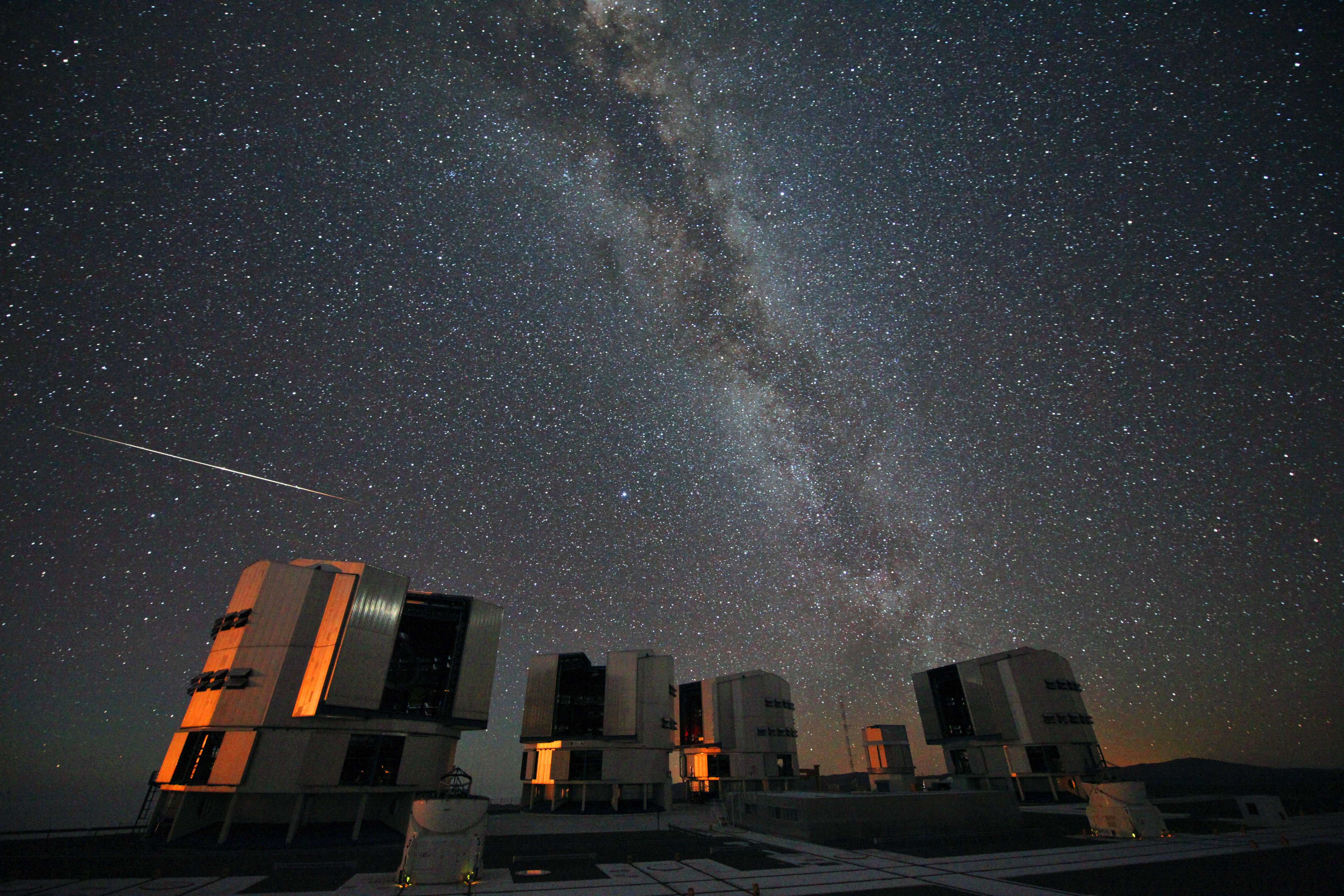
What can a naturalist celebrate in August?
Check out this month’s Naturalistic Traditions at Patheos.com.
Pagan ritual as an encounter with depth, part 1, by John Halstead

“The process of creation of the ritual is a collaboration with the unconscious.”
We are not one
Jungian-based Paganism begins with the proposition that the human psyche is not unitary. We are not one; we are many striving to become one. As James Hillman writes, “every sophisticated theory of personality has to admit that whatever I claim to be ‘me’ has at least a portion of its roots beyond my agency and my awareness.” Our conscious mind is only the tip of an iceberg which is largely unconscious. The unconscious includes the primal parts of ourselves as well as parts of ourselves that have been repressed. The goal of Jungian-based Neopaganism is wholeness, the integration of the unconscious and the conscious.
A Jungian-based Paganism uses ritual to facilitate this integration. In Jungian Pagan ritual, the contents of the unconscious (archetypes) are represented symbolically: as persons sometimes, but also as things, places, and events. The archetypes sometimes become the “gods” of Jungian Pagan ritual. As David Waldron explains, psychic development
“cannot be achieved through will or intention alone. People require symbols and rituals to express realities beyond the scope of conscious thought in order to achieve wholeness. The collective unconscious, the wellspring of intentional and unintentional thought is, by definition, unknowable and cannot be grasped within the confines of conscious rational intent. The mediation of symbols is required to give a person’s psychological development meaning beyond that of the purely rational. From this perspective, when a Jungian-oriented neo-Pagan utilizes ritual, it is a metaphor to describe psychic realities in relation to certain archetypes, within the collective unconscious […]”
Conscious ritual creation
However, the conscious nature of ritual creation raises an interesting dilemma. When the purpose of ritual is to listen to the unconscious, what role does the conscious mind play? Jungian Pagans seek to consciously and intentionally construct rituals for the purpose of integration of the psyche. But, according to Jungian theorists, psychic development cannot be achieved through conscious intention alone.
The reason is because the conscious mind is always trying to transform the contents of our unconscious into something more psychologically palatable, and in the process defeating the purpose of ritual. Jung wrote that, “Filling the conscious mind with ideal conceptions is a characteristic feature of Western theosophy […]. One does not become enlightened by imagining figures of light, but by making the darkness conscious.” We run the risk of “imagining figures of light” when our rituals are too much the product of conscious intention. When this happens, the ineffable archetypes are reduced to mere symbols*. Waldron explains that, when an archetype is reduced to a symbol which can be a consciously apprehended, it ceases to be archetypal. Although a symbol may masquerade as an archetype, it is a construction of the ego, and can become what Waldron calls “a collaborator in the suppression of the shadow.” In other words, when ritual symbols are a product of conscious intention, they not only fail to speak for the unconscious, but actually contribute to its ongoing repression.
Discovering the rite
How then is a new ritual to be arrived at? Edward Whitmont answers, “A genuine ritual, like a living symbol or a religious experience, cannot be fabricated; it can only be discovered.” Rituals are not invented; like our dreams, they happen to us. James Hollis echoes this formula:
“A rite is a movement in and toward depth. Rites are not invented. They are found, discovered, experienced. They rise out of some archetypal encounter with depth. The purpose of the symbolic act which the rite enacts is to lead back toward that experience of depth.”
Thus, for Jungian Pagans, the process of creation of the ritual is a collaboration with the unconscious. We can liken it to an artist being inspired by a muse (or possessed by a daimon).
Understood in this way, ritual is the product of a conscious form applied to unconscious content. Conscious design of ritual is unavoidable, or else there could be no “ritual” per se. However, to balance the conscious side of the equation, as it were, the Jungian Pagan seeks to draw the content from the unconscious. This can be done though meditation, dream work, what Jung called “active imagination” (which would be better named passive imagination), creative engagement with mythology, or by collecting what W.H. Auden calls “privately numinous words”, phrases, and images. These contents are then combined into a ritual form. Jung explains that the secret of great art (in which I would include ritual creation)
“consists in the unconscious activation of an archetypal image, and in elaborating and shaping this image into the finished work. By giving it shape, the artist translates it into the language of the present, and so makes it possible for us to find our way back to the deepest springs of life.”
How do we know if we have succeeded in tapping into the unconscious? Jung writes that the origin of a work of art can be seen in the work itself. A ritual of one’s own conscious intention and will can be expected to reflect the effect intended and “nowhere overstep the limits of comprehension”. But if a ritual is a product of the “alien will” of the unconscious, we find
“something suprapersonal that transcends our understanding to the same degree that the author’s consciousness was in abeyance during the process of creation. We would expect a strangeness of form and content, thoughts that can only be apprehended intuitively, a language pregnant with meanings, and images that are the best possible expressions for something unknown — bridges thrown out toward an unseen shore.”
Jung describes these as two different types of art, but it is probably better to think of them as two ends of a spectrum.
When I first began creating my own Pagan rituals, I did not feel authentic in performing the rituals, I felt a distinct sense that the rituals were lacking life of their own. I first attributed this to the newness and unfamiliarity of the ritual. However, I have come to realize over time that my early rituals, although drawing heavily on mythological symbolism, were overly cerebral, lacking in poetry and bodily movement. The most evocative rituals I have since created have been poetic creations, ones that seemed to come from somewhere other than my rational mind. They combined words that I had read or heard, which had a talismanic-like effect on me, with intuitive bodily movements. It is only at the end of the process that I would consciously apply structure to these contents to give the ritual a form. The result is a ritual that feels like, as Jung says, a “bridge thrown out toward an unseen shore”.
Next week in Part 2, I will discuss how I try to maintain the connection with the unconscious during the performance of the ritual.
* Note on terminology: I have the terms “archetype” to refer to a structure of the unconscious and “symbol” to refer to a signifier which points to an experience of the archetype. An archetype is ineffable, while a symbol can be fully apprehended by consciousness. This can be confusing because Jung often used the term “symbol” and “symbolic” in the way that I have used “archetype” and “archetypal”, and distinguished “symbols” from mere “images”, “signs”, and “allegories”.
Sources
Auden, W.H. “Making, Knowing, Judging”, The Dyer’s Hand (1962)
Hillman, James. Re-visioning Psychology (1975)
Hillman, James. “A Psyche the Size of the Earth”, Ecopsychology, eds. Roszak, Gomes & Kanner (1995)
Hollis, James. Under Saturn’s Shadow: The Wounding and Healing of Men (1994)
Hollis, James. Tracking the Gods: The Place of Myth in Modern Life (1995)
Jung, Carl. “The Philosophical Tree”, Alchemical Studies; Collected Works, vol. 13
Jung, Carl. “The Psychology of the Child Archetype”, The Archetypes and the Collective Unconscious , Collected Works, vol. 9, part i
Jung, Carl. “On the Relation of Analytical Psychology to Poetry”, The Spirit in Man, Art, and Literature, Collected Works, vol. 15
Tillich, Paul. “Symbols of Faith”, Dynamics of Faith (1957)
Waldron, David. Sign of the Witch (2008)
Whitmont, Edward. Return of the Goddess (1982)
The author
John Halstead is a former Mormon, now eclectic Neopagan with an interest in ritual as an art form, ecopsychology, theopoetics, Jungian theory, and the idea of death as an act of creation. He authors the blog The Allergic Pagan.
Check out John’s other posts:
Buy Godless Paganism (paperback)

Buy Godless Paganism (ebook)


Pagan Coming Out Day – May 2nd
 Naturalistic Paganism