 Naturalistic Paganism
“Why Modern Paganism is Good For Today’s Families” by Debra Macleod

This article is part of a two-part series discussing the rise and role of modern paganism in today’s families. Part I tells the author’s story, while Part II expands into the history and principles of some practices. This article was first published at The Huffington Post.
I grew up in an atheist home. It was a happy, kind-hearted and good-humoured one, with parents who loved each other as much as they loved their kids (and who still do). We had our own traditions: summer trips to the cabin, car wash blitzes on the driveway and sledding in the winter. Suckers for a hard-luck story, we fostered stray animals — abused pups, orphaned ducklings, one-legged pigeons, you name it.
My dad — a self-proclaimed redneck — was a man ahead of his time. Despite living in Canada’s Evangelical Bible belt, he had the guts to speak up for gay rights at a time in our province when not many voices were. He was unflinching in his pro-choice stance and raised two daughters who never believed that a woman should “obey” a husband. Love and respect, absolutely. But obey? Fat chance.
My mom was the same way. I remember her getting mad because evolution wasn’t being taught in our public school, the instruction having been opposed by religious lobby groups. Despite this, my family wasn’t anti-religious. We were just indifferent-religious. Even looking back, there was nothing that religion could have added to my family life. We were good without god. Read More
“Are the Gods Natural?” by B. T. Newberg
Author’s Note: This was among my first essays, published at the Witch’s Voice at the inception of HumanisticPaganism.com, and bears the stamp of an earlier and perhaps less-mature voice. I am republishing a select few of those early essays here. The “we” referred to is the larger Pagan community.
Gods, ghosts, spirits, and magic – are these supernatural? Nine out of ten Americans would likely say “yes.” And yet Pagans defy the norm.
“No,” we Pagans say, “our gods are natural.” Is this a joke? A semantic game? A gimmick to get a “100% natural” label on the bottle? What do we Pagans mean when we say our gods are natural? Read More
“A Sticky, Sweaty, Complicated Mess (That Nearly Everyone Wants)” by Mark Green [An Atheopagan Life]
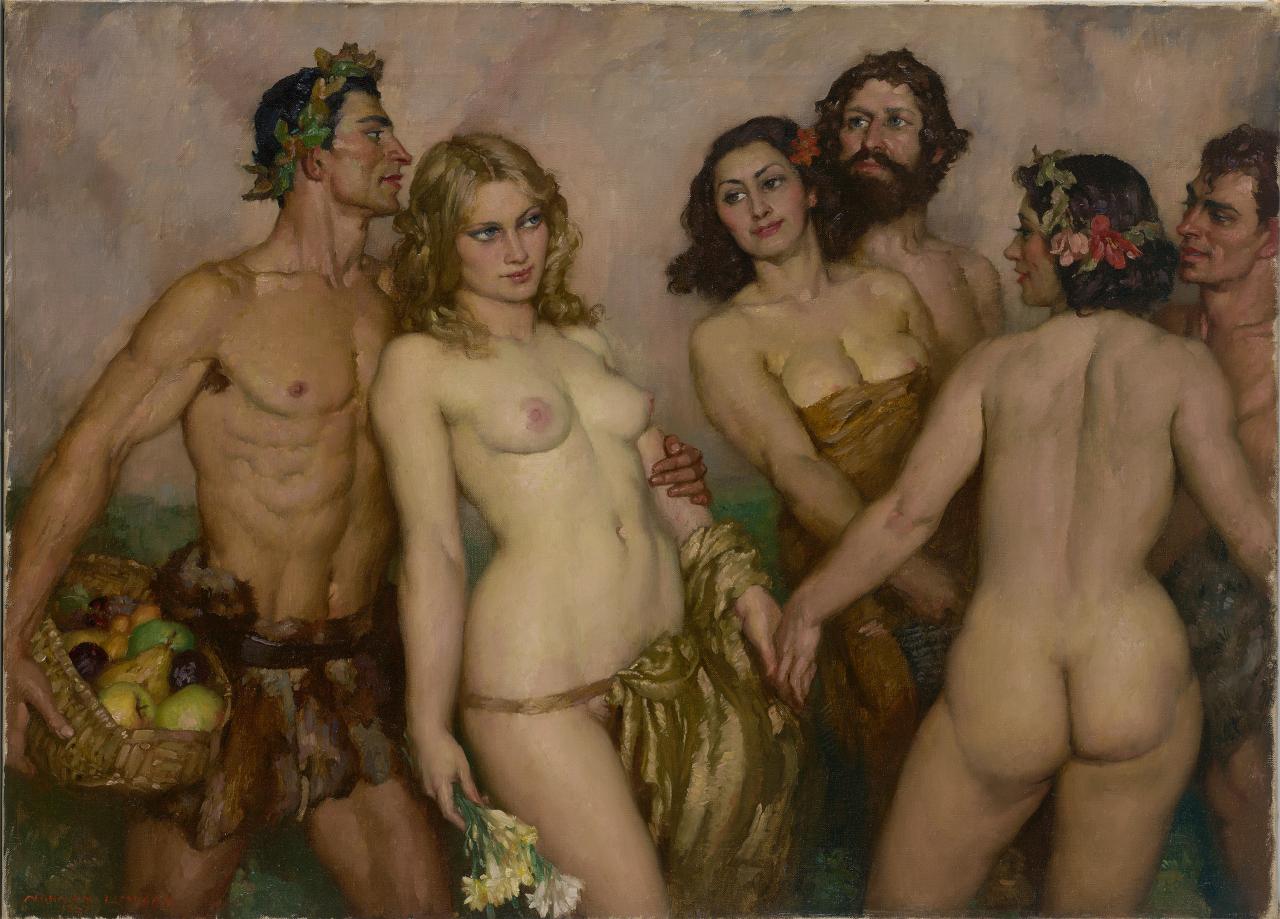
Norman Lindsay, “Spring’s Innocence” (1937)
[Editor’s note: Due to an oversight on this editor’s part, Mark’s post was delayed. My apologies to Mark and to our readers who didn’t get to enjoy this essay before Beltane. Fortunately Mark’s thoughts here are timely in any season.]
We were up long before the day-o
To welcome in the summer, to welcome in the May-o
For sumer is icumen in, and winter’s gone away-o!
May Day has just passed, which many Pagans know as Beltane, the festival of young adulthood, love, and sexuality. Time for rising early to greet the dawn—if you haven’t been up all night—wearing floral wreaths, dancing ribbons about tall phallic Maypoles, sipping May wine … and making out, at least, if not making love. Read More
“10,000 Pagans Raise Their Voices For Environmental Action”: Help make this a reality

“10,000 Pagans Raise Their Voices For Environmental Action”
This might be the headline this summer.
Help us get 10,000 signatures by Summer Solstice this year (June 21) for “A Pagan Community Statement on the Environment”.
Why 10,000?
It’s been 2 weeks since “A Pagan Community Statement on the Environment” was published and already over 2,000 people have signed from all over the world. 10,000 Pagans represents just 1% of the Pagans in the United States. Since we are collecting these signatures from all over the world, the goal is even more realistic.
Why the Summer Solstice?
The Pope’s environmental encyclical is going to be published this summer. It is expected to be historical, and it is already drawing a lot of media attention. A previous environmental encyclical by Pope Benedict explicitly contrasted Catholic earth stewardship with “neo-paganism” and another statement by Pope Francis suggests he may have a similar perspective on paganism. Regardless of whether Pope Francis explicitly mentions paganism this summer, there is going to be talk in the press about paganism, and this is an ideal opportunity to share a Pagan vision of ecological sustainability with the world.
Here’s what you can do:
- If you belong to a Pagan organization that has a mailing list, email list or newsletter, ask someone in the organization to promote the statement to its members.
- Share the statement with 5 Pagan friends in a personal email or personal Facebook message. We need signatures, not Facebook likes (so a post on your wall is good, but not enough). So ask your friends to go to ecopagan.com to sign the statement.
- If you haven’t already done so, go to ecopagan.com to sign the statement.
HP Pride: Meet Debra Macleod

HP Pride is a new monthly column where we interview members of the Humanistic Paganism community and other like-minded friends. One or more interviews will be published every month. If you are not a “Big Name Pagan”, or if you have never written online before, all the better! We want to hear from everyone! If you’d like to be interviewed, just click this link and follow the instructions.
Today we are interviewing Debra Macleod. You can visit Debra’s private practice at DebraMacleod.com or her Vesta website at NewVesta.com.
What do you call the religion you practice?
New Vesta. It is a re-introduction and renewal of the ancient Roman cult/tradition of Vesta, goddess of the home and hearth. Read More
Buy Godless Paganism (paperback)

Buy Godless Paganism (ebook)


Pagan Coming Out Day – May 2nd
 Naturalistic Paganism