Naturalistic Paganism
Call for Submissions: July’s themes are individualism, religious tradition, gender issues

This month (July 12) is “Malala Day”, which honors Malala Yousafzai, the young Pakistani activist who survived an assassination attempt and nominated for the Nobel Peace Prize in 2014.
 Also this month, we are a couple of important anniversaries in the Transcendentalist movement. The Transcendentalist Henry David Thoreau was born this month (July 12) in 1817. Another Transcendentalist, Ralph Waldo Emerson, gave his “Divinity School Address” the same month (July 15) in 1838. The address is regarded by some as the beginning of the Transcendentalist movement, which represented an individualist challenge to traditional religion.
In honor of the Transcendentalists and Malala, our themes for the month of July will be individualism and religious tradition. We’ll also be looking for articles on gender issues.
Send your submissions to humanisticpaganism [at] gmail [dot] com.
Help Support “Universe Story Car Decal”
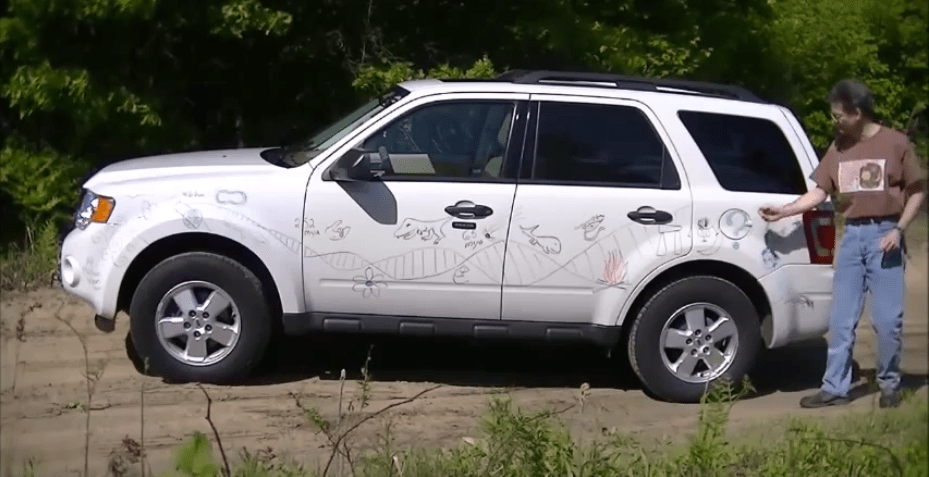
Help Create Car Decal to Share the History of the Universe and Build a Sustainable Future!
The Universe Story on Your Car!
I’m Jon Cleland Host – an educator, scientist, and father. I’ve been active in helping build a better world for future generations, marching in the Great Climate March, contributing future focused blog posts, and helping kids learn about our world. My wife Heather and I authored the book “Elemental Birthdays” to empower all parents to hold science related birthday parties, and much of my work can be found online. I realized how much an understanding of our deep time history energized me to work for a better future, and that one way to share this knowledge would be to create a car decal depicting the history of the Universe and pointing toward the future.
Imagine seeing the history of the Universe as you drive down the road on the car next to you – I’ll be bringing that experience to hundreds of people here in Michigan, and to thousands more as we make this artwork available to everyone.
The decal will consist of a DNA strand winding from the front of a car to the back with 18 events from the Big Bang into the future, depicted along its length. The decal will show the first stars, the formation of the Earth and Moon, the extinction of the dinosaurs, the history of humanity, the possible sustainable future, and more. I’ll make the decal available online, so anyone can download it, take the file to an auto detailer, and have it put on their car as well. Vinyl, other decal material, or maybe removable magnet sheet could be chosen. Read More
The Wheel of Evolution: Litha

Dr. Eric Steinhart draws on his philosophical background to create a naturalistic foundation for the Pagan Wheel of the Year. To better understand axiarchism, the philosophy on which Dr. Steinhart draws to create a Naturalistic Pagan theology, see Part 1 and Part 2 of his essay “Axiarchism and Paganism”.
At Litha, the power of the sun reaches its maximum. Litha therefore signifies the prime of life, the climax of cosmic complexity. As far as we can tell, we are the most sophisticated things to evolve in the universe. Of course, this happy self-assessment needs to be tempered by the recognition that our existence is merely an evolutionary accident. We are not the goal of the cosmos. Furthermore, it seems likely that our universe either already contains or will contain forms of life far more complex than humans. If we ever learn about them, we will need to revise our assessments of ourselves. But until then, it is reasonable for us to provisionally situate ourselves at the peak of cosmic evolution. Read More
[Rotting Silver] “A Book of Charms” by B. T. Newberg

Wit against ogres, discernment against elves,
Self-worth against vampires, courage against ghosts,
Laughter against spooks, and critique against angels,
Gratitude for flowers, patience with weeds,
Industry in sunshine, and rest in rain,
Greeting in thunder, kinship in thunderbolts,
Caution against vipers, forgiveness for cast-off skins,
Charity for snails, respect for the crow,
Wrath for leeches, sympathy for wasps,
Posterity in eagles, and destiny in worms,
Candor in disease, wisdom in sanity,
Nakedness in the mirror, and a veil among swine,
Worship in a good year, action in dearth,
A clean house, and a fondness for mud,
Love in darkness, lightness in sorrow,
Levity in fever, and work in fire,
Loneliness on the mountain, aid in the field,
Joy at home, and sensitivity in caves,
Waywardness in forests, perseverance in desert,
Buoyancy in rivers, and surrender in the ocean,
Burial in water, rebirth from a well,
Roundness in autumn, and thinness in spring,
Crookedness in growth, and a solid sense of mist. Read More
Neo-Pagan History Quiz
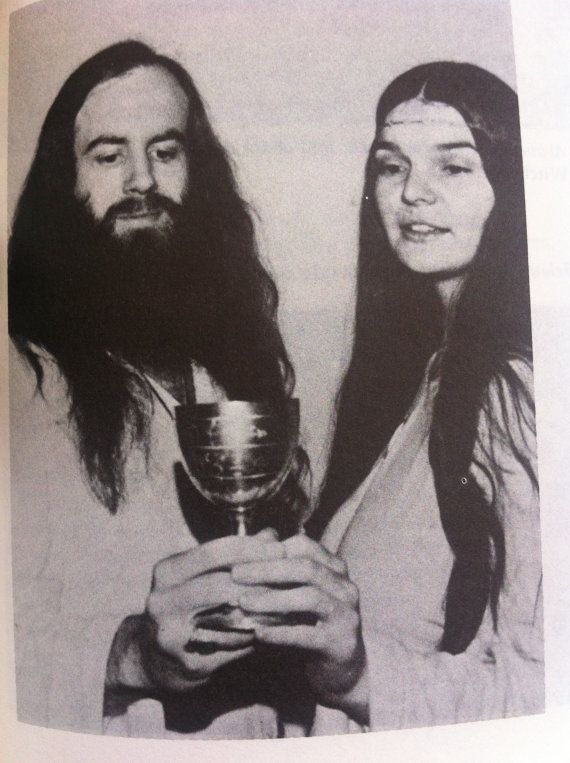
Click below to take this 12 question quiz and see how much you know about the history of Neo-Paganism. (And feel free to challenge me about the answers in the comments.)

click here
Buy Godless Paganism (paperback)

Buy Godless Paganism (ebook)


Pagan Coming Out Day – May 2nd