Naturalistic Paganism
[The Dionysian Naturalist] “Dancing with Dionysus: Ecstasy and Religion in the Age of the Anthropocene, Part 1” by Wayne Martin Mellinger, Ph.D.
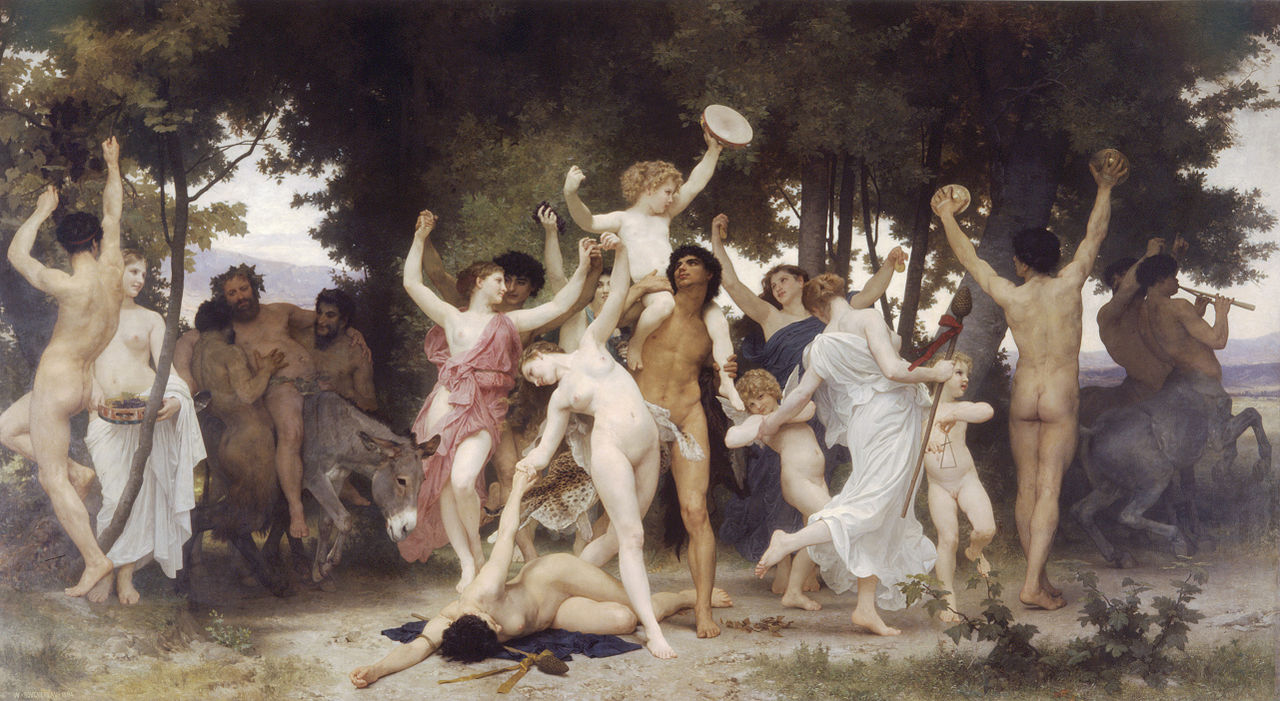
“A religion, new or old, that stressed the magnificence of the universe as revealed by modern science might be able to draw forth reserves of reference and awe hardly tapped by the conventional faiths. Sooner or later, such a religion will emerge.” — Carl Sagan, Pale Blue Dot (1994)
My goal in this essay is to explore a form of “Godless Paganism” I refer to as Dionysian Naturalism—an approach to religion ground in scientific evidence but imbued with reverence and awe, and centered around spiritual ecstasy. I contextualize this “earth-centered” spirituality and search for sacred ways to experience altered states of consciousness within the contours of my autobiography. The importance of ecstatic experiences in religious behavior is highlighted and I briefly mine the history of what has been called the “Western Mystery Tradition” (by Caitlin and John Matthews) for shamanic elements, mystical experiences and consciousness-transforming practices to briefly summarize their “base elements”. The interests of Dionysian Naturalists in reclaiming embodied ecstatic rituals is not just to infuse intense pleasure and passion into their religious lives. Through such mystical experiences pre-established ways of seeing the world are dissolved, ego-less realms of becoming are entered and spiritual connections with the natural world are greatly enhanced. These new-found spiritual connections with nature and fresh ways of thinking are essential if we are to develop sustainable ways of living on our planet as we enter the age of the Anthropocene.
FROM SOMEWHAT PURITANICAL BEGINNINGS
The New England Congregationalism in which I was raised was rather staid and proper, and terribly emotionally restrained. The only time when a touch of theatricality entered my religious upbringing was during my grandfather’s festive Christmas pageants at his church in Chicopee, Massachusetts. Rev. Asa Wright Mellinger (1897-1976) was my idol as a child, with the booked-lined study of his colonial-era parsonage, degree from Harvard Divinity School and fluency in most of the Biblical languages (including Latin, Greek, Hebrew, Aramaic and Syriac). He and my grandmother lived radically simple lives inspired by the Great Depression and made necessary by his meager salary. He was a kind and loving shepherd to his dwindling Yankee flock in this small mill city along the Connecticut River, then being filled with Catholic immigrants. To be sure, when I came of age no shaman took me to the nearby Mount Sugarloaf for a vision quest or tribal initiation.
As a young adolescent I discovered science in general and ecology in particular. I put aside my childish ways (or so I thought) and embraced the secular life. Of course, I still loved my Grandfather dearly, yet had no need for his or any other religion (or so I thought). I was almost 12 years old when the first Earth Day was celebrated (1970), and even then, we knew the Earth was in grave trouble, and I had no doubt that serious and scientific minds were needed to face these environmental challenges. Much later, I entered the University of Massachusetts at Amherst with plans to study the biological sciences.
But while in Amherst I discovered the Arts (first performing and then visual) and was floored by the powerful emotional effects they had on me. Live theater and dance enthralled me. I fell in love with the visual arts (and much later became a painter). And music, which had long been a part of my life, became even more important as I played clarinet in the University’s symphony band. I spent my fifth undergraduate year at the University of Paris—Sorbonne studying theater and fine art.
Yet, the pressing problems of our social world also weighed heavily upon my heart and mind—economic inequality, environmental devastation, gender and racial oppression, psychological alienation. I decided I must do doctoral work in Sociology, although I had never taken a Sociology class before, because it was the only discipline able to bridge all these diverse topics. I moved to San Francisco in 1981 to gain California residency and access to the plum University of California system.
I am 22 years old, living in San Francisco, when I suddenly find myself surrounded by people calling themselves Witches, Pagans and shamans. Back in Massachusetts I had never met any people involved in what initially seem like bizarre pursuits. I am intrigued by their do-it-yourself approach to spirituality, their wholesome environmental integrity and their anarchic sensibilities to establishment religion. I am particularly interested in their quest to create a non-patriarchal approach to divinity and their new ways of conceiving of gender and sexuality. It is here in San Francisco that the Greek god of ecstasy, Dionysus, first enters my life. I read Starhawk’s The Spiral Dance, Margot Adler’s Drawing Down the Moon, Michael Harner’s The Shaman’s Way and Arthur Evan’s Witchcraft and the Gay Counterculture. I joined a group of Radical Faeries (a gay male variation of Pagan traditions founded by Harry Hay) active in the Haight-Ashbury neighborhood in which I live. I experiment with hallucinogens and see such mind-altering activities as Pagan sacraments—as “dancing with Dionysus”.
I decide that I have found a important and timely topic for my Master’s thesis in this Pagan resurgence and I enter the University of California at Santa Barbara in 1983 intending to do an ethnography of the emergence of feminist spirituality, reclaimed Paganism and Wicca in the Bay Area. After arriving at UCSB I learn that here in this program ongoing graduate school funding is dependent upon attaching oneself to a viable mentor who offers a employable methodology and research domain. To be unaffiliated is to risk loosing all the financial support one needs to do the 5-6 years of graduate study required for the Ph.D. After six months I realize that no veteran Sociology faculty support my planned study, and I accept that I must re-align myself with other academic interests in the department.
Many years later I am a successful young college professor (I specialized in Critical Social Theories, the Social Psychology of Everyday Life, and Qualitative Methodologies) buying a home in Ventura, California and settled into a suburban life with my partner of 19 years. When this relationship comes to a crashing end, I fall into a deep depression and experience a mental breakdown verging on suicide. While previously a pretty regular marijuana user (with some brief forays into the experimental use of other substances), I then begin using crack cocaine very heavily each day to numb the intense pain I feel. A middle-class white guy with no street smarts I enter a social world of gang members, felons and hard-core dysfunctional addicts. Within about six months I loose everything in my life—my good-paying teaching positions, my suburban house with the pool, my network of friends and colleagues, and my self-respect.
Eventually, I get off of crack cocaine. I start teaching again and resume a somewhat normal life. Episodes of depression still haunt me and I find that small doses of methamphetamine seem to ease my drastic mood swings and allow me the focused attention I need to paint glorious works of art. I consider myself a “functional user” because I successfully lead a double life of teaching eight very popular classes a year while smoking small amounts of crystal meth daily. I rationalize these practices as attempts to insert ecstasy into my otherwise overly rational life—a pattern I sometimes drift into off and on for a decade. In my mind I am still “dancing with Dionysus”.
But even $30 a day of meth adds up quickly and to cover my growing expenses I begin to sell to a small network of friends. This continues for about two years until one very fateful day. To get himself out of jail and to have a very minor possession charge dropped, an acquaintance sets me up for a police bust. On April 23, 2005 I am arrested on the streets of downtown Ventura for sales of methamphetamine. I again loose my teaching position and everything else in my life. I am devastated and very depressed. I move back to Santa Barbara to get treatment at the Rescue Mission—a year-long Christ-based recovery program centered around the Twelve Steps of Alcoholic Anonymous. I am forced to go to church each Sunday and after a couple months of church-shopping, in which I explore Episcopal, Quaker and other forms of liberal Christianity, I settle on the Unitarian Society of Santa Barbara, where I have happily made my religious home for more than ten years now. As a non-theist it was the option that made the most sense (although the liberal Quaker congregation in Santa Barbara was seemed open to religious rebels and non-theists like myself!). Subsequently I begin to get treatment for bi-polar disorder—a chronic and severe mental health challenge in which often wild and sudden fluctuations in moods create havoc to one’s life. I learn that between 40 – 60% of those with bi-polar disorder “self-medicate” with alcohol and street drugs.
To be continued …
About the Author
 Wayne Martin Mellinger, Ph.D. is a Santa Barbara-based social justice activist, writer, and educator who uses spiritual practices to create a better world. Specifically, Wayne is very active in helping our neighbors of the streets transition into permanent housing and environmental issues. He has taught at the Santa Barbara, Santa Cruz, and Berkeley campus of the University of California, Ventura College, the Fielding Graduate University and Antioch University Santa Barbara.
“The Non-Theistic Pagan, Part 3” by Michele Briere
Continued from Part 2 …
So why are we alive and the table is not? I’m going to ignore the argument that everything vibrates at its own frequency. So does a vibrator, but that doesn’t mean I’m willing to grant equal rights. Read More
“The Non-Theistic Pagan, Part 2” by Michele Briere
Continued from Part 1 …
But what came before the polytheists?
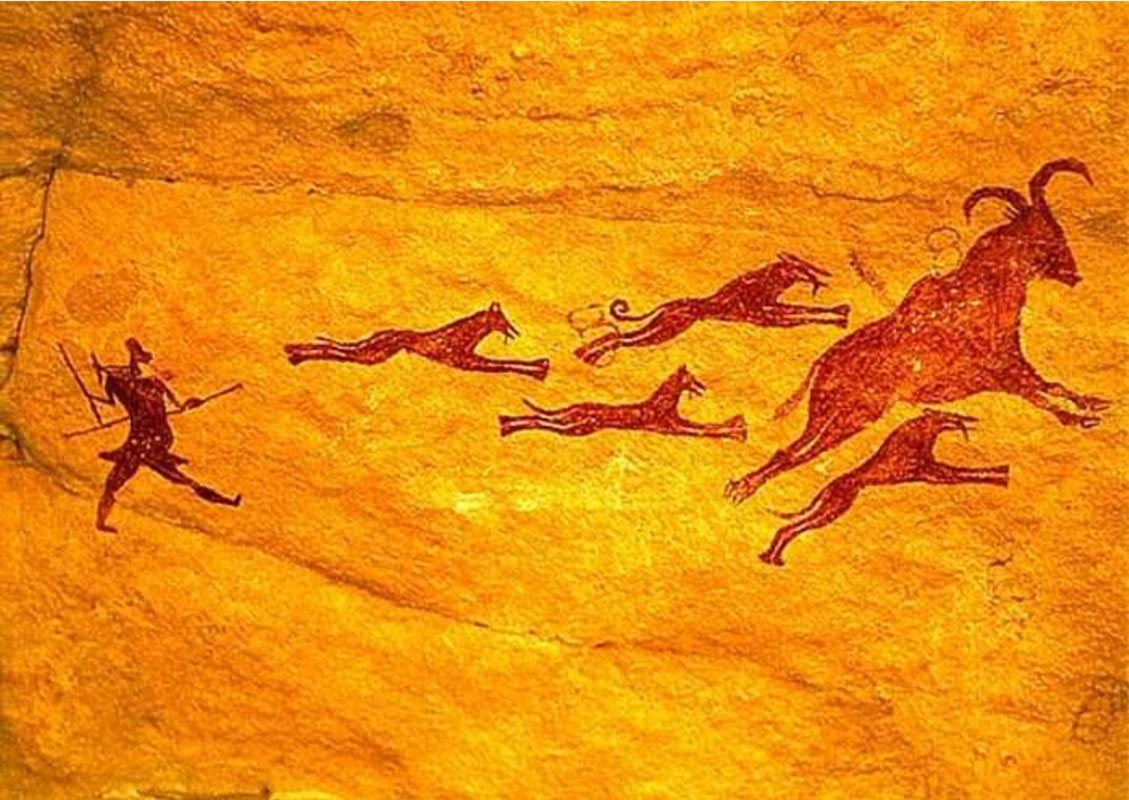
There is no evidence that humans were polytheist from the moment we left the trees. All we need to do is look around the planet at the dwindling tribes that are left in the forests. They live the land as all of our ancestors did thousands of years ago. We know this because of pictographs left behind by those ancients, by early writings when alphabets were new. Read the myths left to us by the more ancient cultures, remove the king aspects and the laws of mankind, and what is left over? Metaphors and allegories. The earth and her seasons, and the cultivation of crops and animals around those seasons. The primitive tribes that still exist continue to live in that world and they have shown no evidence of deity, only the respect for the earth and the ancestors which continue to be buried under it. The elders rule the tribe, so why shouldn’t they lay in the earth and continue to whisper their wisdom to their family? Read More
“The Non-Theistic Pagan, Part 1” by Michele Briere
Most of the pagans I know all believe in the reality of their gods. Some even believe in the reality of the myths, just as people of other religions believe in their holy books. I don’t. I believe in physical evidence, and the only thing the myths tell us is a reflection of the society that wrote them. If the gods had truly walked the earth, I’m sure their power would have left some sort of physical evidence. A being capable of creating everything, and yet nothing except stories exist? That isn’t good enough for me. Any information we have on the gods, from stories to statues, all come from people. Read More
Winter Cross-Quarter

Today (Feb. 4) is the Winter Cross-Quarter in the Northern Hemisphere, the midpoint between the Winter Solstice and the Spring equinox. It is one of eight stations in our planet’s annual journey around the sun. For those in the Northern Hemisphere, the claws of winter are harsh at this time, even though sunlight has already started returning. It takes a while for the climate to warm in response to the longer day, so the earth remains cold. While the Winter Solstice is the time of longest darkness, the Winter Cross-Quarter is (on average) the time of greatest cold. Yet, like a secret promise, the sun is returning. Jon Cleland Host of the Naturalistic Paganism yahoo group refers to the day as the Winter “Thermistice”, the peak of cold in the winter season.
In the Northern Hemisphere, February 2 is traditionally celebrated in the Neo-Pagan Wheel of the Year as Imbolc. Other names include Oimelc, Brigit, Brigid’s Day, Bride’s Day, Brigantia, Gŵyl y Canhwyllau, and Candlemas. Those in the Southern Hemisphere celebrate Lammas instead at this time. Imbolc derives from Celtic traditions surrounding the goddess Brigid, whose sacred fire at Kildare was tended by virgin priestesses. Traditionally, it marks the season when ewes birth and give milk. It is a time of emergence, as the herd brings new life into the world, and we look forward to the coming spring. One custom to observe this is placing a well-protected candle in each window of the house, to shine the light of life out into the snowy cold (Nichols, 2009).
Glenys Livingstone of PaGaian Cosmology, a naturalistic tradition revering the Goddess as a metaphor for the Cosmos, recommends meditating upon emerging Creativity through the ever-new flame of the candle, the beginning of the in-breath, and the word om. It is a time for individuation, a time to renew dedication of one’s small self to the big Self.
“A dedication to Brigid means a dedication to the Being and Beauty of particular small self, and knowing deeply its Source – as an infant knows deeply its dependence on the Mother, as the new shoot on the tree knows intimately its dependence on the branch and the whole tree, as the new star’s being is connected to the supernova. It is a dedication to the being of your particular beautiful Self, rooted seamlessly in the whole of Gaia.” (Livingstone, 2008)
NaturalPantheist shares the words he uses during his Imbolc celebration:
“As I stand here on this celebration of Imbolc, the sacred wheel of the year continues to turn and spring begins again. As my forebears did, I do now, and so may my descendants do in time to come. It is the feast of the goddess Brigid, guardian of the hearth fire and protector of the home. Patron of poetry, healing and smithcraft. It is a time of awakening after the dark, cold slumber of winter. The sun has grown stronger and the days have grown longer and I see now the first signs of spring. Trees are beginning to bud, snowdrops are blossoming and animals are stirring from hibernation. The time of Oimelc has arrived – the ewe’s are pregnant, lambs are being born and milk is beginning to flow once more. Winter is over and I rejoice in the hope of the coming warmth.
“I light this candle now in thanksgiving to Brigid, the sacred hearth fires of my home. I celebrate the growing power of the sun and look forward in hope to the coming warmth of summer.”
Jon Cleland Host of the Naturalistic Paganism yahoo group suggests making snow candles – an activity especially fun for kids.
Áine Órga sees February as a time to start fresh:
“While it is often a quiet time for me spiritually and otherwise, it is always a time of great change. Things get moving, and start coming into being. Everything begins to stir. Deep inside all forms of life, something is responding to the growing length of the days, the sun rising earlier each day. We feel the promise of Spring in our bones.
“This is a time to be bold, to take risks, to take a leap of faith. It is a time to push yourself, to set up a pattern of growth and inspired action for the months to come. There are so many months of manifestation ahead of us, and February is a wonderful time to get in there early and start manifesting your dreams for this year. …
“So this month I will get inspired, I will seize my resources, I will start tilling soil and preparing for the great creative outpouring of the Spring. This is the time of the birthing of my creativity, and I can feel my manifesting power starting to move out into the world.”
John Halstead celebrates Mid-Winter with his family as a time for new beginnings and time for transformations. They begin by gathering snow from outside and pouring it into a bowl, reciting these words:
Melt the ice that stills you,
in this season that chills you,
may the fire within you,
be lit by this hearth.Refrain:
Bring the cold, cold water,
from the dark, dark well,
to the warm hearth fire,
when the ice begins to melt.May the days grow longer,
as the fire grows stronger;
may the waking of spring,
be the light in your dark.Refrain
When the nights grow warmer,
may your heart grow stronger;
may the first melt of light
warm your dreams in the night.Refrain
They then melt the snow with four candles, colored white, green, red, and black — symbolizing the faces of the Neo-Pagan Goddess. They wash their hands in the water while thinking about something they want to start anew.
Buy Godless Paganism (paperback)

Buy Godless Paganism (ebook)


Pagan Coming Out Day – May 2nd