 Naturalistic Paganism
“The Non-Theistic Pagan, Part 2” by Michele Briere
Continued from Part 1 …
But what came before the polytheists?
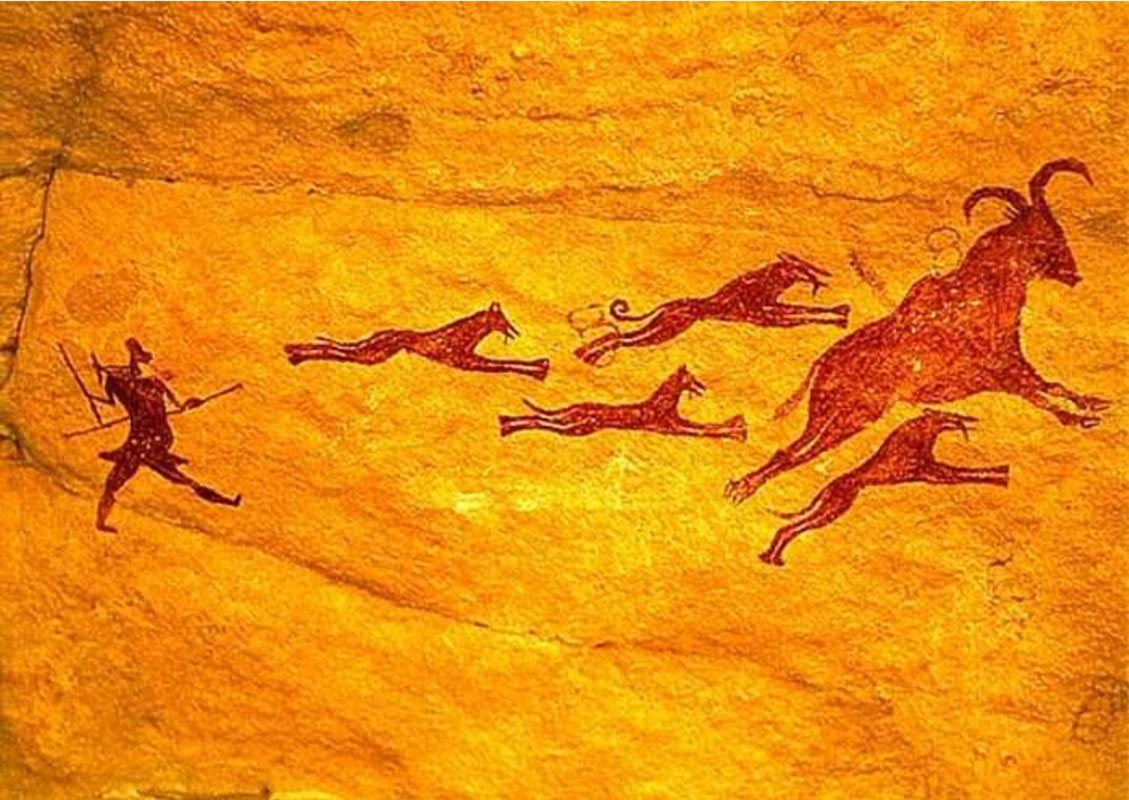
There is no evidence that humans were polytheist from the moment we left the trees. All we need to do is look around the planet at the dwindling tribes that are left in the forests. They live the land as all of our ancestors did thousands of years ago. We know this because of pictographs left behind by those ancients, by early writings when alphabets were new. Read the myths left to us by the more ancient cultures, remove the king aspects and the laws of mankind, and what is left over? Metaphors and allegories. The earth and her seasons, and the cultivation of crops and animals around those seasons. The primitive tribes that still exist continue to live in that world and they have shown no evidence of deity, only the respect for the earth and the ancestors which continue to be buried under it. The elders rule the tribe, so why shouldn’t they lay in the earth and continue to whisper their wisdom to their family? Read More
“The Non-Theistic Pagan, Part 1” by Michele Briere
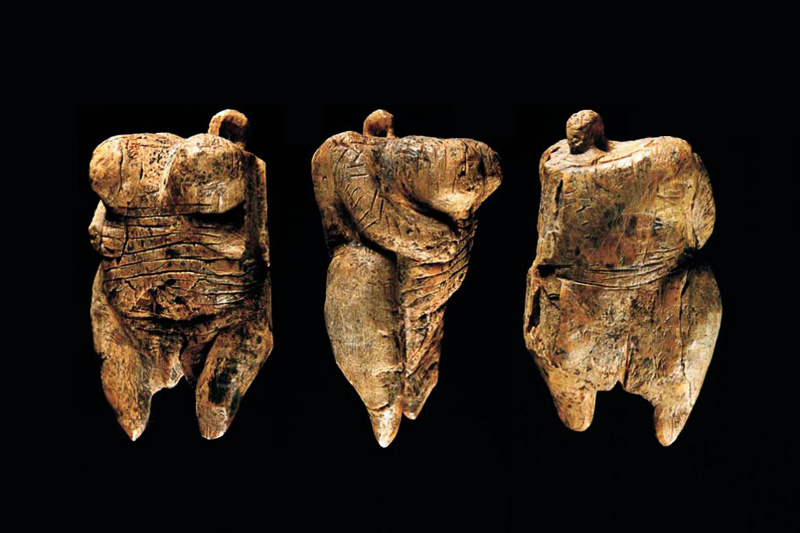
Most of the pagans I know all believe in the reality of their gods. Some even believe in the reality of the myths, just as people of other religions believe in their holy books. I don’t. I believe in physical evidence, and the only thing the myths tell us is a reflection of the society that wrote them. If the gods had truly walked the earth, I’m sure their power would have left some sort of physical evidence. A being capable of creating everything, and yet nothing except stories exist? That isn’t good enough for me. Any information we have on the gods, from stories to statues, all come from people. Read More
Winter Cross-Quarter

Today (Feb. 4) is the Winter Cross-Quarter in the Northern Hemisphere, the midpoint between the Winter Solstice and the Spring equinox. It is one of eight stations in our planet’s annual journey around the sun. For those in the Northern Hemisphere, the claws of winter are harsh at this time, even though sunlight has already started returning. It takes a while for the climate to warm in response to the longer day, so the earth remains cold. While the Winter Solstice is the time of longest darkness, the Winter Cross-Quarter is (on average) the time of greatest cold. Yet, like a secret promise, the sun is returning. Jon Cleland Host of the Naturalistic Paganism yahoo group refers to the day as the Winter “Thermistice”, the peak of cold in the winter season.
In the Northern Hemisphere, February 2 is traditionally celebrated in the Neo-Pagan Wheel of the Year as Imbolc. Other names include Oimelc, Brigit, Brigid’s Day, Bride’s Day, Brigantia, Gŵyl y Canhwyllau, and Candlemas. Those in the Southern Hemisphere celebrate Lammas instead at this time. Imbolc derives from Celtic traditions surrounding the goddess Brigid, whose sacred fire at Kildare was tended by virgin priestesses. Traditionally, it marks the season when ewes birth and give milk. It is a time of emergence, as the herd brings new life into the world, and we look forward to the coming spring. One custom to observe this is placing a well-protected candle in each window of the house, to shine the light of life out into the snowy cold (Nichols, 2009).
Glenys Livingstone of PaGaian Cosmology, a naturalistic tradition revering the Goddess as a metaphor for the Cosmos, recommends meditating upon emerging Creativity through the ever-new flame of the candle, the beginning of the in-breath, and the word om. It is a time for individuation, a time to renew dedication of one’s small self to the big Self.
“A dedication to Brigid means a dedication to the Being and Beauty of particular small self, and knowing deeply its Source – as an infant knows deeply its dependence on the Mother, as the new shoot on the tree knows intimately its dependence on the branch and the whole tree, as the new star’s being is connected to the supernova. It is a dedication to the being of your particular beautiful Self, rooted seamlessly in the whole of Gaia.” (Livingstone, 2008)
NaturalPantheist shares the words he uses during his Imbolc celebration:
“As I stand here on this celebration of Imbolc, the sacred wheel of the year continues to turn and spring begins again. As my forebears did, I do now, and so may my descendants do in time to come. It is the feast of the goddess Brigid, guardian of the hearth fire and protector of the home. Patron of poetry, healing and smithcraft. It is a time of awakening after the dark, cold slumber of winter. The sun has grown stronger and the days have grown longer and I see now the first signs of spring. Trees are beginning to bud, snowdrops are blossoming and animals are stirring from hibernation. The time of Oimelc has arrived – the ewe’s are pregnant, lambs are being born and milk is beginning to flow once more. Winter is over and I rejoice in the hope of the coming warmth.
“I light this candle now in thanksgiving to Brigid, the sacred hearth fires of my home. I celebrate the growing power of the sun and look forward in hope to the coming warmth of summer.”
Jon Cleland Host of the Naturalistic Paganism yahoo group suggests making snow candles – an activity especially fun for kids.
Áine Órga sees February as a time to start fresh:
“While it is often a quiet time for me spiritually and otherwise, it is always a time of great change. Things get moving, and start coming into being. Everything begins to stir. Deep inside all forms of life, something is responding to the growing length of the days, the sun rising earlier each day. We feel the promise of Spring in our bones.
“This is a time to be bold, to take risks, to take a leap of faith. It is a time to push yourself, to set up a pattern of growth and inspired action for the months to come. There are so many months of manifestation ahead of us, and February is a wonderful time to get in there early and start manifesting your dreams for this year. …
“So this month I will get inspired, I will seize my resources, I will start tilling soil and preparing for the great creative outpouring of the Spring. This is the time of the birthing of my creativity, and I can feel my manifesting power starting to move out into the world.”
John Halstead celebrates Mid-Winter with his family as a time for new beginnings and time for transformations. They begin by gathering snow from outside and pouring it into a bowl, reciting these words:
Melt the ice that stills you,
in this season that chills you,
may the fire within you,
be lit by this hearth.Refrain:
Bring the cold, cold water,
from the dark, dark well,
to the warm hearth fire,
when the ice begins to melt.May the days grow longer,
as the fire grows stronger;
may the waking of spring,
be the light in your dark.Refrain
When the nights grow warmer,
may your heart grow stronger;
may the first melt of light
warm your dreams in the night.Refrain
They then melt the snow with four candles, colored white, green, red, and black — symbolizing the faces of the Neo-Pagan Goddess. They wash their hands in the water while thinking about something they want to start anew.
“Humanistic Pagan Thoughts at the Deathbed” by Renee Lehnen
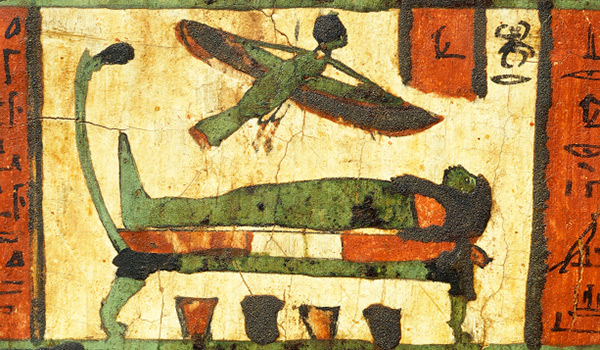
Searching for any scrap of evidence for a human afterlife, I asked my very terminally ill father where he thought he was about to go. “Into that cookie jar,” he whispered. He had decided to have his body cremated, and I had purchased a twelve dollar blue and white ceramic container at Winners to serve as an urn for his ashes. My aunt thought we should splurge on a handmade urn, but my father liked the jar. Seven years later his remains rest within it in the living room next to my mother’s knitting, a few feet from where he died. I don’t know if he found himself in heaven as well, but I doubt it.
Although agnostics, my parents raised my sisters and me as Christmas and Easter Christians in the United Church of Canada, ostensibly to give each of us a solid moral compass. Time passed and I grew up, out of the United Church, and into a Searcher. Whether or not there are deities is a side issue to me. My burning questions are whether we survive our deaths and, if not, how we can find meaning in this life. Attempting to answer these questions has led me to my spiritual home in Humanistic Paganism.
As a registered nurse, I am a regular witness to death. To me, the bodily processes of sickening and dying resemble the breakdown of machinery. When a healthy person suddenly falls ill or is catastrophically injured, an observer might imagine that the person’s soul departs his or her body as life slips away. In some deaths it appears that a life force has escaped and the face of the corpse looks vacantly peaceful.
This illusion is shattered when illness takes hold slowly, especially when people lose cognitive function prior to physical decline as occurs in neurological disease such as Alzheimer’s. More often, the dying process takes enough time that grief stricken family members may find themselves guiltily bored at their loved one’s bedside. As the shell of a formerly vibrant person continues to breathe, take fluids, and expel wastes, at what point would an observer think that the person’s soul leaves the body? A simple answer is that it doesn’t because the soul doesn’t exist. No iridescent soul vapour rises in a tendril from the left nostril at the moment of the final breath. We are all, each of us, our bodies. We live to the extent that our cells, tissues and physical systems, including our brains, function. We die when they cease to function.
In the mists of history when I was a novice nurse, I watched for clues suggestive of an afterlife for immortal human souls. I discarded the Christian notion of heaven and hell and Buddhist ideas of reincarnation. I read books claiming that the writers had glimpsed heaven in near death experiences but they seemed false and written to capitalize on readers’ yearning for immortality. I rationalized: perhaps we are like radio sets tuned into a great consciousness, and we, in the form of souls, will abandon our broken equipment and dwell elsewhere after death? Over time I have come to view this hope as unlikely, even preposterous, but I have retained the drive to find spiritual meaning in death.
I still attend church a couple of times a year. Although my heart swells with joy when I sing hymns, the minister’s sermons on the promise of heaven for believers ring hollow to me. On the other hand, the Genesis verse, oft recited on Ash Wednesday, resonates: “for dust you are and unto dust you shall return.” I explored Buddhism while living in East Asia, and still meditate weekly in a sangha. The Buddhist principle of “no soul” is plausible to me, and wins the doctrinal battle against reincarnation handily. However, most compelling of all spiritual traditions on the subject of death are Humanism and Paganism.
Nothing concentrates the mind more than a looming deadline. As Humanistic Pagans, facing the fact that we probably do not have souls that will survive our deaths injects urgency into making our time on this planet count. People who come to Humanistic Paganism tend to be curious, adventurous intellectual and spiritual explorers who deeply value their relationships with other people, life in all of its forms and the planet and cosmos. A Naturalist Creed is a thoughtful declaration honouring our humble, awesome place within the order and chaos of the universe.
Whether we celebrate festivals on the Wheel of the Year, or mark the equinoxes and solstices as times for reflection, or engage in daily ritual, Humanistic Pagans intuitively share this understanding: We were born of this earth and we will return to it upon our deaths. We are Beltane and Samhain, matter and space, purposeful energy and dishevelled entropy. After many years of searching I feel that is enough. How lucky we are!
About the Author: Renee Lehnen
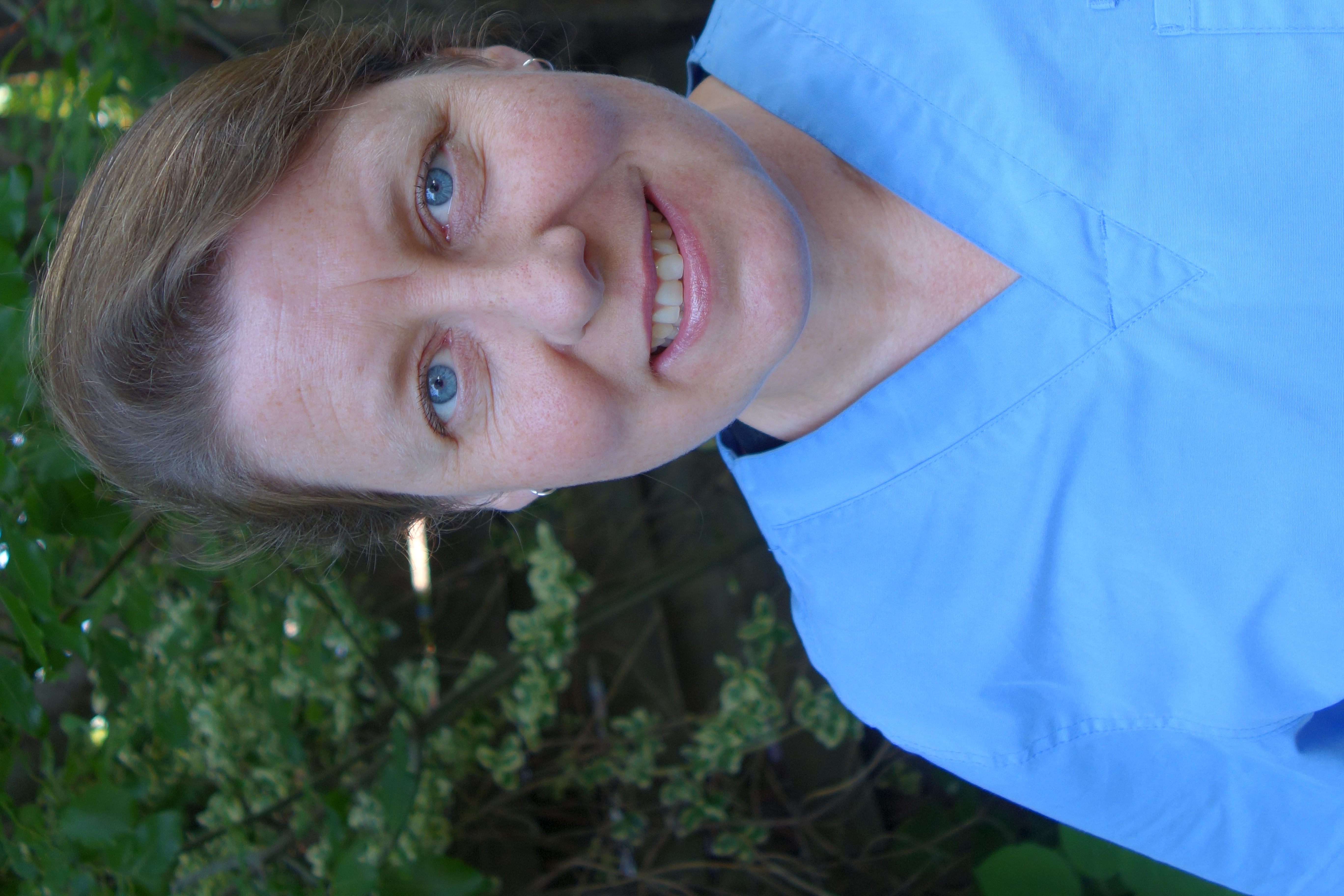 Renee Lehnen is a registered nurse and recent empty nester living in Stratford, Ontario, Canada. With her new found free time, she enjoys outdoor sports, working on local environmental projects, and gazing at the sky wondering, “What does all of this mean?”
“Astral Bodies” by Shepherd King

♀.
Your dawn foams red in
blushing, dancing waves, teasing
the flesh of the day.
☉.
Shafts of light from your
golden bow pierce clouds and crown
the sakura sky.
☿.
Heaven-helmed, you hold
aloft the spiral spear, the
shield-wheel of the stars.
☽.
The cloud-veiled crescent
grail of your smile overflows
and phantom rains fall.
⊕.
Your jade skirt sprouts from
mudslide mountain thighs, smearing
earth with afterbirth.
♂.
Dogs and serpents feast
on bone-pale flesh, nursing blood
from your rotting breast.
♃.
Compassion burns and
blossoms forth, fragrant on the
thorned cross of your heart.
♄.
Your torch reflects the
parchment sands, unfolding the
face of time grown old.
♅.
The dharma shines through
diamond eyes, sparking rainbows
on your lotus feet.
♆.
Your cosmos swirls like
pearls of milk on the quickened
waters of the void.
♇.
Scattered ashes dust
your tongue; their grave-dance feeds the
hunger of the night.
∞.
Crescents crown your star,
your void; the earth, your womb—your
footstool is the sun.
Brooding, you ascend;
your dawning wings enfold the
egg. The universe.
About the Author
Shepherd King is a philosophical naturalist and occasional Pagan based out of Austin, Texas. When he’s not expounding the virtues of theological noncognitivism or translating Sanskrit, he can be found meditating in his favorite field, writing bad sci-fi, and wishing he had a dog.
Buy Godless Paganism (paperback)

Buy Godless Paganism (ebook)


Pagan Coming Out Day – May 2nd
 Naturalistic Paganism