 Naturalistic Paganism
Welcome our new Managing Editor, Jon Cleland Host

(Myself, Jon Cleland Host, and Brandon Sanders of SolSeed at PantheaCon, February 2015)
On the Spring Equinox, I will be officially handing over the reigns of the Humanistic Paganism site to Jon Cleland Host. The truth is that Jon has already been managing things behind the scenes for a while now and has been doing a great job.
Jon is uniquely qualified to take over as Managing Editor of HP. He is the founder of the Naturalistic Paganism Yahoo discussion group, which was the first online resource for our community. Together with his wife, Heather, Jon writes a column at HP. In addition, he is a scientist who earned his Ph.D. in materials science at Northwestern University, and has conducted research at Hemlock Semiconductor and Dow Corning since 1997. He has authored papers for peer-reviewed scientific journals, including the journal Nature. He has taught classes on biology, math, chemistry, physics and general science at Delta College and Saginaw Valley State University.
Jon has been building a reality-based spirituality for over 30 years. He has collaborated with Michael Dowd and Connie Barlow to spread the awe and wonder of the Great Story of our Universe. I have been fortunate to meet Jon in person, and I can tell you that his enthusiasm for science and the Great Story is contagious. He is a natural diplomat and has a unique ability to communicate about science in a way that engages both the young and old. I recently invited Jon to present at my Unitarian Universalist congregation, and my fellow congregants were enthralled. I have met some wonderful people while serving as the Managing Editor here, and Jon is one of my favorites.
I will be staying on as Editor-at-Large, in an advisory capacity to Jon, but also as a regular columnist. My new column will be called, “The Naturalistic Pagan Toolbox: Beyond the Wheel of the Year,” and will offer down-to-earth ideas for putting our Naturalistic Pagan ideas into practice. And you can still find me elsewhere on the web, including at Patheos as the Allergic Pagan, at my Jungian Neo-Paganism blog, Dreaming the Myth Forward, as an occasional contributor to Gods & Radicals and Huffington Post, and at my new project, Earthseed.
Looking back, we have seen some exciting developments in our community in recent years:
- Dozens of authors have been added to our list of contributors and several regular columnists.
- We have had multiple successful fundraising campaigns, including recently raising 200% of our goal for the Godless Paganism anthology.
- We have built and strengthened relationships with other naturalistic groups, like the Spiritual Naturalist Society and SolSeed, as well as with other Pagan institutions.
- Atheopaganism has emerged as its own Naturalistic Pagan tradition, and has conducted rituals and panel discussions at PantheaCon two years in a row, thanks to the efforts of Mark Green and others. (This year, they were included on the official schedule.)
- Earthseed is also emerging as a new Humanistic Pagan tradition. (Visit godischange.org.)
- Several Naturalistic Pagans (including Jon Cleland Host) were instrumental in the drafting of “A Pagan Community Statement on the Environment,” which has now collected almost 7,000 signatures, and which we hope will draw 10,000 signatures before Earth Day 2016. If you haven’t already done so, go to ecopagan.com to add your signature.
- And the book Godless Paganism: Voices of Non-Theistic Pagans has gone to print! It includes the writings of over 40 Pagan authors, including Humanistic and Naturalistic Pagans, atheist Pagans or Atheopagans, Buddho-Pagans, animists, pantheists, Gaians, naturalistic polytheists and more.
We continue to make our voices heard in the Pagan community at large. While some Pagans still feel that humanists and naturalists do not belong under the Pagan umbrella, they are a minority and one that is increasingly being overruled by our friends and allies in the wider Pagan community, who include other non-theistic Pagans, but also many polytheists, who do not condone the creation of new theistic orthodoxy. I can attest that more and more people are coming forward all the time to say that they share a Humanistic or Naturalistic Pagan perspective, while others are coming to realize recognize the value of our unique contribution to the diversity of contemporary Paganism.
I want to thank B. T. Newberg, the founder of this site, for his support and encouragement, as well as NaturalPantheist, our social media coordinator, who made my job that much easier, and all of our columnists.
But most of all, I want to thank you, our readers and our writers, without whom none of this would be possible.
 John Halstead is Editor-At-Large and a contributor at HumanisticPaganism.com. He blogs about Paganism generally at AllergicPagan.com (which is hosted by Patheos) and about Jungian Neo-Paganism at “Dreaming the Myth Onward” (which is hosted by Witches & Pagans). He is also an occasional contributor to GodsandRadicals.org and The Huffington Post and the administrator of the site Neo-Paganism.com. John was the principal facilitator of “A Pagan Community Statement on the Environment,” which can be found at ecopagan.com. He is a Shaper of the fledgling Earthseed community, which is described at GodisChange.org. John is also the editor of the anthology, Godless Paganism: Voices of Non-Theistic Pagans.
To speak with John, contact him on Facebook.
The Light Returns!

Has it awoken your senses as it has mine? Is the returning light stirring you too from winter’s slumber? 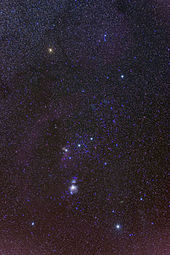
In my Anishinaabe culture, the constellation with three stars in a row is called “Kabibonokka”, not “Orion”. Kabibonokka is the personification of winter (“biboon”), striding powerfully into our nights in the fall, bringing frigid cold by January when he rules the nights. A few days ago I pointed him out to my sons, thanking him for winter, but also sharing my happy anticipation of the coming bike rides and campfires. Just after dusk, you too can see Kabibonokka – now wandering dejectedly toward the sunset in defeat, closer with every passing day. When he gets to the sunset, he’ll be gone – and with him, the cold of winter, at least for now.
I work a regular 8-5 job, and now the evenings are so noticeably brighter, even before the time change for daylight savings. It’s coming! Longer days! (Apologies – and humble thanks- to our Southern Hemisphere Pagan friends, from whom we are about to steal the light). The excitement in my family is building for Ostara, just days away now. Another way we are building this anticipation here is with this new video by John Boswell at the Symphony of Science* that also celebrates light. If you like, find a big screen TV. Darken the room. Remove distractions, and settle down comfortably – either alone or with others – and let these waves of light and wonder wash over you, reminding us of the now victorious light. Or save it for Ostara itself. Hey, is that a sacred stone circle at 1:40? Read More
Intuition: Following Your Heart vs. Trusting Your Gut; by Debra Macleod
“Heart” vs. “Gut” ?
At first glance, you might think that “following your heart” and “trusting your gut” are similar. They’re both about listening to your intuition, right?
It depends. I think our heart – and by that I mean our desires and hopes – can definitely help us become more intuitive and make an intuitive decision or choice.
Yet here’s the stumbling block with our heart. It can sometimes become too focused on what we want to do or what we hope (sometimes desperately hope) will happen.
As many of us have learned the hard way in life, if we desire or hope for something too strongly, those intense feelings can blur us to the reality of what’s best for us.
That purely emotional or hopeful voice – But I love him, I know it’ll work out! I don’t care about the rotting foundation, I love this house! It doesn’t matter what it costs, I need it – can drown out the sound of our intuitive voice. Read More
The Spring Equinox Approaches…

Daylight
Though still in the depths of winter here in Michigan, the longer days are already noticeable. Because the daylight cycle leads our seasons, the days are already as long as they were in early October – though of course still much colder. For me (Jon Cleland Host), this growing daylight is a reminder from our Earth itself, one of those many helpful features of our seasons, to begin thinking about, and planning for, the Spring Equinox/Ostara. Read More
[Rotting Silver] “Wine for Dionysos” by B. T. Newberg

As icelets beat my ears
and prick my cheeks,
The candle fire of Hestia
bobs within a glass cup,
laying its yellow hands on the offering
of wine for Dionysos:
three dark bottles in the snow.
With a palm-full of barley,
and raising toward the snowy altar-mound,
my hands begin a prayer,
my lips follow;
I speak to that warm god
that pulses in fingers and branches,
and the barley falls like snow over the offering.
The wine bottles open
with a low pop,
and a cup raises in my hands
before the altar-mound;
that sweet, heady aroma,
resonates with layered traces
of offerings gone before.
Here is where my god is,
in the dark, full-bodied scent,
heavy with being,
a lord of hands and feet,
clustered with shivers and hot breaths,
dripping with memory,
a warm glow in the belly.
Image Credit: B. T. Newberg
Rotting Silver is a column devoted to this Earth in all its tarnished radiance: poetry, prose, and parables of ugliness alloyed with joy.
This piece was first published at The Witch’s Voice.
The Author

B. T. Newberg: Since the year 2000, B. T. has been practicing meditation and ritual from a naturalistic perspective. He currently volunteers as Education Director for the Spiritual Naturalist Society, where he created and now teaches an online course in naturalistic spirituality (including Naturalistic Paganism!). His writings can also be found at Patheos and Pagan Square, as well as right here at HP.
Professionally, he teaches English as a Second Language, and hopes to begin a PhD program in the psychology of religion soon. After living in Minnesota, England, Malaysia, Japan, and South Korea, he currently resides in Minneapolis, Minnesota, with his wife and cat.
After founding HumanisticPaganism.com in 2011 and serving as managing editor till 2013, he now serves as advising editor, and feels blessed to be a part of this community.
Buy Godless Paganism (paperback)

Buy Godless Paganism (ebook)


Pagan Coming Out Day – May 2nd
 Naturalistic Paganism