 Naturalistic Paganism
Category: 1Themes
“Pantheism, Archetype, and Deities in Ritual, Part 2” by Shauna Aura Knight

I believe that we cannot encompass the whole of the divine, and our story-loving minds not only want to tell stories about what we see and make meaning out of it, we also tend to work better with concepts we can wrap our brains around. When we think of gods and spirits that look like us, perhaps that’s just a way that we can more easily connect to that larger divine. Perhaps we need that mirror, that gateway. Perhaps the larger divine around us is just too huge to encompass, so we shape it into a face we know well—our own.
Read More“Pantheism, Archetype, and Deities in Ritual, Part 1” by Shauna Aura Knight

I do believe in the larger divine, in that something else, in that energy beneath the surface. I just don’t believe that it takes much of a direct hand in our lives. It’s just love…energy…something that doesn’t fit well into words.
Read More“Steps Toward A Dionysian Naturalism: Making the Earth Sacred in a Time of Ecological Disaster, Part 3” by Wayne Martin Mellinger, Ph.D.

To re-sacralize our natural world and to turn it into a “Thou” rather than an “it”, Dionysian Naturalism hopes to develop spiritual practices, including rituals and ceremonies, liturgies, and mythopoetic narratives. We need to discard the hierarchical schism between human beings and nature. Humans are a mere part of nature and not the center of the universe
Read More“Steps Toward A Dionysian Naturalism: Making the Earth Sacred in a Time of Ecological Disaster, Part 2” by Wayne Martin Mellinger, Ph.D.

Modern humans have become debased by absolute adherence to order and stability. The de-sacralization of nature we find in modernity is intrinsically linked to that most Apollonian of economic systems–industrial capitalism. How we yearn to return to the immediacy of life at the edge of chaos. How we yearn to dance again with Dionysus!
Read More“Steps Toward A Dionysian Naturalism: Making the Earth Sacred in a Time of Ecological Disaster, Part 1” by Wayne Martin Mellinger, Ph.D.
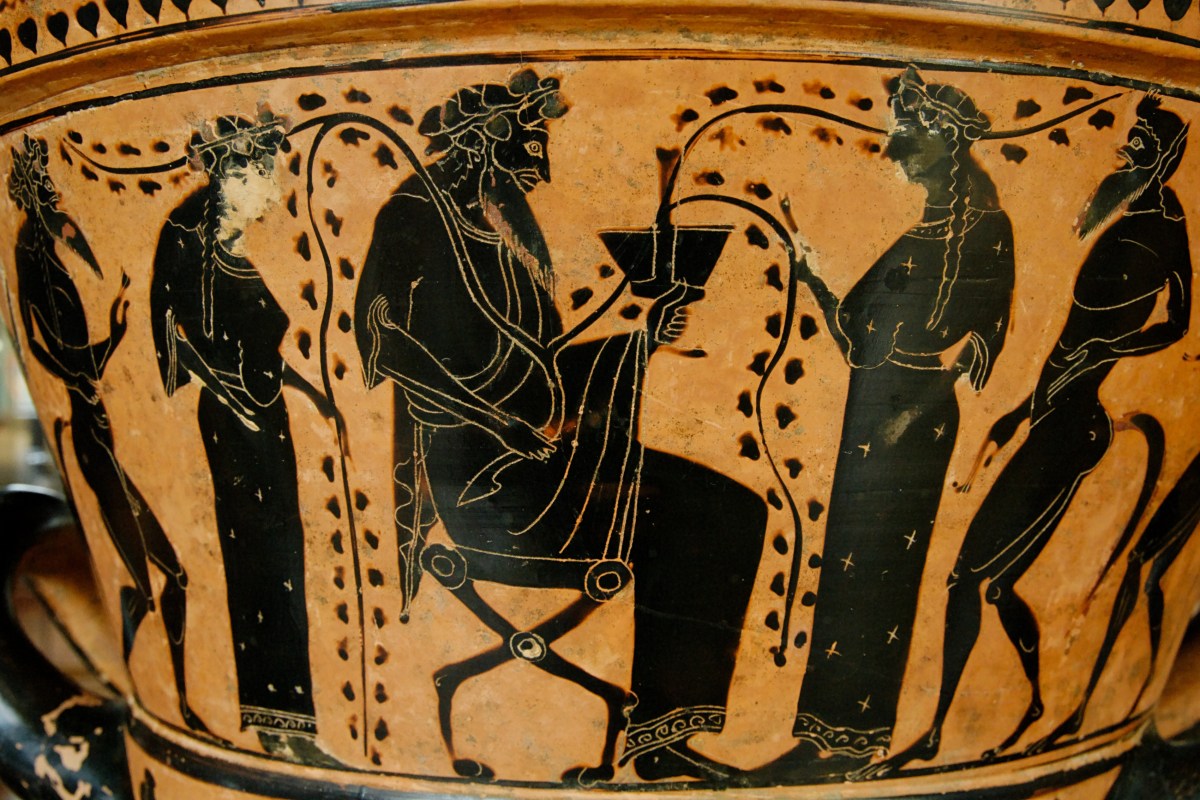
The de-sacralization of nature is a central causal factor in our ecological crisis. To guide us through these turbulent times and to help us transition to a sustainable society, we need a revolutionary approach to religion that rethinks the moral foundations of western civilization which have supported our ecocidal, repressive and hierarchical social systems.
Read MoreBuy Godless Paganism (paperback)

Buy Godless Paganism (ebook)


Pagan Coming Out Day – May 2nd

 Naturalistic Paganism