 Naturalistic Paganism
May Cross-Quarter: Vernal Equitherm
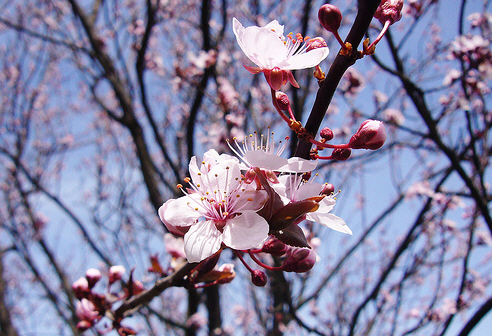
Today is the May Cross-Quarter. It is the midpoint between the spring equinox and the summer solstice. It is one of eight stations in our planet’s annual journey around the sun. For those in the Northern Hemisphere, spring is well and truly come and summer is around the corner. Flora is bursting to life even in the most northern climes, and fauna frolicks in the verdure. Those in the Southern Hemisphere experience the opposite, as autumn passes into winter.
In the Northern Hemisphere, May 1st time is traditionally celebrated in the Neo-Pagan Wheel of the Year as Beltane. The name derives from the Irish Gaelic Bealtaine or the Scottish Gaelic Bealtuinn for “Bel-fire”. Beltane is reputed as a day of unabashed sexuality, visible in the phallic symbolism of dancing round the Maypole. Read More
The Wheel of Evolution, by Eric Steinhart: Beltane

Dr. Eric Steinhart draws on his philosophical background to create a naturalistic foundation for the Pagan Wheel of the Year. To better understand axiarchism, the philosophy on which Dr. Steinhart draws to create a Naturalistic Pagan theology, see Part 1 and Part 2 of his essay “Axiarchism and Paganism”.
At Beltane, the light, which has concentrated itself into life, now concentrates itself into a novel kind of life. Evolution builds on itself. During Beltane, life reaches a new level of self-engagement: it becomes self-aware. Perhaps life achieves self-awareness on millions of planets in our galaxy. But our self-awareness includes only the history of life on earth. It is arguable that many species have reached self-awareness here on earth; and, even if they have not, in the future, they might. Human self-awareness is not the only possible kind of self-awareness. Nevertheless, it is the only kind we can authentically discuss. So, at Beltane, Pagan naturalists focus on the development of humanity.
Beltane begins with the first members of the genus Homo. As Beltane progresses, modern humans very quickly appear. These first humans reproduce, bringing the next generation into being. The wheels of human progress start rolling uphill. During Beltane each previous generation of humans is surpassed by the next generation. And while the wheels of human progress may sometimes crash down into valleys during Beltane, it is a remarkable fact that they generally roll uphill. The series of generations of humans keeps climbing the hill of human progress, towards higher heights of flourishing and prosperity. As humanity rolls through Beltane, our lives and societies on average get better and better. Nevertheless, our lives and societies suffer from terrible defects. And human self-awareness brings a new kind of suffering into the universe: it brings moral suffering, which is closely linked with social and political suffering.
The Author

Eric Steinhart is a professor of philosophy at William Paterson University. He is the author of four books, including Your Digital Afterlives: Computational Theories of Life after Death. He is currently working on naturalistic foundations for Paganism, linking Paganism to traditional Western philosophy. He grew up on a farm in Pennsylvania. He loves New England and the American West, and enjoys all types of hiking and biking, chess, microscopy, and photography.
[Rotting Silver] “Haiku Collection: Crows in Winter” by B. T. Newberg
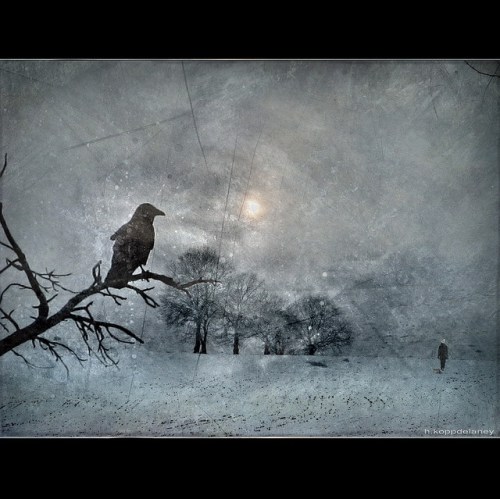
When winter descends
The somber-veteraned crows
Do not fear the cold
Undisturbed by gust
Nor gale, the well-entrenched crows
Stare down the north wind Read More
“Cities and Nature” by CrafterYearly
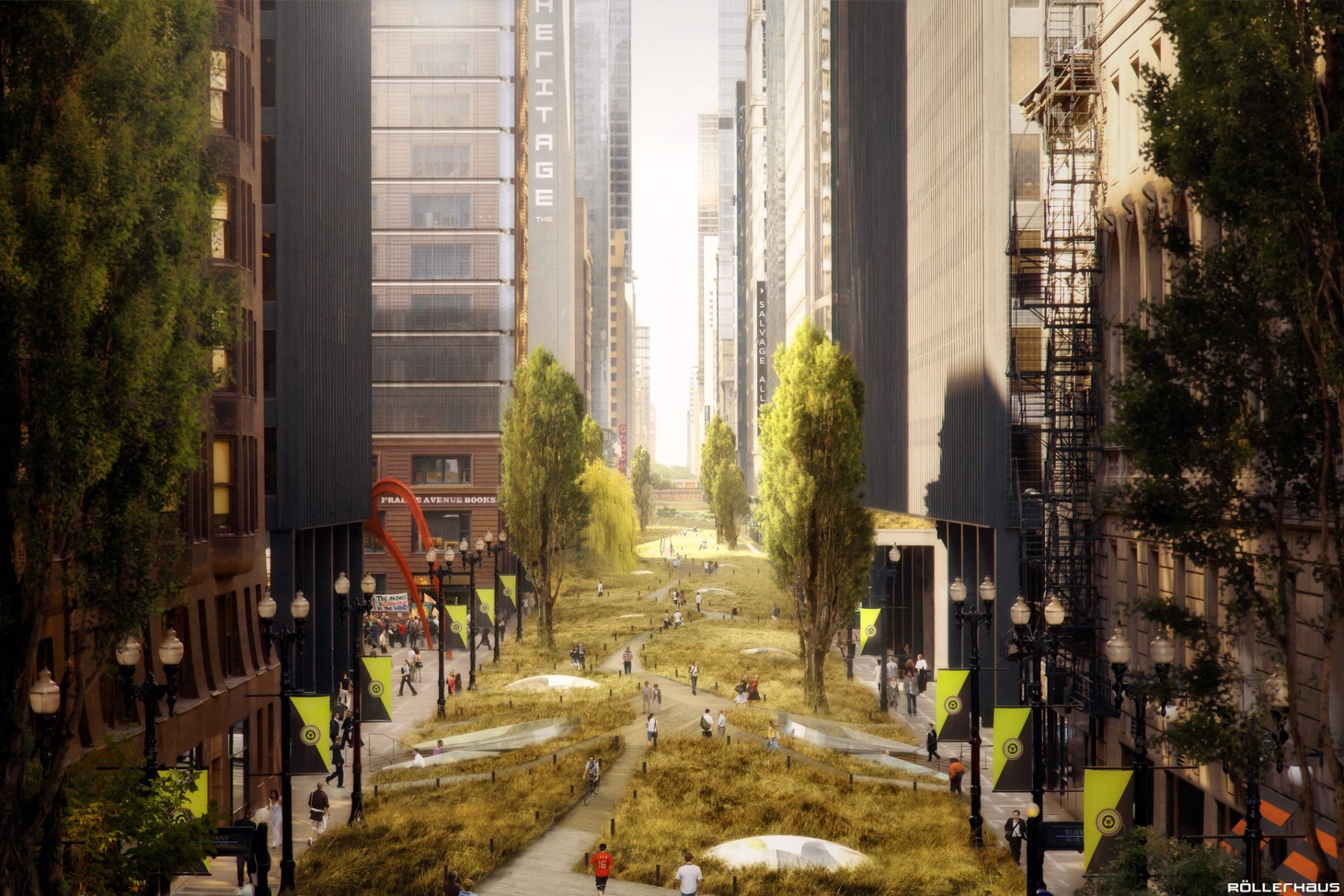
(Above: Design and think tank group, Rollerhaus, re-imagines an eco-centric future vision of Chicago.)
Since I was small, I have always loved cities. When I am in them, I feel a kind of expansiveness that is unique to my experience of a city. When I walk down streets surrounded by tall buildings, or when I wait for a train, I feel small in the best possible way. Human activity feels big. Limitless. The impossibility of knowing everyone or everything happening in that moment is humbling and exciting. Like there are possibilities too numerous to even consider. Thousands of lives I could choose for myself, magnified and made more intoxicating because of my close proximity to thousands or millions of others, each with their own set of impossibly diverse opportunities for building a life and a self.
I am an advocate for cities. And given the option, I would choose living in a city over the suburbs or even rural or isolated areas. Since I have such a strong preference for and love of cities, people are often surprised when I tell them I practice a nature-based spirituality. Loving cities and revering nature are, it would seem, for most people mutually exclusive endeavors. Read More
[Pagan in Place] “Numina loci” by Anna Walther

Editor’s Note: I am excited to announce that Anna Walther, who has been a contributor for a while now, has joined HP as a regular columnist. The name of her column is “Pagan in Place”. Please join me in welcoming her!

shoal creek
Pagan in Place is a column devoted to place-bound paganism. My goals are active engagement with my environment via meditation, walking outside, ritual, journaling, storytelling, and acts of social and environmental justice. Being pagan in place is about getting out of the house, putting foot to ground, and doing my holy work directly, at the closest creek, at my neighborhood park, at the community garden, and in my own backyard. Read More
Buy Godless Paganism (paperback)

Buy Godless Paganism (ebook)


Pagan Coming Out Day – May 2nd
 Naturalistic Paganism