 Naturalistic Paganism




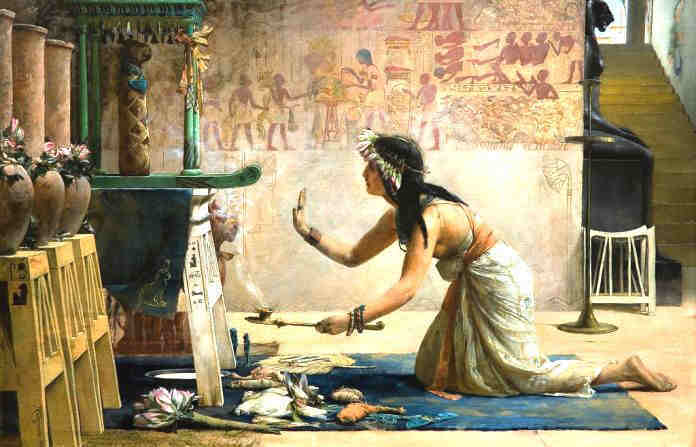
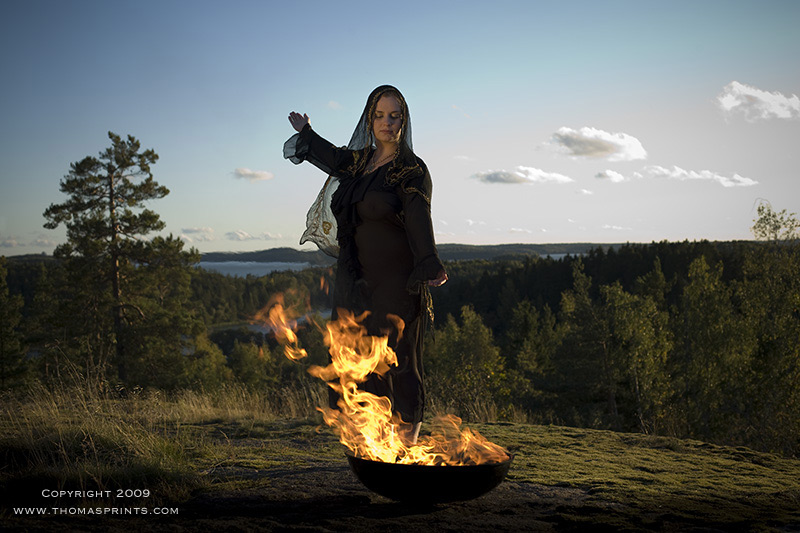
Let me ask you a question: How do you feel when you’re sitting by a crackling fire? Whether it’s a campfire under a starry sky or a fireplace in a book-lined living room, the feelings are the same. Warmth. Comfort. Well-being. Wonder and awe as you stare into the shifting, roaring orange flame, watching it snake around the wood and snap embers into the air. It almost feels…sacred.
People who lived before us — and not all that long before us — felt the same sense of reverence. Fire lit and warmed their homes, and served as the focus of family life. Fire was so important and inspirational that they gave it a name and an identity — Vesta, beloved goddess of the home, hearth and domestic life. Symbolized by a flame, she lived in the household fire.
It doesn’t matter what year the calendar reads, people are people. The people who believed in Vesta had hopes and fears, just like we do. They loved their spouse and their children. In fact, many did a better of this than we are doing, thanks to the ancient Roman virtue of pietas or sacred loyalty to one’s family. Nothing came before your family — not your personal desires, not a deity, nothing. The simple rituals of Vesta worship reinforced this sense of family devotion and solidarity.
At that time, goddess worship wasn’t a “girl thing.” Men revered goddesses as much as women did, and it was in this pagan world that marriage was first conceived as a monogamous union. This was an early step toward improving the status of women. While women had few rights, they had respect and influence and nobody imaged the feminine as “less divine” than the masculine. From hard-working husbands to powerful emperors, men looked to goddesses for comfort, guidance and protection.
Even the great Julius Caesar was a goddess guy. He claimed to be descended from a goddess and bragged about it every chance he got. Many emperors, including Augustus, minted Vesta’s image on their coins. Men wore Vesta seal rings. The Vestals, a venerated order of priestesses tasked with keeping Vesta’s sacred fire going in the temple, was the only full-time, state-funded priesthood in Rome. They lived in luxury and led a privileged life. Statues of them still line the House of the Vestals in Rome.
You weren’t weird if you worshipped a goddess. You were weird if you didn’t worship a goddess.
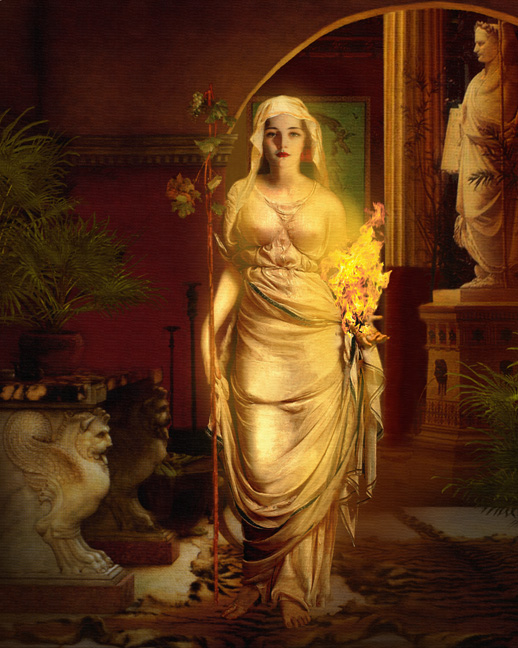
Vesta by Howard David Johnson
So imagine everyone’s surprise when the new cult of Christianity hit town. One god. Oh, and the god’s a man. Sort of. And this sort-of-man says there are no goddesses, and that women are divinely subordinate to men. He also says that, if your family doesn’t accept him into their hearts, you should leave your family and follow him. He also says that the end is near and you have two choices: believe in him and live in a golden heaven, or don’t believe in him and burn in a fiery pit.
Yikes. To a pagan man or woman who worshipped Vesta and who lived in a culture of religious co-existence, this message wasn’t just bizarre; it was deeply offensive to their beliefs and values.
Today, many people believe that pagan traditions like Vesta naturally “died out” as people chose Christ. That is false. The truth is, Christianity only became the official religion of Rome after the rise of the first Christian emperors, at a time when most people were still devoutly pagan. These emperors instituted a brutal policy of Christianization.
They passed anti-paganism laws and ordered temples to be closed, pillaged and torn down. That included the Temple of Vesta. Christian vandals smashed the heads off the statues of the Vestals (which is why most of them are headless today) and defiled the ancient statues of beloved gods and goddesses by carving crosses into their foreheads.
Yet Vesta worship persisted. As their home goddess, Vesta had protected families for centuries and was a beloved symbol of everything Romans held sacred – their history, traditions, values, way of life and especially their families. She was intertwined with their identity.
Stricter laws were passed that criminalized Vesta worship — even in the privacy of one’s home — upon pain of death. It took years of forced Christianization before Vesta’s great fire settled into embers. For most pagans, Christianity was not a choice. (Indeed, the “believe or die” approach persists in parts of our world.)
This Christianization continued as the Catholic church claimed elements of Vesta worship as its own. The goal was to make the androcentric, one god Christianity familiar enough that people would eventually forget the old ways. The powerful virgin goddess Vesta became the divinely subordinate virgin Mary. As Vesta was depicted with her favourite animal, a donkey, Mary was depicted riding on a donkey.
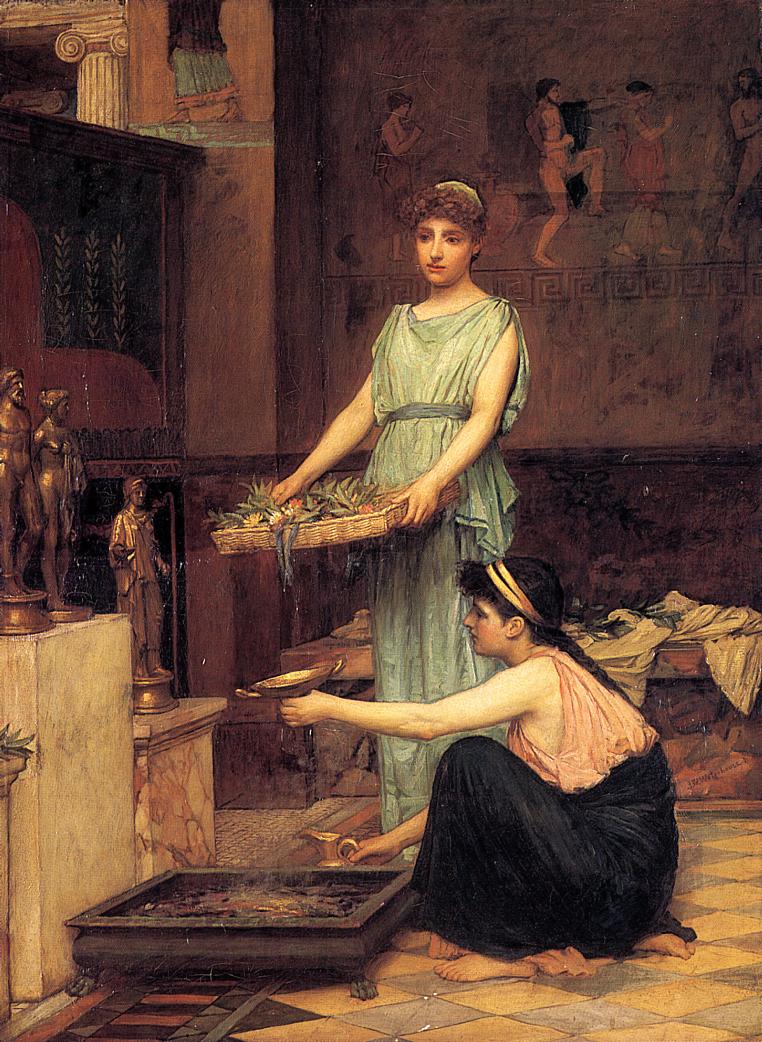
“The Household Gods” by John William Waterhouse
The sacred flame of Vesta became the flame in Mary’s immaculate heart. The privileged Vestal priestesses who served the great goddess, became the poverty-line Catholic nuns who served male priests and a male god. The salted-flour wafers prepared as offerings by the Vestals became the wafers of the Eucharist. The circular shape of Vesta’s temple became the domes of Christian churches. And so on.
All of this incites the question: Why is paganism seen as a fringe spirituality when, in truth, it is a natural form of spiritual expression? Indeed, the polytheism of paganism allows people to explore their spirituality and personality, and to find the rituals and beliefs that are most relevant to their life. You know all those different saints in the Catholic church? They were established to serve the same purpose as the pantheon of gods and goddesses. You pick the one that fits you best, and you wear it.
Winston Churchill said it best: “History is written by the victors.” How true. Once the Catholic church had sole power, it launched a smear campaign against paganism, one that persists to this day. In a recent Mass in Vatican City, Pope Francis warned people not to fall into the trap of paganism. According to the Pope — who spoke from the pulpit of the richest organization on the planet — pagans are too concerned with money and worldly desires. Another Catholic deacon attributed abortion and “toilet births” to “the return of ancient pagan practice.”
Yet despite this kind of nonsense, paganism and the Vesta tradition persist. In fact, its popularity is on the rise, especially among people who have rejected religious doctrine on moral or intellectual grounds or who have had negative experiences with organized religion. It’s also on the rise among people who are re-embracing the virtue of pietas and Vesta’s home rituals to strengthen marital and family bonds.
Vesta and modern paganism is for women who long for a spirituality that resonates with them, and who refuse to be complicit in their own subordination. It is for men who long for a natural spirituality, who don’t feel empowered by subordinating women, and who refuse to outsource their family’s morality. It is for parents who refuse to teach their daughters they are “less” than men.
It’s for people with humanist values such as gender equality and personal autonomy, who embrace science and reject the indoctrination of children into supernatural belief, and who don’t believe that “mankind” has the “god-given right” to exploit the Earth or its life. It’s for people who believe in co-existence and feel that spirituality, like life itself, should be dynamic and open to positive change.
We have this idea in the modern world that “we’ve arrived.” We know best. The past was somehow less relevant than today, and we don’t see those who lived before us as real people with important things to say. Their traditions are seen as mere stepping stones that got us where we are now. Their society’s spirituality is seen as less sophisticated and valuable than our society’s religions. A quick scroll through today’s news headlines should be enough to shatter this kind of presumptuousness.
Despite spending most of my life as an atheist, I have come to realize that spirituality is part of the human condition. So is the ability to think for oneself, to follow one’s own moral compass and to challenge stereotypes that others have created for their own purposes. If you agree, you might have a spark of Vesta’s ancient fire in you after all.
Visit NewVesta.com to learn more about the renewal of this ancient tradition.





 Naturalistic Paganism