 Naturalistic Paganism
[Rotting Silver] “Karma” by B. T. Newberg

There is only one stream of karma: cause and effect.
There is only one stream of karma: that of the entire ecosystem.
There is no individual karma, all is inextricably bound together.
There is no individual karma, all return to the earth equally at death.
The good receive their just reward: rejoining nature, freed of ego.
The bad receive their just punishment: annihilated into nature, freed of ego.
Rejoining the original influence, the good are physically recycled for the nutriment of all.
Expunged of ill influence, the bad are physically recycled for the nutriment of all.
Those who wish worse for the bad misperceive their place in the ecosystem.
Those who wish better for the good misperceive their place in the ecosystem.
They think individually, but they are not individuals.
They think individually, but they are the one earth.
There is only one stream of karma: cause and effect.
There is only one stream of karma: that of the entire ecosystem.
Rotting Silver is a column devoted to this Earth in all its tarnished radiance: poetry, prose, and parables of ugliness alloyed with joy.
Parts of this piece were first published at The Witch’s Voice.
The Author

B. T. Newberg: Since the year 2000, B. T. has been practicing meditation and ritual from a naturalistic perspective. He currently volunteers as Education Director for the Spiritual Naturalist Society, where he is creating an online course in naturalistic spirituality. His writings can also be found at Patheos and Pagan Square, as well as right here at HP.
Professionally, he teaches English as a Second Language. After living in Minnesota, England, Malaysia, Japan, and South Korea, he currently resides in St Paul, Minnesota, with his wife and cat.
After founding HumanisticPaganism.com in 2011 and serving as managing editor till 2013, he now serves as advising editor, and feels blessed to be a part of this community.
“Seeing the Trees for the Dryads: Non-Theistic Nature Worship” by John Halstead

You weary Nations,
perhaps I am some new being you’ve never encountered before.
Yet there is nothing about me you can’t recognize.
I live in the place where you perceive nothing.
Look again!
— Geoff Bartley, “The Language of Stones”
Some Pagans find non-theistic forms of Paganism strange. They may wonder what the point of non-theistic Paganism is in the absence of a belief in deities who are aware of and responsive to us. One polytheist friend of mine, Lupus, has argued that traditional forms of religious worship must be “irrelevant” to more scientifically-informed forms of Paganism. He explains that, for religious worship to make sense, one must believe in an animating spirit in Nature or “something else beyond what is strictly physical and what can be proven by science”. Read More
Call for Articles: Ancient Paganism and the Neo-Pagan Revival
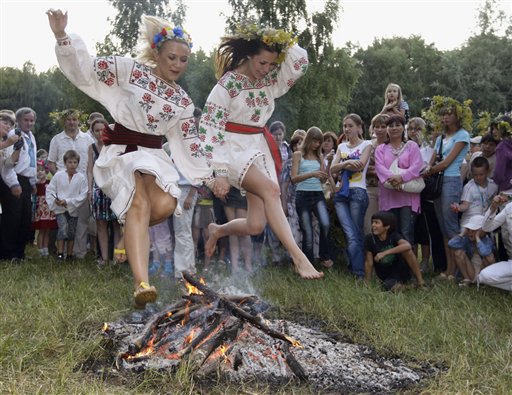
The last pagan emperor of Rome, known as “Julian the Apostate” or “Julian the Philosopher”, died on June 26 in 363 CE. His death is commemorated by some contemporary Pagans. The founder of British Neo-Pagan witchcraft Gerald Gardner was born also in June (13th) in 1884, the same month (June 22) that the Fraudulent Mediums Act was passed in the UK in 1951, repealing the Witchcraft Act of 1735 and making it possible for Gerald Gardiner to go public with his witch cult. In honor of Emperor Julian and Gardner, our themes for the month of June will be ancient Paganism and the Neo-Pagan revival. You can write about one or the other, or both. Send your submissions to humanisticpaganism [at] gmail [dot] com.
Looking forward, our themes for July will be individualism, religious tradition, and gender issues.
“Was the Buddha a Humanistic Pagan?” by Tom Swiss
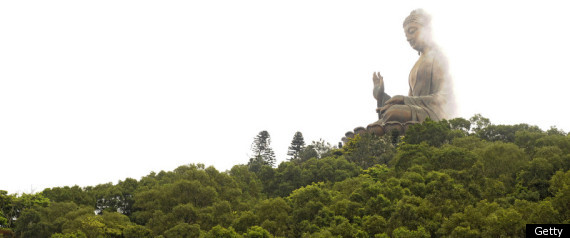
“So Siddhartha sat down under a tree”
Let’s start with a quick overview of the Buddha’s story. About 2,400 or 2,500 years ago a young prince in what is now Nepal, Siddhartha Gautama of the Shakya clan, became more interested in spiritual matters than in politics and government. (Or perhaps his father was an elected chieftain in a sort of republic rather than a king – the history is at best shaky.)

Why the Buddha touched the Earth
The legendary version involves a prophecy made at his birth, an incredibly sheltered childhood, and his sudden discovery as a young man of the existence of old age, sickness, and death. Almost overcome by the shock, Siddhartha discovered the existence of spiritual traditions. Thinking these must hold an answer as to how to deal with the suffering he had just learned about, he left home – abandoning his wife and son – to go study various meditation systems. Read More
A Review of Tom Swiss’ “Why the Buddha Touched the Earth”, by Ken Apple

 Why the Buddha Touched the Earth by Tom Swiss, is a book trying to do a lot of things at once. It is a 101 class on Buddhism, with sections on the Four Noble Truths, the Eightfold Path, and a quick lesson on meditation. There is a section on Buddhist ethics — Swiss is all in on vegetarianism (I am an omnivore, thank you very much) and a little more leery of the advice of celibate Buddhist monks on sexual matters. There is less on the Paganism 101 side, although he does tackle magic and ritual, which he sees as mainly psychological. He stays well within the humanistic point of view. The non-deists and outright atheists out there will find little to disagree with. Swiss gives us a wonderful critique of religions that look away from our world, and a sly dig at the strand of scientism that does the same. Read More
Buy Godless Paganism (paperback)

Buy Godless Paganism (ebook)


Pagan Coming Out Day – May 2nd

 Naturalistic Paganism