Naturalistic Paganism

“I Don’t Believe in Purification” by Shauna Aura Knight

I’m a Pantheist. I believe that the entirety of the world, of the universe, is divine. So the idea of “making sacred space” or “purifying” doesn’t really fit into my theology or cosmology. On the other hand, a lot of the ritual facilitation work that I do is about working with people and their processes. I tend to think of psychology as a kind of magic because it works to understand people and how they work, and for me, those patterns and processes are a part of our nature, and thus, part of the divine as well.

Heros-Journey-Circle

Psychology, architecture, the process of pilgrimage, and the hero’s journey show us that we need steps in order to change our state of consciousness.

For me, the part of the ritual that is often referred to as “making sacred space” is more about getting everyone involved in the ritual into the right mindset, the right headspace. And if I look at psychology, and architecture, and the process of pilgrimage, and the hero’s journey…and I look at that alongside the natural world and the shapes and patterns found in nature, this makes a lot of sense. Read More

“Exploring the Historical Roots of Naturalistic Paganism” by B. T. Newberg

This essay was originally published at The Agora: The Central Hub for the Patheos Pagan Channel.  This is the first of a series entitled “Naturalistic Traditions” previously published at Agora.

Were there Naturalistic Pagans in the ancient world?

This is the central question of a series of essays called “Naturalistic Traditions” which I published at Agora exploring the historical roots of naturalistic ways among Pagans.

Many may assume that Naturalistic Pagans, who tend to be agnostics or atheists, are an exclusively modern phenomenon.  The “Naturalistic Traditions” series questions that assumption, probing various historical Pagan traditions for something resembling naturalism.

The significance of this project goes beyond naturalism.  Indeed, it calls into question the historical consciousness of Pagans in general.  If there were naturalists among ancient Pagans, how might that change the way we see the myths and traditions on which Pagans of all styles of belief base their practices?

By exploring these issues, we may gain an expanded sense of the historicity of the diverse styles of belief common in Paganism today.  This series focuses on just one of those styles: naturalism. Read More
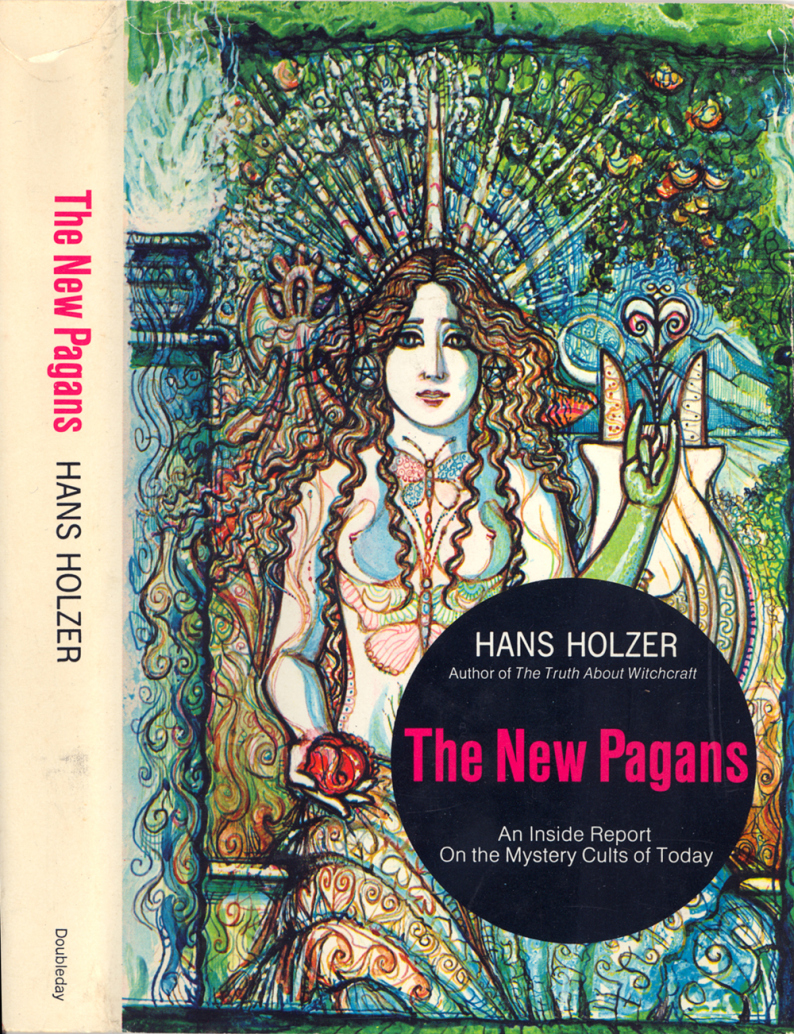
“A Brief History of Neo-Paganism” by John Halstead

This essay was originally published in multiple parts at Neo-Paganism.com.

A Modern Tradition with Ancient Roots

Neo-Paganism has its roots in the 19th century Romantic movement in England and Germany which saw ancient paganism as an ideological and aesthetic counter to the influence of Western modernity and industrialism. Read More

[Pagan in Place] “Home Base Practice” by Anna Walther

Pagan in Place is a column devoted to place-bound paganism. My goals are active engagement with my environment via meditation, walking outside, ritual, journaling, storytelling, and acts of social and environmental justice. Being pagan in place is about getting out of the house, putting foot to ground, and doing my holy work directly, at the closest creek, at my neighborhood park, at the community garden, and in my own backyard.


The elements, plants, animals, and seasonal patterns that inspire my practice manifest in specific places; therefore I must be grounded in a specific place in order to interact with them. To become rooted in place, Starhawk suggests choosing a “home base” or “secret spot” from which to observe the change of seasons (56-58). She suggests the backyard or a neighborhood park, but any place that is accessible on a daily basis will do. A home base for practice need not be wilderness; cities, with their unique structures, communities of organisms, and seasonal changes, are nature, too. The key part of a home base practice is simply showing up over and over again with a sense of curiosity and wonder. How do air and water flow through the environment? What communities of organisms grow together? What changes over time, and how? What patterns can be perceived? See the “Where You At?” quiz in Chas Clifton’s essay “Nature Religion for Real” for bioregional knowledge questions that could be applied to a home base, too. Read More

[Starstuff, Contemplating] “Hearing our Ancestors” by Jon Cleland Host

At times, our Ancestors can seem closer or farther away, though they are always within us – in our trillions of copies of our DNA. Though Samhain is half a year away, here is one of many times that I heard my distant Ancestors.

Around Beltane, 2006, I went on a business trip to Copenhagen and made sure to book a few extra free days to explore. Because all of us with European descent have some Viking ancestry1, I was hoping to find sites that were important to my Ancestors and had vague ideas of marking Beltane with a short ritual as well. After asking about Neolithic sites, I was directed to the National Museum, and eventually an archeologist recommended the local museum in Vaerlose. Between her broken English and my broken German, the kind woman there understood that I was interested in Neolithic sites, and gave me a map, pointing out the little circles. Wow – they were all around! Read More