 Naturalistic Paganism
Mid-Month Meditation: “Nietzsche’s Unknown God”
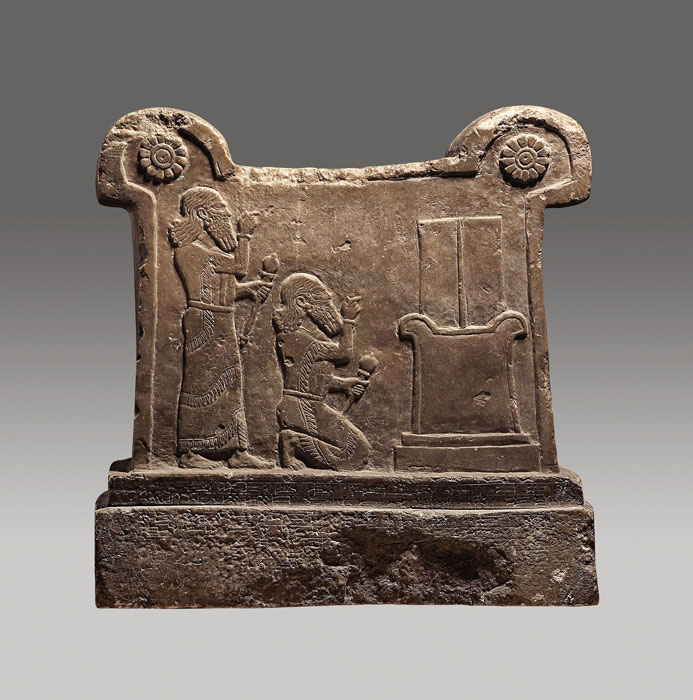
This month, we remember the death of the German philosopher, Friedrich Nietzsche ( 1844-1900). Nietzsche is perhaps best known for his declaration that “God is dead”, published in his 1882 work The Gay Science. On the basis of that statement, many commentators regard Nietzsche as an atheist. Others, however, suggest that Nietzsche had a more subtle understanding understanding of divinity. Two poems by Nietzsche, one written early in his life and another near his death, invoke an “Unknown God”. Read More
“Pantheism, Archetype, and Deities in Ritual, Part 3” by Shauna Aura Knight

Note: This series is a follow-up to my essay, “I Don’t Believe in Purification”. In this 3-part series, I offer some additional context for my approach to deity, spirituality, and ritual.
Divine Communion and Ritual Goals
What strikes me as a bit of a paradox is that one of the core pieces of any of the rituals I do is trying to help people get to divine communion. I’m trying to get ritual participants in real connection with the divine. With their own gods and spirits, if that’s their theology, even if I don’t share their theological views.
I’m doing that through ecstatic trance techniques with chanting, dancing, singing, drumming, movement…with open-language and multi-voice trance journeys…with the structure of the ritual itself.
The rituals I facilitate generally have three goals. To help people connect together as a community, to help people connect to their deep selves and/or connect to the divine, and to help people engage in personal and spiritual transformation, to help each person step into their best selves. Read More
“Pantheism, Archetype, and Deities in Ritual, Part 2” by Shauna Aura Knight

Note: This series is a follow-up to my essay, “I Don’t Believe in Purification”. In this 3-part series, I offer some additional context for my approach to deity, spirituality, and ritual.
Deities or Archetypes?
In general, but specifically in ritual, I tend to work with deities as archetypes, as stories. I’m a mystic, but I also have a scientific bent. I think about the various stories of the gods, and culture and sociology and how cultures form around their stories, and around their environment. And I think about how deities change over time just as language changes over time. The Greek word Zeus and Latin Deus and Norse Tiw (Tyr) all come from an Proto-Indo-European root word deiwos. I believe that gods changed over time just as cultures spread and changed and became unique from one another. In fact, if you want a great overview of gods that are connected to each other in function, as well as the etymology of their names/language, this is a fantastic place to start. Read More
“Pantheism, Archetype, and Deities in Ritual, Part 1” by Shauna Aura Knight

Note: This series is a follow-up to my essay, “I Don’t Believe in Purification”. In this 3-part series, I offer some additional context for my approach to deity, spirituality, and ritual.
When I lead a ritual, I’m far less concerned with teaching and enforcing any given theology than I am with getting ritual participants to a place where they can commune with the divine. And, if they aren’t theistic at all, perhaps that’s more just getting people to a place where they can connect to their deep inner wisdom. I identify as a pantheist, so I’m usually going to refer to that “something” that I’m helping people connect to as the divine, as deity, as archetype, as mystery.
I see it as divine communion, but not with something external or “above.” I see it as connecting to the divine within us that always was, we just can’t stay in a constant state of perceiving that divine. If the ritual is working for my participants, that’s all that matters to me. Read More
“Steps Toward A Dionysian Naturalism: Making the Earth Sacred in a Time of Ecological Disaster, Part 3” by Wayne Martin Mellinger, Ph.D.

This is Part 3 of a 3-part series.
Spiritual Practices to Make the Natural World a Sacred Object
Modern secular society tends to regard the natural world as something for humans to use. This “utilitarian creed” is reinforced by an extreme anthropocentrism in which humans constantly imagine that it is all about them–that the world exists solely to satisfy human desire. They worship the gods of Progress, Economic Growth and Profit, and faith in this trinity has led to a near ecological collapse. Humans are so asleep to the consequences of this mechanistic conception of nature that we need a revolutionary religion to jolt open our eyes and awaken us to the world we’ve created. We are born of the earth, live all our days within it and shall ultimately return to it. Read More
Buy Godless Paganism (paperback)

Buy Godless Paganism (ebook)


Pagan Coming Out Day – May 2nd
 Naturalistic Paganism