Naturalistic Paganism
[Starstuff, Contemplating] “Gather together: Harvest and Community” by Heather and Jon Cleland Host

“Look, here’s another one – with a yellow neck!” “Wow! This one is like a green and yellow striped football!”
The kids excitedly gathered the gourds. Our tiny little garden, only about 5’ by 10’, had produced a big pile of gourds of all different kinds.
“This one has yellow stripes, but no neck. This one has warts, this one has these little horn things, this one’s white, but like a little pumpkin, this one’s really big, this one is green and yellow, these have little curved necks….. Why are they so different?”
“It’s because of their DNA,” one of them declared knowingly to his younger brother.
“Yeah, but they are all from the same two kinds of plants. Why are they different shapes?”
“Mutations! They are mutated gourds!” Read More
“A PaGaian Perspective” by Glenys Livingstone, Ph.D.
This is an edited excerpt from the author’s book PaGaian Cosmology.
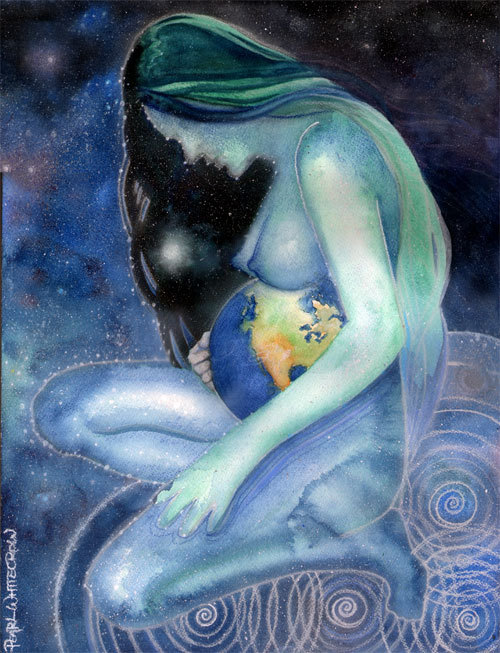
I long considered the practice of my spirituality to be Gaian, encouraged by Charlene Spretnak’s use of the term[1]: that is, it is an Earth-based spirituality, which requires only birth, not baptism, for belonging. We are all native to Gaia; all humans are indigenous to Her, though as Primordial Mother She does have many names around the planet. We do all issue forth from the same Origin. Gaia, as I understand Her however is not only Earth; She is Cosmos. The same Creative Dynamic[2] that flourishes in Earth is assumed to be the same Creative Dynamic present throughout the Universe. Earth-Gaia is seed and jewel of a larger living Organism. Earth-Gaia is our Mother, but She is Daughter too, of an essential sentience that seethes through the Universe. The only faith required in this spirituality is in the Teeming Abundant Creativity (a name for Deity?) that has been manifesting on this planet in a particular way for some billions of years, and throughout the Cosmos for about thirteen point seven billion years. This is not a flimsy track record! Perhaps, as James Lovelock has said, this is “as near immortal as we ever need to know”[3]; or as Susan Griffin said more poetically, “at no instant does She fail me in Her presence.”[4] Read More
“The Gaea Hypothesis: An Overview” by Dana Corby
This article was first published in The Crystal Well in Spring 1976.
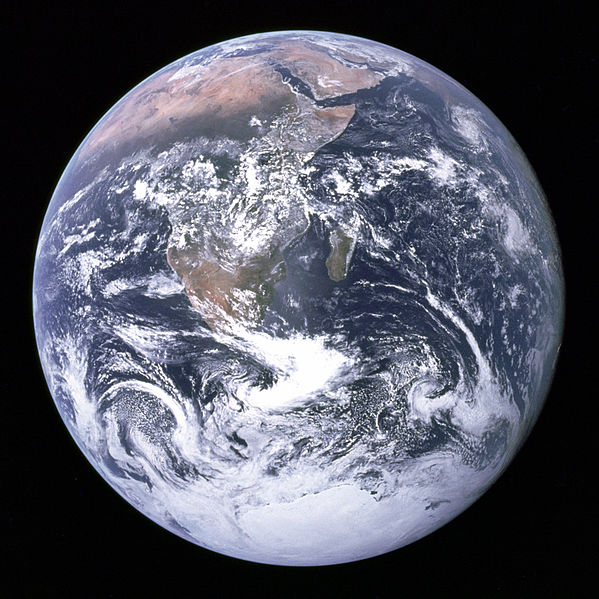
In the late 1960’s, a photograph appeared in magazines, on television screens, front pages and posters, all over the world. It was a photograph taken from space, of the Earth itself, and it radically changed the way human beings viewed this lovely planet of ours.
It is no coincidence that the ecology movements became “respectable” shortly afterwards. Never before had it been possible, except philosophically, to perceive the Earth as a whole. Never before had humans been brought so forcefully to awareness that there really wasn’t “someplace else” we could go to when we had thoroughly fouled our own nest. Read More
“Gaia Is Dead. Long Live Gaia!” by Bart Everson
This essay was originally published in 3 parts at Celebration of Gaia.
Gaia is dead.

On Gaia: A Critical Investigation of the Relationship Between Life and Earth by Toby Tyrrell is a devastating book. Devastating, that is, to the Gaia hypothesis. It’s also quite fascinating. This is recommended reading for anyone who lives on Earth and has a brain.
The author aims to investigate the hypothesis, formulated by James Lovelock in the 1970s, “that life has played a critical role in shaping the planetary environment and climate over ~3 billion years, in order to keep it habitable or even optimal for life down through the geological ages.” (from Q&A with Toby Tyrrell)
Tyrrell offers evidence and argument in roughly equal measure. The empirical evidence is drawn from a diverse array of sources, most notably evolutionary biology and Earth system science. The philosophical arguments include an extended meditation on the anthropic principle and its implications. Read More
“The Death of God and the Rebirth of the Gods” by John Halstead
“God is dead. God remains dead. And we have killed him. How shall we comfort ourselves, the murderers of all murderers? What was holiest and mightiest of all that the world has yet owned has bled to death under our knives: who will wipe this blood off us? What water is there for us to clean ourselves? What festivals of atonement, what sacred games shall we have to invent? Is not the greatness of this deed too great for us? Must we ourselves not become gods simply to appear worthy of it?”
— Nietzsche, The Gay Science (1882)
In 1882, Friedrich Nietzsche declared those fateful words:
“God is dead.”
Almost 100 years later, David Miller declared, in The New Polythesism (1974),
“The death of God gives birth to the rebirth of the Gods.”
Sometimes the gods have to die in order for us to rediscover the gods. Read More
Buy Godless Paganism (paperback)

Buy Godless Paganism (ebook)


Pagan Coming Out Day – May 2nd