 Naturalistic Paganism
[A Pedagogy of Gaia] “The Surprising Results of Magical Thinking” by Bart Everson

If you should ever venture down to New Orleans, I hope that you will take a stroll (or a bicycle ride) on the Lafitte Greenway. Besides being a fine example of greener urban infrastructure, this path has a story behind it. It’s a great example of the power of magical thinking.
The trail stretches almost three miles, starting near the famous French Quarter and proceeding through neighborhoods such as Tremé, Lafitte, and Mid-City, almost to Lakeview. Construction was only completed in 2015, but the story goes back much further.
It’s Easy to be Pagan in the Wild, by Lupa Greenwolf
It’s easy to be pagan in the wild. It’s easy to find the heart of a nature-based pagan path when you’re immersed in a quiet forest or secluded desert highway. Connecting with the divine is a simpler act when your breath catches at the sight of a graceful doe or soaring raptor. Inspiration flows when viewing a wild river or the pounding waves.
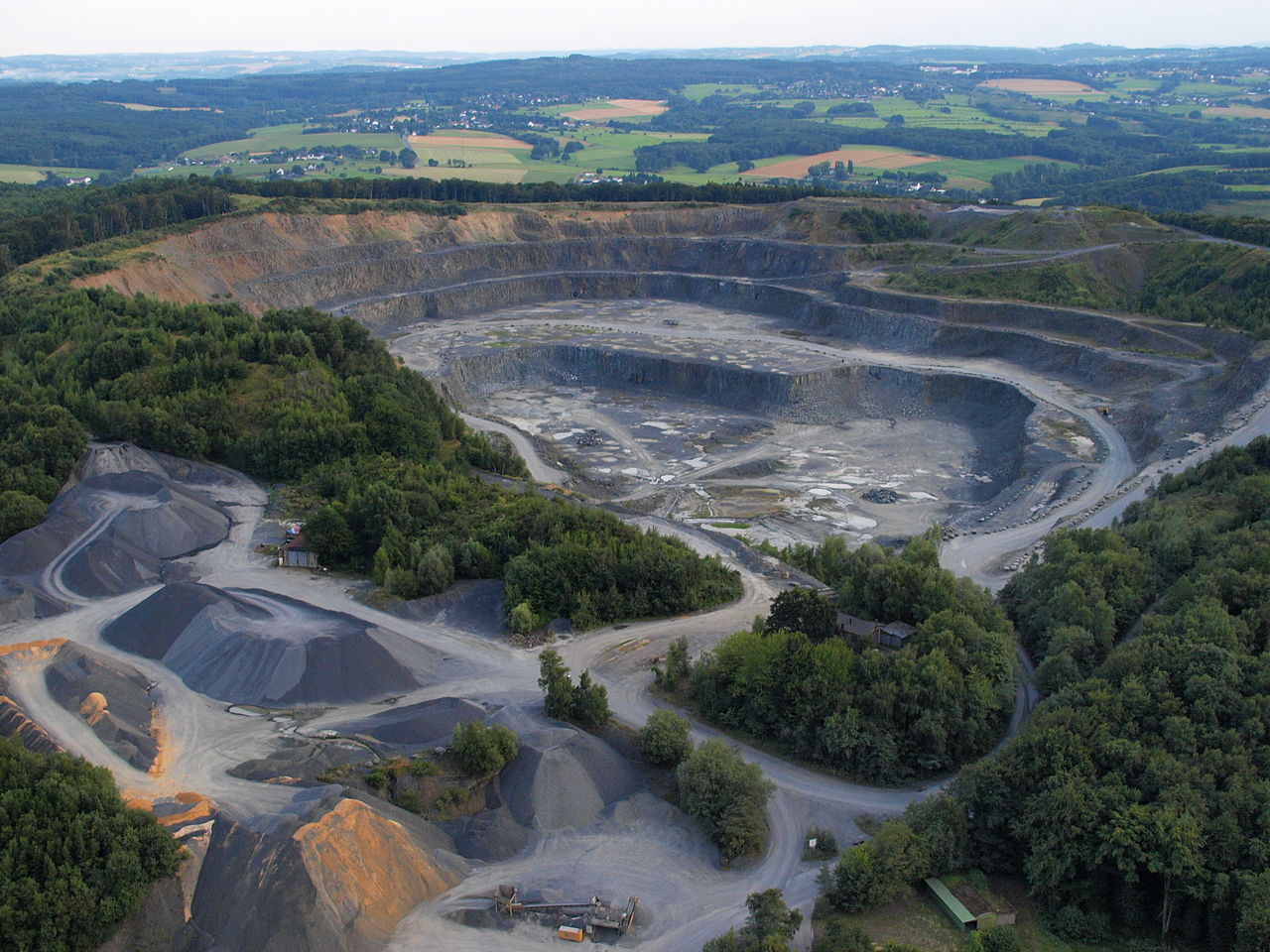
It takes more effort to see the sacred in human-dominated places, where we have so changed the landscape that it’s hard to see what was there before our arrival. Cow pastures and corn fields at least give us some green, growing things to look at and wonder upon. But what about deep within cities, with graffiti-tinged cement and stinking hot asphalt under the burning summer sun? Where is the sacred in a clearcut, or a landfill, or a mountaintop mine?
To me, everything is sacred and deserving of reverence–every bit of it. If anything, it is the missing peaks and filth-choked rivers that need reverence even more, for we have forgotten they are holy. We turn away from them in their time of distress, and seek out places that are more pure and easier to be with. Even I, after fifteen years of brick and concrete and steel, have finally found an avenue to escape for more than a few days at a time–and I’m taking it, by gods.
Like any human animal, by sheer weight of evolution alone I need the respite of relatively untrammeled places, where I can remember that I am a part of a vibrant, multi-species community. All those who work toward a better world need space to care for themselves, places where the fire is not burning so hot, away from the storm-stripped tornado’s path. It is a privilege to be able to step away from war and squalor, to only see refugee camps on television and not in person–or at home. And we share the effects of that privilege by diving back into the fray once we’ve had some time to recover.
It’s hard to look upon the damaged and destroyed. But if we are going to be truly naturalist pagans–nature-based in word and deed–we can’t look away forever. Nature is all things, us included, and to deny ourselves a place in that community, and the responsibilities that come with it, only enables further destruction. We have to celebrate the places that are no more than haunts, those that have been uprooted, those that have evaporated entirely. We need to find the sacred in traumatized eyes and bleeding wounds, in toxins suffusing soil and oil spreading through the Gulf, in the poacher’s rifle and the developer’s plans.
This does not mean we have to accept that things must stay their current course. We can work to move the momentum of an entire world in a healthier, more sustainable direction. We can extend our hands to those in need, human and not, and pull them out of dire circumstances.
But in order to do so, we must be willing to engage with all of it. We must not look away all the time. We must be as pagan in the city as we are in the wild.
Did you enjoy this post? Please consider buying my newest book,Nature Spirituality From the Ground Up, which is meant for people in any setting to connect with nature, whether urban, rural or somewhere in between.
Lupa

Lupa is an author, artist, and neoshaman living in Portland, OR. She earned her Master’s degree in counseling psychology in 2011, with a specific focus on ecopsychology, as a way to integrate the healing and intermediary work of shamanism with a broader cultural and humanistic framework. When she isn’t engaged in creative chaos in her studio, Lupa may be found hiding out in the Columbia River Gorge. Otherwise, she’s online at http://www.thegreenwolf.com and http://therioshamanism.com.
Late Spring Theme: Challenges!
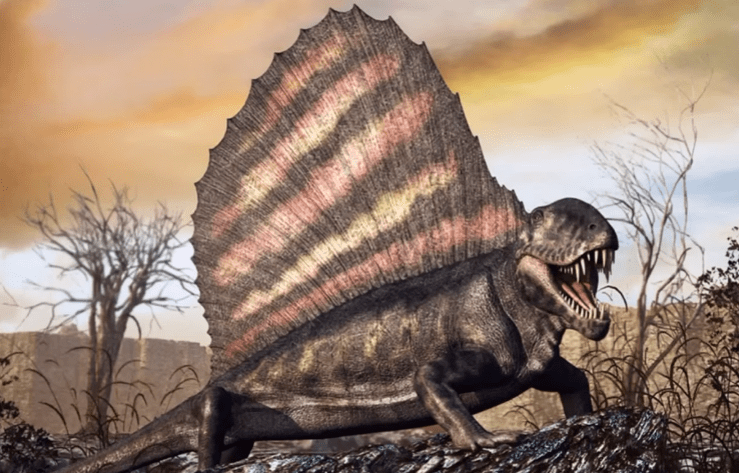
In Deep Time, late spring can span the time from the Cambrian to the early Mesozoic – a time during which life moved onto land, including, belatedly, our vertebrate Ancestors. Surviving on land required many deadly challenges to be overcome. Similarly, our lives are often filled with challenges that can cast us into depression and despair. Are there ways that your Naturalistic & Humanistic Paganism helps you through those times? Perhaps, as we’ll see soon, with trees? As with all themes, this just an optional muse.
Lat Spring (May 1 – Jun 20)
Cosmic event: Animal diversification to the Dinosaurs
Theme: Challenges
Questions: What challenges do you, or we, face? How can our spirituality help us?
Happy Spring Equitherm!
Celebrations
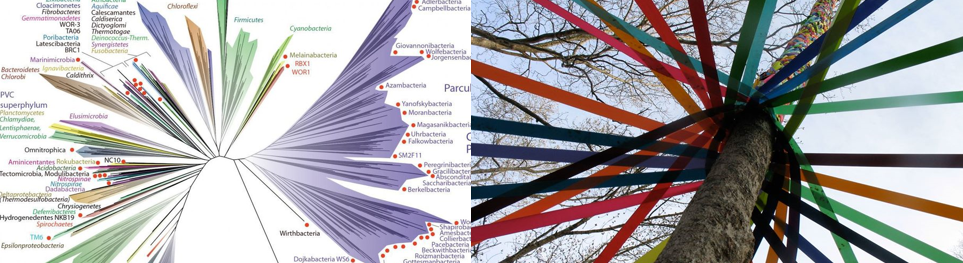
Life! What amazing forms life takes! Scientists published this new look at our extended family tree just in time for our Beltane celebrations of life, and Mark Green pointed out how similar it looks to a maypole. Perfect for Beltane!
Some of the ways many of us are celebrating were published a few weeks ago, and at least for my family, celebrations have already started with our CUUPS Beltane ritual last night. It was especially fitting to see the celebrant hold the ritual wearing a shirt with a Mexican Day of the Dead skull, reminding us of the symmetry of life and death, of Beltane and Samhain – as Glenys does here. And did you see the Edinburgh Beltane Fire Festival? Wow – 12,000 people celebrating Beltane! I’d love to make it to that some year. For some of us, the celebrations will be later this week – the actual midpoint between the Equinox and the Solstice is May 5th. However you are celebrating, may your be celebration be blessed.
Longing and Contradiction in (Re?)Creating Modern Paganism by Emile Wayne
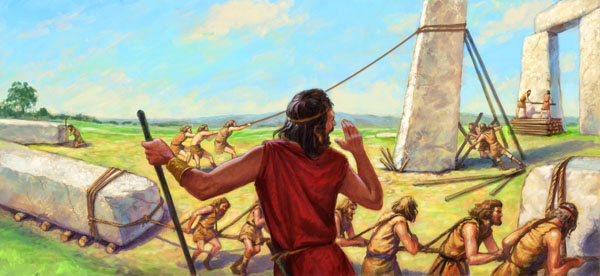
The emergence of modern Paganism in the post-industrial West in the 20th and 21st centuries presents a unique set of challenges and opportunities for those engaged in critical reflection on the nature of this movement, on its defining qualities, and on the specific character of Pagan spirituality. The difficulties and opportunities I will describe are very much those I have personally come to identify, as part of my own struggle to articulate what it is I am a part of , and what I hope to produce. Read More
Buy Godless Paganism (paperback)

Buy Godless Paganism (ebook)


Pagan Coming Out Day – May 2nd
 Naturalistic Paganism