 Naturalistic Paganism
Potok and the Hundred-Thousand Year Fire—A Campfire Tale, by Mark Green [an Atheopagan Life]

There was a night—long, long ago—when we had captured fire.
This was many years before we knew how to make it. We found it in a tree which had been struck by lightning, carried it in a gourd to where we made a camp.
And that night, we gathered around where the fire was fed to grow fat and snapping. We saw one another’s faces in the flickering light, and felt the warmth even in the dead of night.
Book Review Special: Malala Yousafzai and Maajid Nawaz by Megan Manson
“Extremists have shown what frightens them the most: a girl with a book.” – Malala Yousafzai
On May 22nd, Salman Ramadan Abedi bombed the Manchester Arena following a concert by Ariana Grande. He used a nail bomb, designed to maim and mutilate. He murdered 22 people and injured 116 others. Many of his victims were children. The youngest of the children he killed was eight years old.
Like everyone else in the UK and throughout the world, I am trying to get my head around what has just happened. In attempt to grasp what could have possibly led to this brutal atrocity taking place in my country, conducted by one of our citizens against our children, I have turned to the weapons that terrify the terrorists: books. So this month, instead of the usual monthly round-up of Pagan and Shinto books, I have looked at two very different, yet oddly parallel, autobiographies by two Muslims whose lives have been directly intertwined with Islamic extremism.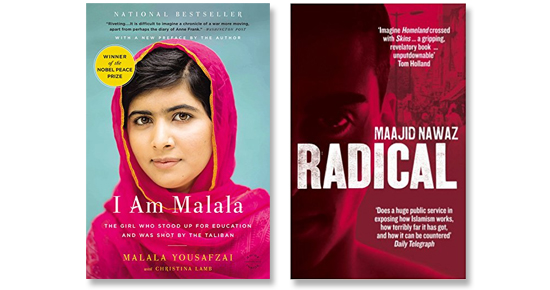
The first is I Am Malala, the autobiography of Malala Yousafzai, a Pakistani activist who was shot by the Taliban at the age of just 15. The second is Radical by Maajid Nawaz, a British-born Muslim who turned away from Islamist politics after being captured and tortured in Egypt and now works to end extremism.
I Am Malala tells Yousafzai’s life story, from her childhood in Pakistan’s Swat District up to her attempted assassination and treatment in the UK. A bright and studious girl, Yousafzai began speaking up for the rights of women in Pakistan, and particularly the right of girls to go to school. Through the course of her life, we see how the world around her becomes increasingly dangerous. Conservative Islamist ideology gains popularity with worrying speed. The Taliban grows more powerful and more vicious, destroying schools, whipping people in public and forcing women into purdah (secluding themselves from society by wearing face coverings and minimising their contact with the outside world). Within this oppressive environment, Yousafzai persisted in speaking out against the Taliban. She blogged for the BBC to reveal to the world what life under the Taliban is like, and made public TV appearances advocating the right of women to be educated. She received national awards for her activism alongside death threats from the Taliban and their supporters.
Yousafzai nearly died for her beliefs. In 2012 she was shot by a member of the Taliban while riding a bus home from taking an exam. She was airlifted to the UK to be treated, and the rest is history. This incident, which at once revealed the barbarity of the Taliban and the extraordinary bravery of Yousafzai, propelled this young girl to world fame. She eventually, and very deservedly, won the Nobel Peace Prize for her courageous work.
While I Am Malala is the account of a gentle and inspirational individual whose persistence and entirely non-violent actions are helping women to overcome oppression, Maajid Nawaz’s Radical is a very different story. In some ways, Yousafzai and Nawaz are mirrors of each other: Yousafzai is a Pakistani Muslim girl and victim of Islamist extremism who embraces the secular liberal democracy of the West when she comes to live in the UK, while Nawaz is a British Muslim of Pakistani heritage who, for much of his life, rejected Western ideals in favour of sympathising with extremists who actively attack the West. His journey is fascinating and eye-opening. Growing up in Essex in the 90s, Nawaz suffered racist bullying as a young child and was later subject to racially-motivated attacks from white skinhead gangs as a teenager – experiences that would have far-reaching repercussions in his future. As an impressionable youngster he was recruited by Hizb ut Tahrir (HT), an Islamist organisation that aims to establish an Islamic Caliphate and considers itself at war with the West. On travelling to Egypt as part of his university degree, he was captured by officials (HT membership is illegal in Egypt) and threatened with torture. His case was eventually taken up by Amnesty International and he was released. His experiences caused him to re-think the ideology which he adopted and he decided to renounce Islamism entirely. Nawaz went on to co-found Quilliam, a counter-extremism organisation, and has advised the British government on combating Islamic extremism.
What I Learned From These Books
I Am Malala and Radical have certainly given me greater knowledge into Islamic extremism: how it works, how it recruits, why it flourishes in certain environments, and the devastation it causes throughout the world.
Even after reading these works, I still struggle to comprehend just what has happened in Manchester. But I have taken away the following important messages from these two books:
- Secularism is crucial for a fair and democratic society
In both accounts, suffering is rooted in fundamentalism and the embedding of religious ideals into political policy. Yousafzai and Nawaz now support the ideal that a secular state, in which one is guaranteed freedom of religion and freedom from religion, is the only way to guarantee fundamental human rights. - Extremist ideology is volatile and viral
It’s hard to imagine how societies end up becoming militant theocracies, but we see that happening in Yousafzai’s home town in I Am Malala with terrifying speed. Political instability and military conflict were of course central factors, but what is perhaps surprising is how many ordinary people were not only impassive to the spread of sharia law in Swat, but in fact in support of it. While things are very different in the UK, Nawaz warns that certain conditions in British society make it easier for extremism to fester, including poor community integration, weakness on the part of academic institutions where extremists are active, an “Orientalist” attitude to Muslims that condones extremist ideas, and issues such as racism and discrimination that feed into Islamist narratives. - Islamic extremists aren’t necessarily devout or knowledgeable about Islam
As Nawaz explains, for an extremist Islam is less about religion and spirituality, and far more about a unifying identity and political ideology. He recalls that himself and other members of HT weren’t particularly devout, and carried out Muslim practises (such as Salat, daily prayers) more as a form of communal ritual reinforcing their Muslim identity rather than as an act of spiritual devotion. In fact, Yousafzai is probably a more devout than Nawaz ever has been; I Am Malala contains many references to Yousafzai’s prayers and devotions to Allah. - Religion can give real comfort
It may seem strange, but in both Yousafzai’s and Nawaz’s case, the religion of Islam has been a genuine help to them in their darkest moments of suffering brought about by Islamic extremism. Despite the pain and persecution inflicted upon her by Islamist preachers, politicians and militants, Yousafzai found hope and inspiration in her deep faith in Allah. Similarly, Nawaz seeks refuge in his religion while imprisoned in the dire conditions of an Egyptian jail. There is a touching moment in Radical in which Nawaz comforts a fellow inmate by praying together with him (perhaps the first glimpse we see of his gradual transformation from angry extremist to compassionate humanitarian). Both cases reaffirm the distinct division between Islam as religion and Islam as a political tool – embracing one does not mean embracing the other – and the idea that one can readily be a secularist and a religious devotee. - Education is everything
Education is so powerful that Yousafzai and her family put themselves in grave danger in order to spread education, and the Taliban are so terrified of education that they resorted to shooting a defenceless 15 year old girl in order to try and eliminate this threat. In Nawaz’s account too, extremism flourishes when only one side of the story is told: Islamist propaganda hinges on portraying all Muslims, throughout the world, as victims of evil Western imperialism. Recruits buy into the propaganda because they are never exposed to any other viewpoint. Providing access to good, rounded education, which encourages debate and critical thinking, is an essential form of immunisation against extremist ideologies. - The UK is a beacon of liberalism and compassion
While neither book shies away from examining the role of Western interventionism in the complex issue of Islamic extremism, both I Am Malala and Radical ultimately conclude that the UK has done a great deal of good in saving people from terror and oppression. In addition to the role the BBC played in getting her message out to the world, it was the UK who took in Yousafzai and her family and gave her the life-saving treatment she needed. She lives in the UK to this day. And while Nawaz may have hated what the UK stood for in his youth, it was the action of Amnesty International in Britain and the British government that secured his release and gave him a second chance.What happened in Manchester is particularly sickening because Salman Abedi’s parents were also beneficiaries of British kindness and compassion. They came to the UK as refugees fleeing Colonel Gaddafi’s Islamist regime in Libya. Abedi’s attack on UK families is the grossest betrayal and abuse of Britain’s compassion, and the people of Britain have every right to feel enraged at this violation.I too am enraged at what Abedi has done to our children and families. I am enraged at this vile attack on the values I hold most dear: freedom, democracy and human rights. I believe it is essential that we fight to defend these values for which other countries admire the UK, and which have saved the likes of Yousafzai and Nawaz. I therefore encourage others to read these books or other literature about problem of extremism. By arming ourselves with knowledge about extremism and terrorism, we can work to make our country a safe place for everyone – for Muslims and non-Muslims alike.
Original post here.
Megan Manson
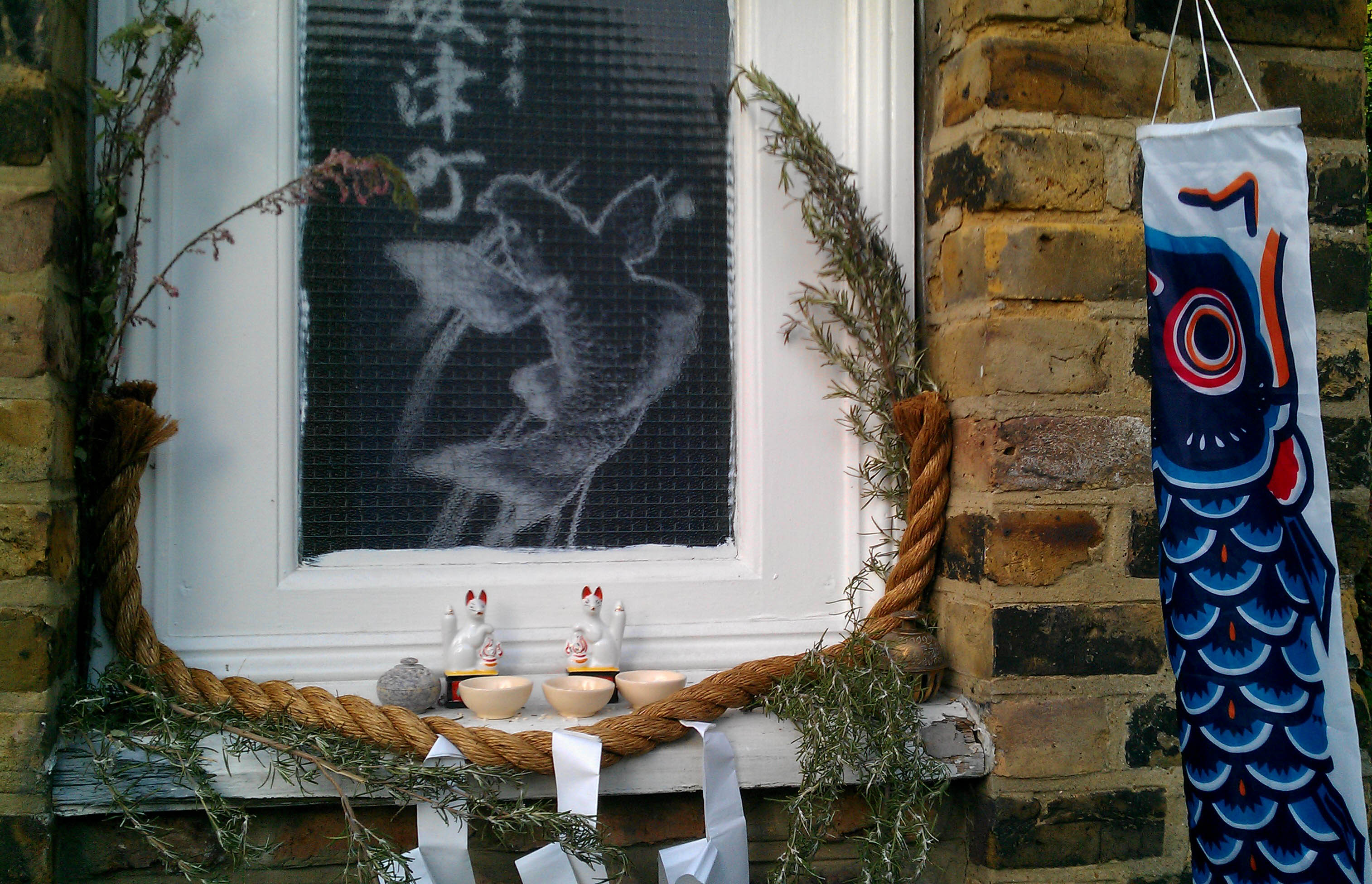 Megan is an eclectic Pagan from the UK who also practices Shinto, the Japanese “Way Of The Gods.” She is actively involved in the field of Japan-UK relations, interfaith activities, and her local Pagan community. Her blog can be found here, and her facebook page here.
[Dead Ideas] “Titoism I: Slovenia from Prehistory to Tito”, by B. T. Newberg

https://player.megaphone.fm/ADL4479010679?
Our new series is a delve into my own Slovenian ethnic heritage. Our dead idea is Titoism, the ideology of the former Yugoslavia which died along with its communist dictator, Tito. I also mix in stories of my family and my own conflicted feelings about ethnicity.
This Historic Moment (Part I), by [Starstuff, Contemplating]
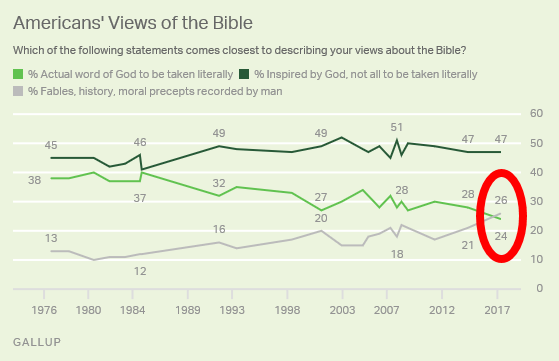
Not all that long ago, three times as many people saw their chosen Bible as the actual word of their god, to be read literally as those who saw their Bible as a book of fables. For the first time in American history, more Americans see their Bible as a book of fables than the literal words of a god (because there are many different books called a “Bible” – some with 81 books, or 66 books, or 73 books, or other books, with different texts in those books, I try to avoid referring to “the Bible” – because there isn’t just one “Bible”, and the canon has never been settled, and probably never will be settled, even among Christians). This historic point was crossed just this May, and is, as we’ll see, not alone.
Happy Summer Thermstice/Lammas!

Celebrations
Heat! Summer! Productivity! Growing Darkness! These and many other themes join with the baking of bread and early harvest celebrations of Lunasa.
Some of the ways many of us are celebrating were published a few weeks ago. For my family, celebrations with our annual blueberry harvest and evening ritual will be this Friday. This year, our Earth, Moon and Sun bring the growing dark of Lunasa to us in the dramatic display of the August 21st eclipse. Not only is this display of darkness so fitting for Lunasa, but it will also pass directly over the great plains, where so much of our grain harvest comes from. For some of us, the celebrations will be later this week – the actual midpoint between the Solstice and the Equinox is August 7th. However you are celebrating (including Imbolc celebrations in the Southern Hemisphere), may your be celebration be blessed.
Buy Godless Paganism (paperback)

Buy Godless Paganism (ebook)


Pagan Coming Out Day – May 2nd
 Naturalistic Paganism