 Naturalistic Paganism
2012: It’s the end of the world!
Hey… wasn’t something supposed to happen today?
We’re still here.
(Big surprise.)
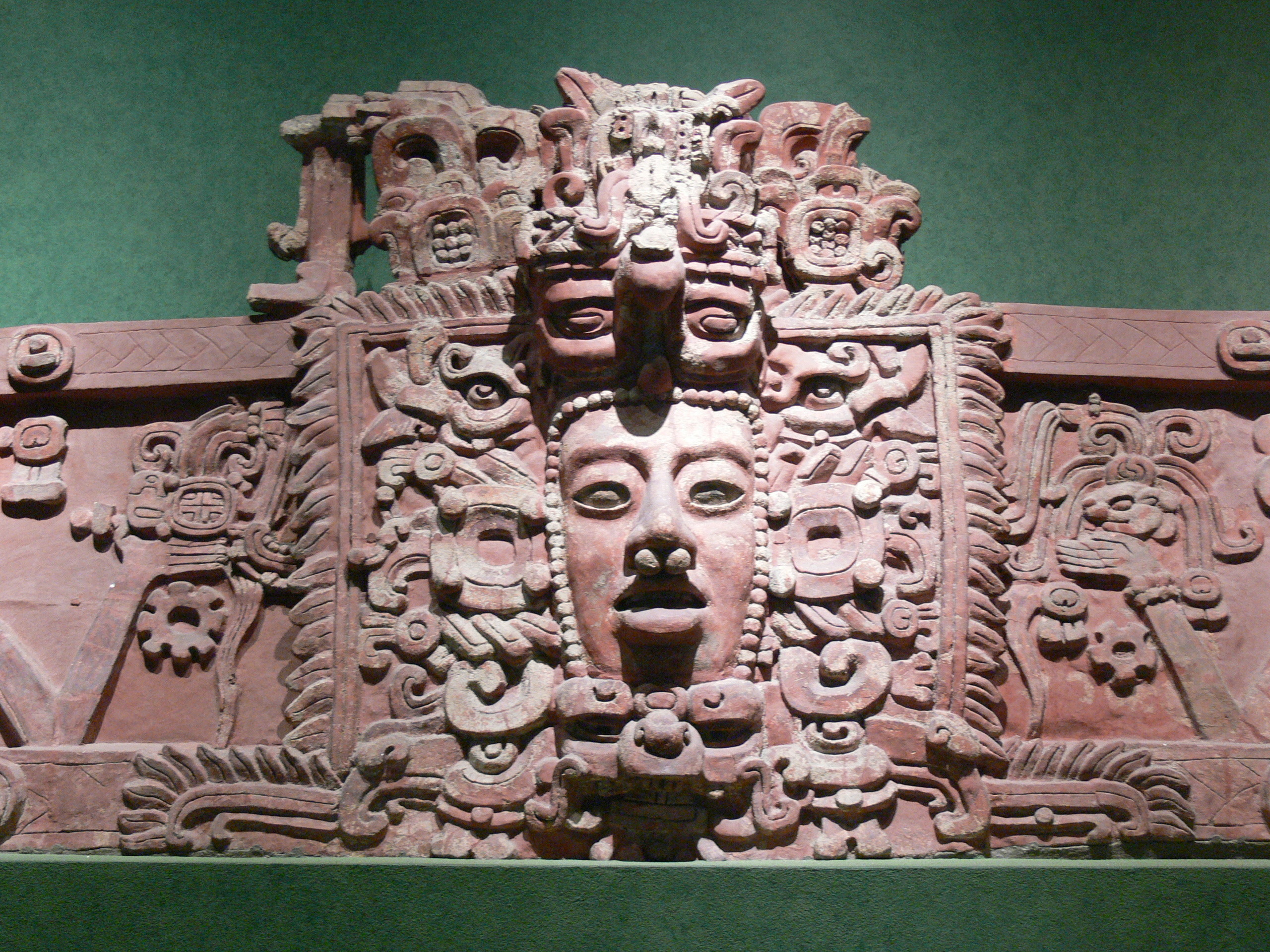
Today marks the notorious “prediction” of the Mayan calendar that the world will end (or, some say, a new spiritual era will begin).
The so-called prediction is actually nothing of the kind. The Mayan calendar simply ends, with no mention of what is to happen afterward. Maybe some mathematician had a hot date to get to, and decided 2012 was as good a place as any to leave off work for the day.
The hysteria has caused frustration for scholars of Mayan culture:
“For the ancient Maya, it was a huge celebration to make it to the end of a whole cycle,” says Sandra Noble, executive director of the Foundation for the Advancement of Mesoamerican Studies in Crystal River, Fla. To render Dec. 21, 2012, as a doomsday or moment of cosmic shifting, she says, is “a complete fabrication and a chance for a lot of people to cash in.” (USA Today)
David Webster says in The Uses and Abuses of Mayan Culture:
The Maya, of course, would simply have begun another cycle, just as they did before, and their world would have gone on. Here’s my prediction: 2012 will come and go without the world falling apart (at least any faster than it is at present), and people will forget about this particular intrusion of the ancient Maya into our lives. Nevertheless, long after 2012 we will still be fascinated with the Classic Maya. We will continue to use and abuse them for our own purposes, and see our own fate as somehow linked with their own. Each generation gets the Maya it deserves, or thinks it wants.
What is noteworthy is not the uniqueness of this doomsday prophecy (it’s only one in a very, very long line of such predictions). Rather, it’s that many in the New Age and Pagan communities were taken in by it.
But despite the failure of the world to end, today is a great victory for those predicting doomsday. You see, we’ve known since the 50s that failed prophecies, far from dissipating believers, actually increase their numbers. The cognitive dissonance associated with it causes them to seek explanations and persuade ever more people they are right.
So… on with the predictions. What’s next?
With what aspects of Pagan popular culture do you identify?
2012 Thing on Thursday #13
Final poll of 2012
Ah, Pagan culture! Some revel in it, others are embarrassed by it. From incense to crystals, does any of it appeal to you? If so, which parts?
There is, of course, no way to fairly delineate what is and is not “pop”: one person’s pop is another person’s… not pop. So, this post doesn’t even try. Instead, it focuses primarily on material aspects of pop culture, the kind of things or services you might find available in a metaphysical shop.
Perhaps you could call it Pagan kitsch… or not. Your call.
Please share your thoughts in the comments.
About Thing on Thursday
 This post is part of a series of councils on matters vital to the future. The name represents both the generic term for, you know, a thingie, as well as the Old Norse term for a council of elders: a Thing.
Each week from the Autumn Equinox until the Winter Solstice, Thing on Thursday explores a new controversy. Participation is open to all – the more minds that come together, the better. Those who have been vocal in the comments are as welcome as those quiet-but-devoted readers who have yet to venture a word. We value all constructive opinions.
There are only a few rules:
- be constructive – this is a council, so treat it as such
- be respectful – no rants or flames
Comments will be taken into consideration as we determine the new direction of Humanistic Paganism.
So please make your voice heard in the comments!
Winter Solstice: A naturalistic ritual for the cosmos

Let us see with fresh eyes, fresh as the first radiant flaring forth of the cosmos
– by B. T. Newberg
This ritual celebration of the birth of the cosmos is designed for use by Spiritual Naturalists of any stripe. For those whose schedules permit and who can embrace the cold, it is best performed outside in the dark of night, timed for the arrival of dawn at the end of the ritual. Failing that, a setting that can accommodate darkness and candle light is good.
Additional notes on the style of ritual can be found in the “Samhain Ritual for the Ancestors”, as well as “Working Ritual with the Center, part 1 and part 2.”
Preparation:
- Bell (bell, gong, drum, horn, or other musical instrument; a clap or stomp may do in a pinch; see Section 1)
- Gifts and Recipients (one each for Opening Gift and Closing Gift; for example, a small plant may be a Recipient of a Gift of water, or a humanitarian or environmental charity may be the Recipient of a Gift of goods, efforts, or funds; see Sections 2 and 12)
- Center (represented by a fire, well, standing stone, tree, statue, spiral pattern, or other item symbolizing a situationally-appropriate center of life activity; see Section 3)
- fire and/or candles (see Section 5b)
- drums and rattles, if desired (see Section 5b)
- song sheets for “Silent Night, Stardust Version” by Connie Barlow, and “PaGaian Joy to the World”, if desired (see section 5b)
- sand or other material for planting candles in, if desired (see section 6)
- Water (clear drinking water)
- Cauldron (bowl or pitcher for serving Water) and Chalice (cup or cups for receiving and drinking Water)
- small foodstuffs (optional)
1. Opening and Statement of Intentions
P1 leads participants in a procession to the ritual site while all chant “We Are Made of Stardust Burning” by Connie Barlow:
All: We are made of stardust burning
Churning and turning into animals.
Upon arriving at the ritual site, all stand or sit in a circle facing the Center. P1 stands among them as just another member of the circle.
P1 rings Bell to signal the start of the ritual.
P1: At this time and to this place, we come for a purpose:
To celebrate the season at this moment of the Winter Solstice,
To live the birth of our cosmos,
And to know our participation in that which is greater than us.
2. Opening Gift
Opening Gifts are more appropriately small, inward-looking, and contemplation-oriented, such as a Gift of water to a small plant. The Recipient of an Opening Gift should not be a participant.
P1 approaches Recipient with Gift held aloft in both hands.
P1: Let us begin this rite with an act of giving. For nothing and no one in this interdependent world is so small that it does not need a gift.
P1 offers Gift to Recipient.
P1: The one that flourishes nourishes the whole.
All: The one that flourishes nourishes the whole.
3. Creation of Special Time and Space
In this section, the group initiates a slight alteration of consciousness through focused concentration and circumambulation of the Center. All move in unison, with P1 signalling the raising and lowering of arms with the Bell. Any participants with physical differences preventing them from performing these movements may substitute other movements that facilitate maximum inclusion.
P1 gestures toward the Center.
P1: Here and now is the Center,
The fulcrum of the mind,
The hearth of the community,
The birthplace of the cosmos;
In it, we behold the world,
And we know what we have always known:
That we are of the world.
All turn to stand at a right angle to the Center, i.e. with one shoulder toward it and the other away.
P1 rings Bell and all raise their inner arm toward it as if to feel its warmth, join its radiance, or to represent a spoke in a turning wheel. All gaze at the Center along this inner arm. All then circumambulate the Center saying the following words. Groups may interlock fingers over the Center if appropriate, and may perform an appropriate chant or song during each circumambulation if desired.
P1: This is the Center, around which all revolves.
It does not revolve around us,
We revolve around it.
P1: As we pass round, we affirm our place within the mind.
All: As we pass round, we affirm our place within the mind.
All return to original positions, arms still raised and gazing toward the Center.
P1 rings bell and all lower arms. After a moment’s pause, P1 rings bell again, all raise arms and circumambulate a second time.
P1: This is the Center, around which all revolves.
It does not revolve around us,
We revolve around it.
P1: As we pass round, we affirm our place within the community.
All: As we pass round, we affirm our place within the community.
Repeat for a third circumambulation.
P1: This is the Center, around which all revolves.
It does not revolve around us,
We revolve around it.
P1: As we pass round, we affirm our place within the cosmos.
All: As we pass round, we affirm our place within the cosmos.
All return to original positions. P1 rings bell and all lower arms.
P1: Behold the Center.
Here and now, we are of the world.
And what is of the world can change the world.
4. Meditation on the Five +1
The following text guides through the meditation as appropriate for groups, while solitaries may memorize the sequence or pre-record it for playback. Text may be improvised to suit sensations of the occasion, such as wind, warmth, starlight, etc. Participants may stand or sit for the meditation as appropriate. Allow a pause between each sense faculty, long enough for participants to explore their sensations.
P1: Now let us see with fresh eyes, fresh as the first radiant flaring forth of the cosmos.
Close your eyes, and at the same time open to the world around you. Gently and without judgment, open. Like cosmic energy in the moment of its first flaring forth, open to all the sensations by which the world presents itself here and now.
Open to the sensations of touch: your feet on the ground, the temperature on your skin, the drape of clothes against your body, the rise and fall of the chest with each breath, and any tension in the body melting away.
Open to the sensations of taste: any lingering flavors, or absence thereof.
Open to the sensations of smell: the fragrance in the air, the quality of the air.
Open to the sensations of sound: the ambient sounds, and the silences between.
Now slowly open your eyes, and behold the sensations of sight: the colors and patterns that slowly form themselves into recognizable objects.
Open finally to that inward sense: the thoughts, feelings, and emotions passing through you.
Through these six foundations of experience, the world presents itself, and the universe perceives its own reflection.
5. Stories, Myths, or Activities of the Occasion
This section provides for the unique character of the ritual. Ritualists should prepare seasonally-appropriate myths, stories, poems, songs, or other activities. For example, the Winter Solstice would be a good time to recount the myths of dying-rising deities, such as Dionysos. This ritual script opts to inovke the birth and symbolic regeneration of the cosmos.
5a. Invocation of the Spiral of Being
Text by Rose Welsh
I am the Flaring Forth of the Universe – The Great Ancestor.
I am the bones, blood and tears of the Grand Elder Stars
I am Florescence of Being and Mass Extinctions
I am the Light who enlivens the Earth and the Earth who is enlivened by the Light
I am the Ancestors
I am the First One born from rock, heat, light and water.
I am All who came from the Sea onto the Land and those who remained behind: plant and animal
I am the changing face of Life through the ages: bacteria, fish, bird, lizard, tree, flower, worm and shrew.
I am the First Mother and Father of my kind: Stewards of the Earth.
I am all Beings who sustain me: Rain, Wind, Soil & Plants; Laborers, Animals and Beings Behind Sight: with their gifts my body is built and recycled and my life and spirit maintained.
All of Us together are The Ancestor….
All of Us are One.
And we are the Flaring Forth of the Universe.
We hold Chaos and Order in our hands
Within Us they become Change: birth, growth, decay, death and rebirth.
Through Us the Great Ancestor experiences Herself anew each day and dreams the future and past into being each night.
We are the Flaring Forth of the Universe.
All Being envelopes us, runs through us, supports us – is us.
We do not own the Air, the Sea, the Land nor the Spark that ignites all being:
We are the Spark in the center of life.
We are the Land that builds our bodies.
We are the Sea that is our blood.
We are the Air that cradles life.
All giving voice, sight and heart to the Universe.
So it is as it always was, forever.
5b. Regeneration of World and Self
Adapted from text by Glenys Livingstone, from PaGaian Cosmology.
Participants sit in the dark.
P1: Sit in the stillness now, wrap the Dark Space of the Mother around, and await the transformation.
Any lights or candles are extinguished.
After some time of sitting in the dark:
P1: Out of Her fertile Dark Matter, out of the stillness of Her Creative Centre, New Being comes forth, Light is thus born, all Manifestation is born.
P1 lights the fire (in a firebasket or a cauldron or a bonfire) at the edge of the circle (in the North for the Southern Hemisphere, or in the South for the Northern Hemisphere).
All move to stand near the fire.
P1: We recall our Beginnings – the Great Flaring Forth, and our Grandmother Supernova Tiamat – Goddess Mother of our Solar system, of our star the Sun. This is our Cosmic lineage. We are Gift of Tiamat – Goddess Mother supernova. Out of her stardust we are born. Carbon, hydrogen, oxygen, nitrogen, sulphur, phosphorus and trace elements. We are Gift of Tiamat – out of her stardust we are born25.”
P1: We are Gift of Tiamat – out of her stardust we are born.
All: We are Gift of Tiamat – out of her stardust we are born.
All may chant or sing the response – with drums and/or rattles.
A young person (or P1) takes a lit taper candle from the fire and lights the old candle, then the new candle from this light – passing it on, then blows out the old candle.
Song: All sing “Silent Night”, stardust version by Connie Barlow
All move back to their places.
P1: The Universe wants to speak you, the Universe wants to speak you. Take a candle, light it, hold it up ceremoniously and recall, and speak if you like, of the new being coming forth in you this year.
Each in turn moves to the center, takes a candle, puts a holder on it, lights the candle and speaks if they wish, then holds the lit candle up ceremoniously – which is the cue for all to respond with:
All: So be it. Let this new being within you come forth.
When all have lit candles in hand:
P1: Let us celebrate these new beings coming forth, with the song.
Song: All sing “PaGaian Joy to the World” standing in a single circle.
6. Drum, Chant, Dance, or Trance (optional)
Depending on the skills and preferences of the participants, a period of drumming, chanting, dancing, or other trance-inducing activities may be held. This allows a deeper and more inward contemplation of ritual themes, and builds toward the experience of communion in the Shared Meal.
For large groups, this time may overlap with the Shared Meal. While the Meal is being distributed, others drum, chant, dance, or trance.
This ritual script follows Glenys Livingstone’s script in calling for a Spiral Dance. Those who prefer to skip this step may turn on the lights and re-light any candles at the end of the song in section 5, and proceed to the Shared Meal.
P1: Now let us dance the Spiral.
All join hands, each holding their candle in linked right hand. P1 leads into a spiral, all singing the first verse and chorus of “PaGaian Joy to the World” over and over, making sure to look in the eyes and faces of the passing people, then re-forming the circle.
P1: Let us take our new beings and re-generate the world, as the Sun has always done. What do you wish for the world, what is the flame in your heart? Join it with all the others.
Each participant in turn steps into the center and speaks if they wish, takes the holder off the candle, and puts their lit candle down firmly in the sand – which is the cue for all to respond with:
All: May we be like the Sun and re-generate the world.
The lights are switched on or candles re-lit.
7. Shared Meal
This is the culmination of the ritual, an experience of communion. Utmost in this meal is the Water, which should be clear drinking water as sustains all life on this planet. Other seasonally-appropriate items may be consumed, such as harvest foods, provided they can be distributed and handled without disturbing the pace of the ritual. A more elaborate banquet may follow after the ritual.
P1: All life on Earth is a community, and the lifeblood of the community is water. Let us share with one another.
The first portion belongs to the Earth itself.
P1 pours the first portion of water onto the ground or, if indoors, into a receptacle which is either immediately carried out to the nearest ground, or placed at the Center to be taken out after the ritual.
P1: The rest is for Earth’s creatures.
The distribution of the shared meal begins. Ideally, the Water is passed round, with each participant receiving, then giving to the next. Other methods may be innovated to accommodate group size and need. In the case of a solitary ritual, the participant speaks the words of both giver and receiver.
Giver: I am not the center of the universe.
Giver offers Water to Receiver.
Receiver: The universe is the center of me.
Receiver takes Water from Giver and drinks.
If other foodstuffs are to be shared, they begin to be passed round, following the same pattern, as soon as the first participants complete the exchange of Water.
Those waiting or finished may join in an appropriate chant, song, or hymn chosen for the occasion.
8. Realization of Communion
P1 rings bell to call for silence, then completes the communion with words adapted from John Toland:
P1: The sun is my father, the earth my mother, the world is my country, and all creatures are my family.
We are one.
All: We are one.
9. Thanksgiving
Adapted from text by Jon Cleland Host.
P1: Now let us express our gratitude for our very being.
We marvel at our family tree, which goes back though innumerable life forms, through amazing stories of survival, hope, courage, and parental love. It includes the tiny mammal, surviving through the freezing, year-long darkness after the asteroid impact by eating, and likely hiding in, a frozen dinosaur carcass. It includes the first mother to produce milk, and the first blurry view through a newly evolved eye.
If a depressed child suddenly discovered that she was descended from a long line of Nobel prizewinners, think of how her outlook and actions would instantly change! In the same way, we’ve grown from a long line of survivors – noble creatures of every sort, who conquered deadly challenges billions of times over. We stand on a mountain of love and success, and without winning a cosmic lottery against unbelievable odds, we wouldn’t be here. What other outlook could possibly give my life more meaning?
Through fits and starts, the universe has created in ever more wonderful ways, and it will probably lead to a just and sustainable world. It could happen after centuries of environmental disasters, bloody wars, and untold suffering, or it could happen sooner, through our efforts to build a loving, rational culture focused on this world. It’s up to us to choose when we’ll get there.
We stand at the dawn of a new age, the first time we know of when the universe has become able to reason and plan.
My family, your family, and all life on earth will live with the consequences tomorrow of the decisions we make today.
What could be a greater purpose, and a greater reason to take control of one’s life? What could possibly be a stronger moral basis for ethical behavior – a clearer reason to love our neighbor as ourself?
P1: Full of these thoughts, let us give thanks to the cosmos itself for our very being.
Cosmos, thanks be to you.
All: Cosmos, thanks be to you.
10. Dissolution of Special Time and Space
All circumambulate the Center once more, with arm outstretched toward it as before, but this time moving counterclockwise and with the other arm outstretched in the opposite direction like a conduit leading out into the world.
P1: This is the Center, around which all revolves.
It does not revolve around us,
We revolve around it.
P1: As we pass round, we affirm our responsibility in the world.
All: As we pass round, we affirm our responsibility in the world.
When all return to their original positions, arms still raised, P1 signals with the bell, and all turn their gaze from the Center along the inner arm to the outer world along the outer arm.
11. Closing Gift
Closing Gifts are more appropriately larger, outward-looking, and action-oriented, such as gifts of goods, efforts, or funds to a humanitarian or environmental charity. If a participant is especially deserving of honors or recognition at this time, they may be a Recipient of the Closing Gift.
P1: Let us close this rite as it began: with an act of giving. For nothing and no one in this interdependent world is so small that the whole does not need their gifts.
P1 offers Gift to Recipient. If Recipient is not present or not localizable (such as “the environment”), the Gift is placed at the Center, and delivered after the ritual.
P1: The one that flourishes nourishes the whole.
All: The one that flourishes nourishes the whole.
12. Closing
P1: As individuals we come, as a community we go,
One with the world, one with each other, one with ourselves.
The rite is ended.
Go in peace.
P1 rings Bell to signal the end of the ritual.
Upcoming work
Winterviews returns!

It’s back! BIG NAME authors await.
From the Winter Solstice through Imbolc, our annual event Winterviews (winter interviews) brings high-profile authors and public figures your way.
This year, we’ve got a great line up.
Check it out:
- Brian Swimme, author of The Hidden Heart of the Cosmos – video – Winter Solstice, Dec. 21st
- Jason Pitzl-Waters, Pagan journalist of The Wild Hunt – text interview – Dec. 23rd
- John Ryan Haule, author of Jung in the 21st Century – text interview – Dec. 30th
- Chet Raymo, author of When God Is Gone, Everything Is Holy – article – Jan. 6th
- IAO131, author of Naturalistic Occultism – text interview – Jan. 13th
- Connie Barlow, author of The Ghosts of Evolution – article – Jan. 20th
- Jon Cleland Host, creator of the Naturalistic Paganism group and frequent author at EvolutionaryTimes.org – audio interview – Jan. 27th
- Adrian Harris, author of Wisdom of the Body: Embodied Knowing in Eco-Paganism – article – Imbolc, Feb. 3rd
Jung’s Pagans at Pagan Square

Also, be sure to check out the impressive three-part series “Jung’s Pagans” by our own John Halstead. It’s a guest post series for the Pagan, Naturally blog at Pagan Square. The series explores Carl Jung’s influence on major Neopagan figures, including:
- Dion Fortune
- Israel Regardie
- Doreen Valiente
- Starhawk
- Margot Adler
- Janet and Stewart Farrar
- Vivianne Crowley
This Sunday

Celebrating the birth of the cosmos as the sun returns…
Winter Solstice: A Naturalistic ritual script, by B. T. Newberg
Appearing Sunday, December 16th, 2012
Thing on Thursday
This is the last one for this year’s round of polls. 2012’s final Thing on Thursday asks:
With what aspects of Pagan popular culture do you identify?
Next Sunday

Winterviews begins! The creative genius behind The Wild Hunt Pagan news source gives us insight into serving our community.
Solidarity, not unity: An interview with Jason Pitzl-Waters
Appearing Sunday, December 23rd, 2012
Recent Work
Stoicism: God or atoms? by Donald Robertson
The greater significance of ley lines, by Erik Oakenshield
Working ritual with the Center, by B. T. Newberg, part 1 and part 2
Get our ebooks

Does the Fourfold Path resonate with you?
2012 Thing on Thursday #12
Another key concept introduced in the original “What is Humanistic Paganism?” post was the Fourfold Path, which Humanistic Pagans ideally share in common. The Fourfold Path is:
- exploration of the Five +1
- relationship with myth
- responsible action
- a sense of wonder
The intent was to a) distinguish our style of Paganism from others, and b) provide an affirmative, well-rounded structure for living a life in this style.
But honestly, I had no idea how others shaped their paths. I just wrote what made the most sense to me, and hoped to find others of like mind.
Now, two years later, I’m wondering if the Fourfold Path is appropriate anymore. It may not describe our community that well, and it may not provide the desired structure for living either.
Please rate the appeal of the Fourfold Path from 1-5, with 1 being least and 5 most.
Then please share your suggestions for alternatives in the comments.
Some alternatives to the Fourfold Path are briefly explored after the poll.
Alternatives to the Fourfold Path
If Loyal Rue is correct that religions are about melding cosmology and morality into a single unifying narrative, then an alternative to the Fourfold Path ought to include both elements. It should a) distinguish our style of spirituality from others, and b) provide a structured life-stance incorporating both cosmology and morality.
#1. One alternative is provided by IAO131’s book Naturalistic Occultism. A three-part breakdown describes the essential worldview, which is:
- naturalistic – no reliance on or reference to the supernatural
- scientific – systematic, clear, and using the latest facts of psychology and neurology
- pragmatic – things accepted as provisionally “true” because effective and useful
This seems quite reasonable for distinguishing our style from others, though it doesn’t fulfill the function of providing a structured life (nor was it intended to do so). There’s a cosmology here but not much of a morality.
#2. Another alternative is encapsulated in HP’s subtitle: “A naturalistic marriage of science and myth.” This conveys three essential elements:
- naturalism – no reliance on supernatural explanations or aid
- science – evidence-based investigation through systematic, empirical observation and rigorous peer critique
- myth – enrichment of subjective experience through engagement with symbols, narratives, and rituals rooted in the ancient Pagan world
The addition of myth provides avenues for drawing on cultural, aesthetic, and perhaps even ethical traditions of the ancient world. There is potential here for the flowering of religion in Loyal Rue’s sense, though morality remains under-emphasized.
#3. ?
Please suggest your alternatives in the comments.
About Thing on Thursday
This post is part of a series of councils on matters vital to the future. The name represents both the generic term for, you know, a thingie, as well as the Old Norse term for a council of elders: a Thing.Each week from the Autumn Equinox until the Winter Solstice, Thing on Thursday explores a new controversy. Participation is open to all – the more minds that come together, the better. Those who have been vocal in the comments are as welcome as those quiet-but-devoted readers who have yet to venture a word. We value all constructive opinions.
There are only a few rules:
- be constructive – this is a council, so treat it as such
- be respectful – no rants or flames
Comments will be taken into consideration as we determine the new direction of Humanistic Paganism.
So please make your voice heard in the comments!
Buy Godless Paganism (paperback)

Buy Godless Paganism (ebook)


Pagan Coming Out Day – May 2nd
 Naturalistic Paganism