 Naturalistic Paganism
Holiday Music from HP’s very own DJ
Enjoy these playlists from our own Bart Everson (“Editor B”).


Call for Essays: “Our Community”

Next month, our theme will be “Community”, especially Our Community of Naturalistic and Humanistic Pagans. We have chosen this theme in celebration of Jon Cleland Host‘s launch of the Naturalistic Paganism Yahoo group 10 years ago, in January 2005, which was (as far as I can discern) the first such online community. Send us your essays and articles to humanisticpaganism [at] gmail [dot] com. Ideas for topics include:
- What does it mean to you to be a part of a religious community like HP?
- What holds a community like ours together with its diverse beliefs and practices?
- How can we deepen our sense of community and strengthen our bonds with one another?
- How can we better integrate our community with the larger Pagan community, or do we even want to?
- How can we better integrate our community with the larger religious naturalism community, or do we even want to?
- A topic of your own
A Pedagogy of Gaia, by Bart Everson: “Wheel Without End”

The Purpose and Function of Holidays
Many suppose that a holiday is simply time off work, similar to a vacation, an opportunity to rest and relax and engage in various recreational activities. This is certainly a workable definition but we can look deeper. A holiday enshrines values, reminding us again and again of certain existential truths. Holidays help us remember what’s important.
As individuals at this particular moment in history, in the industrialized West at least, we have unprecedented levels of privilege, autonomy, and freedom, as well as access to global information. We can pick our own holidays, even invent them, and in so doing we have the ability to choose our own path, to shape our own identity, perhaps even to determine our own destiny, in ways unimagined by our ancestors.
An Atheopagan Life, by Mark Green: “Observances Around the Year: November/December”
An Atheopagan Life is a monthly column about living an atheist, nature-honoring life.
 November and December certainly don’t lack for observances and holiday celebrations. In the temperate zone of the planet, pretty much every culture has had some way of celebrating the winter solstice, and the accumulation of many of those traditions lives with us today in the form of Christmas, Chanukah, the Pagan Yule, newer traditions such as Kwanzaa and even Festivus.
For Atheopagans, navigating this season in a manner free of theistic and supernatural overtones can be a bit of a challenge. We’re besieged with well-intentioned messages from relatives and friends rooted in their credulous religious beliefs. Exasperating as it can sometimes be, the main thing is to remember that those expressions are meant kindly and with love, by and large, not to try to shove religious credulity down our throats.
Meanwhile, our own opportunities for observances are many and rich.
“Four Devotional Practices for Naturalistic Pagans” by Anna Walther
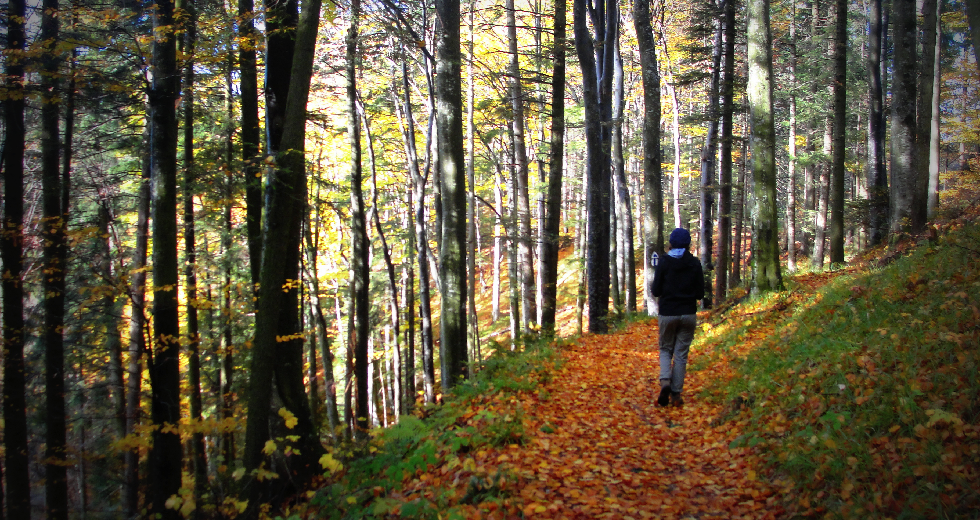
“Why is it so quiet?” my son asked. “I don’t know,” I replied in a whisper, without knowing why. My children and I were visiting Seiders Springs, limestone artesian springs that lie along Shoal Creek in Austin, Texas. They’re framed by crowded city streets and two busy medical facilities, one on each bank of Shoal Creek, such that the quiet blanketing the path past the springs was arresting. Water babbled up through limestone to collect in shallow fern-framed pools. While we stood there listening, a couple of hospital workers walked by, chatting in hushed tones, enjoying the soft beauty and respite of natural springs in the heart of a bustling, rapidly-growing city.
My children stopped briefly to wonder at the improbability of water flowing from rock, then took off down the path, past the springs without me. I hastily gathered a handful of rocks and built a short tower on the ground beside one of the limestone pools. It was my way of saying,
I was here, I care, and Thank you.
Buy Godless Paganism (paperback)

Buy Godless Paganism (ebook)


Pagan Coming Out Day – May 2nd
 Naturalistic Paganism