 Naturalistic Paganism
Don’t miss zodiacal light phenomenon starting Saturday night

At about an hour after sunset on Saturday, February 7, and for the next two weeks afterward, keen sky-watchers in the Northern Hemisphere can hunt down one of the most elusive of astronomical phenomena: zodiacal light.
This pyramid-shaped beam of light is easily mistaken for the lights of a far-off city just over the dark horizon in the countryside. It has also been called the “false dawn.” But this light is more ethereal; it is caused by sunlight reflecting off cosmic dust between the planets.
The best time to catch this ghostly sky light is about an hour after sunset, looking toward the western horizon from the dark countryside.
This celestial phenomenon is actually the reflection of billions of dust-size particles left behind in interplanetary space after the planets formed about 4.6 billion years ago.
A Candlemas-Themed Music Mix by Bart Everson

Our own Bart Everson has put together a great playlist of Candlemas-themed music. Enjoy!  This is an eclectic mix, including a lot of Celtic folk-flavored stuff, but also Italian metal and straight-up rock’n’roll. There’s even a psychedelic prog-rock odyssey called “Glassdust at the Disablot” for any heathens out there.
The Mix-Master

In addition to writing the A Pedagogy of Gaia column here at HumanisticPaganism, Bart Everson is a writer, a photographer, a baker of bread, a husband and a father. An award-winning videographer, he is co-creator of ROX, the first TV show on the internet. As a media artist and an advocate for faculty development in higher education, he is interested in current and emerging trends in social media, blogging, podcasting, et cetera, as well as contemplative pedagogy and integrative learning. He is a founding member of the Green Party of Louisiana, past president of Friends of Lafitte Corridor, sometime contributor to Rising Tide, and a participant in New Orleans Lamplight Circle. See Bart Everson’s other posts.
Winter Cross-Quarter
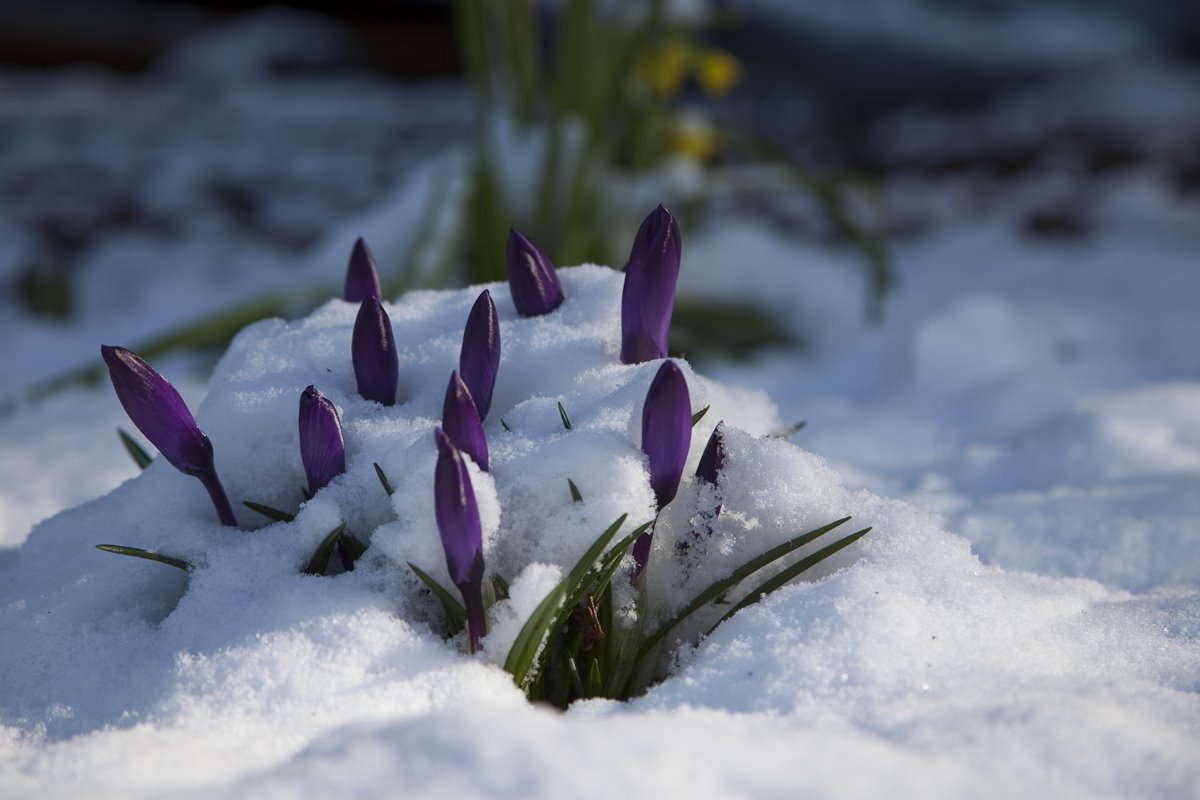
Today (Feb. 3) is the Winter Cross-Quarter (in the U.S. — It’s tomorrow in Europe and Australia). It is the midpoint between the Winter Solstice and the Spring equinox. It is one of eight stations in our planet’s annual journey around the sun. For those in the Northern Hemisphere, the claws of winter are harsh at this time, even though sunlight has already started returning. It takes a while for the climate to warm in response to the longer day, so the earth remains cold. While the Winter Solstice is the time of longest darkness, the Winter Cross-Quarter is (on average) the time of greatest cold. Yet, like a secret promise, the sun is returning. Jon Cleland Host of the Naturalistic Paganism yahoo group refers to the day as the Winter “Thermistice”, the peak of cold in the winter season.
In the Northern Hemisphere, February 2 is traditionally celebrated in the Neo-Pagan Wheel of the Year as Imbolc. Other names include Oimelc, Brigit, Brigid’s Day, Bride’s Day, Brigantia, Gŵyl y Canhwyllau, and Candlemas. Those in the Southern Hemisphere celebrate Lammas instead at this time. Imbolc derives from Celtic traditions surrounding the goddess Brigid, whose sacred fire at Kildare was tended by virgin priestesses. Traditionally, it marks the season when ewes birth and give milk. It is a time of emergence, as the herd brings new life into the world, and we look forward to the coming spring. One custom to observe this is placing a well-protected candle in each window of the house, to shine the light of life out into the snowy cold (Nichols, 2009).
Glenys Livingstone of PaGaian Cosmology, a naturalistic tradition revering the Goddess as a metaphor for the Cosmos, recommends meditating upon emerging Creativity through the ever-new flame of the candle, the beginning of the in-breath, and the word om. It is a time for individuation, a time to renew dedication of one’s small self to the big Self.
“A dedication to Brigid means a dedication to the Being and Beauty of particular small self, and knowing deeply its Source – as an infant knows deeply its dependence on the Mother, as the new shoot on the tree knows intimately its dependence on the branch and the whole tree, as the new star’s being is connected to the supernova. It is a dedication to the being of your particular beautiful Self, rooted seamlessly in the whole of Gaia.” (Livingstone, 2008)
NaturalPantheist shares the words he uses during his Imbolc celebration:
“As I stand here on this celebration of Imbolc, the sacred wheel of the year continues to turn and spring begins again. As my forebears did, I do now, and so may my descendants do in time to come. It is the feast of the goddess Brigid, guardian of the hearth fire and protector of the home. Patron of poetry, healing and smithcraft. It is a time of awakening after the dark, cold slumber of winter. The sun has grown stronger and the days have grown longer and I see now the first signs of spring. Trees are beginning to bud, snowdrops are blossoming and animals are stirring from hibernation. The time of Oimelc has arrived – the ewe’s are pregnant, lambs are being born and milk is beginning to flow once more. Winter is over and I rejoice in the hope of the coming warmth.
“I light this candle now in thanksgiving to Brigid, the sacred hearth fires of my home. I celebrate the growing power of the sun and look forward in hope to the coming warmth of summer.”
Jon Cleland Host of the Naturalistic Paganism yahoo group suggests making snow candles – an activity especially fun for kids.
HP Pride: Be Interviewed on HumanisticPaganism.com

We want to interview you!
To conclude our January theme of “Community”, we are starting a new project called HP Pride. We are interviewing members of the Humanistic Paganism community and other like-minded friends. One or more interviews will be published every month. If you are not a “Big Name Pagan”, or if you have never written online before, all the better! We want to hear from everyone!
Here’s what to do:
1. Indicate what name you want to be identified by. (Especially important if you are not out of the closet about your Paganism.)
2. Answer the questions below. (It’s ok to skip questions if you want.)
2. Limit your responses to each question to about 250 words.
3. Take a picture of you or, if your are shy or concerned about privacy, you can take a picture of something that represents your Paganism. (No internet images please.)
4. Send your responses and your picture to humanisticpaganism [at] gmail [dot] com
Interview Questions
- What do you call the religion you practice?
- If you call yourself “Pagan”, what about your religion is “Pagan”? Why do you choose to call yourself “Pagan”? If you don’t call yourself “Pagan”, why not?
- What other words (i.e., humanistic, naturalistic, atheistic, pantheistic, witch, druid, shaman, etc.) do you use to describe your religion and why?
- What is your religion of origin? What religion were you raised with?
- How did you transition to your current religion? Tell us a little about your faith journey.
- What makes your religion a good fit for you?
- How do you practice your religion?
- Do you observe the Wheel of the Year? If so, how?
- Do you believe in or work with “gods” or “deities” or “spirits” in any sense of those words? Why or why not? If so, how?
- Do you believe in or work with “magic” in any sense of the word? Why or why not? If so, how?
- How does your religion affect your daily life or your state of mind?
- Do you interact with theistic Pagans in religious community? Do you share ritual with theistic Pagans? What has been your experience in this regard?
- How do you engage other Pagans online?
- Are you “out of the closet” about your Paganism? To what degree? Why?
- What is the thing you love the most about Paganism?
- What is one thing you would like to change about Paganism or the Pagan community?
- Add your own question and answer it. (Optional)
“Gathering Around the Well: Ideas for Deepening Humanistic Pagan Community in 2015” by Anna Walther

Community results when a group of people shares a set of values and goals. In our Humanistic Pagan (HP) community, we value spiritual experiences inspired by the patterns of nature and ancient myth. We create spiritual practices based in empiricism, in experiencing the world directly, as it is. We explore ways of knowing that do not rely on extracorporeal experiences. Our shared values and goals create a collective energy of nature reverence, healthy skepticism, and use of symbol with intention. We have the opportunity to develop our individual paganisms to a much deeper level than we would be able to reach alone, if we direct our collective energy into shared action.
Buy Godless Paganism (paperback)

Buy Godless Paganism (ebook)


Pagan Coming Out Day – May 2nd
 Naturalistic Paganism