 Naturalistic Paganism
“Five Ways to Play on Spring Equinox” by Anna Walther

I’m making plans to celebrate the Spring Equinox with my family. The equal length of day and night prompts us to consider balance, and the greening of the land also calls for joy and play. Below are five ways my family revels in the beginning of spring in Austin, Texas.
1. Create a Spring Equinox altar. We include living herbs, flowers, bunnies, nests, eggs, and seeds. Sometimes we bring the signs of spring inside; other times we create an impromptu outdoor altar. Last weekend during a trip to Mt. Bonnell, the highest point in Austin at 775 feet above sea level, my children gathered soil, twigs, and several different kinds of seeds into piles on top of a limestone slab. Whether building the altar inside or out, we look to the natural environment for inspiration. What’s blooming? Have we seen any nests or young animals? What colors do we see in the sky, in budding leaves, in the water and the soil?
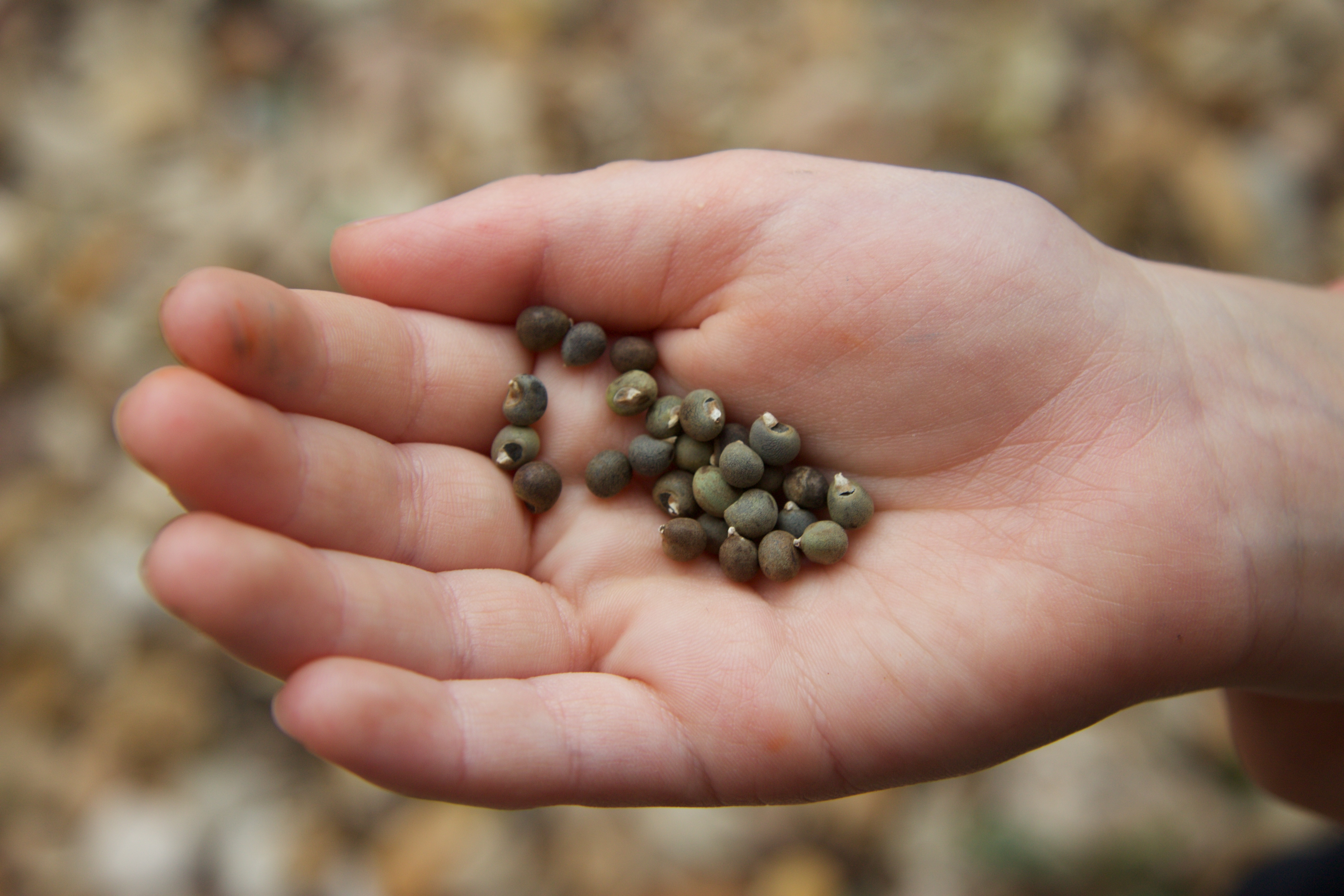 2. Plant seeds. I include flower seed packets in my children’s Easter baskets. Sometimes we’re enterprising and start the seeds in hollowed out egg shells filled with soil. Last year, my kids simply ran around our backyard pushing morning glory and sunflower seeds into the soil with their bare thumbs. Going outside and seeing which ones sprouted and took root, and which ones did not, was an ongoing family project as spring progressed. My children saw first-hand that seeds need sunlight, water, and specific soil conditions in order to flourish.
 3. Dye and hunt eggs. Eggs are symbols of birth and fertility in cultures around the world; plus they’re good food and fun to decorate. I like to draw on hard-boiled eggs with a wax crayon, or wrap rubber bands around them to make stripes, before dunking them in dye. Because it’s usually fairly warm in Texas in the spring, and because we have fire ants, I hide plastic eggs for my children. Once they’ve found and emptied the eggs, we fill some with pebbles or beans to make shakers, and we re-hide and seek the rest for days after.
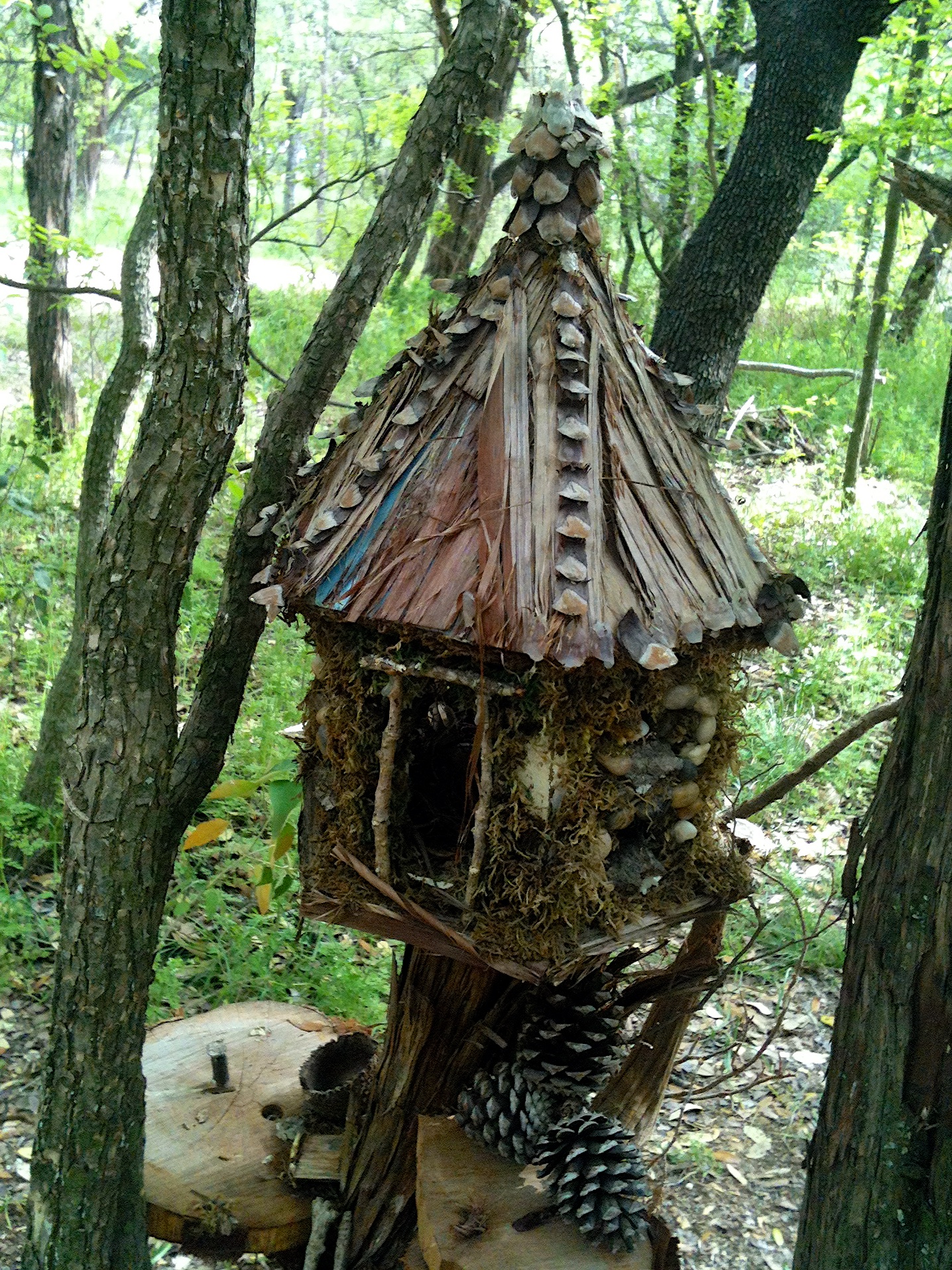 4. Build fairy houses. Walking the Zilker Faerie Homes & Gardens Trail at Zilker Botanical Garden in downtown Austin is one of my favorite events of Spring. Local families, school groups, gardeners, and architects sign up to build houses in February, and the trail opens in March. Walking the Faerie Trail with my children always inspires a flurry of fairy house construction once we get home. Because artists need constraints, the rules: Use only natural, found objects, and not human-made materials. Try not to disturb living, growing plants and flowers. They’re still using all their parts.
Now, this is the Humanistic Paganism blog, where few if any of us believe in fairies as incarnate beings. Last year while he was building a fairy house in the front yard, my son stopped to ask me whether fairies are real. “No,” I replied, “But it’s fun to pretend, isn’t it?” He smiled and happily went back to cobbling rocks together into a structure that might provide appropriate shelter for an imaginary diminutive winged person. So I invite you to avoid overthinking it. Make space to play, and do something fun to welcome the spirits of spring.
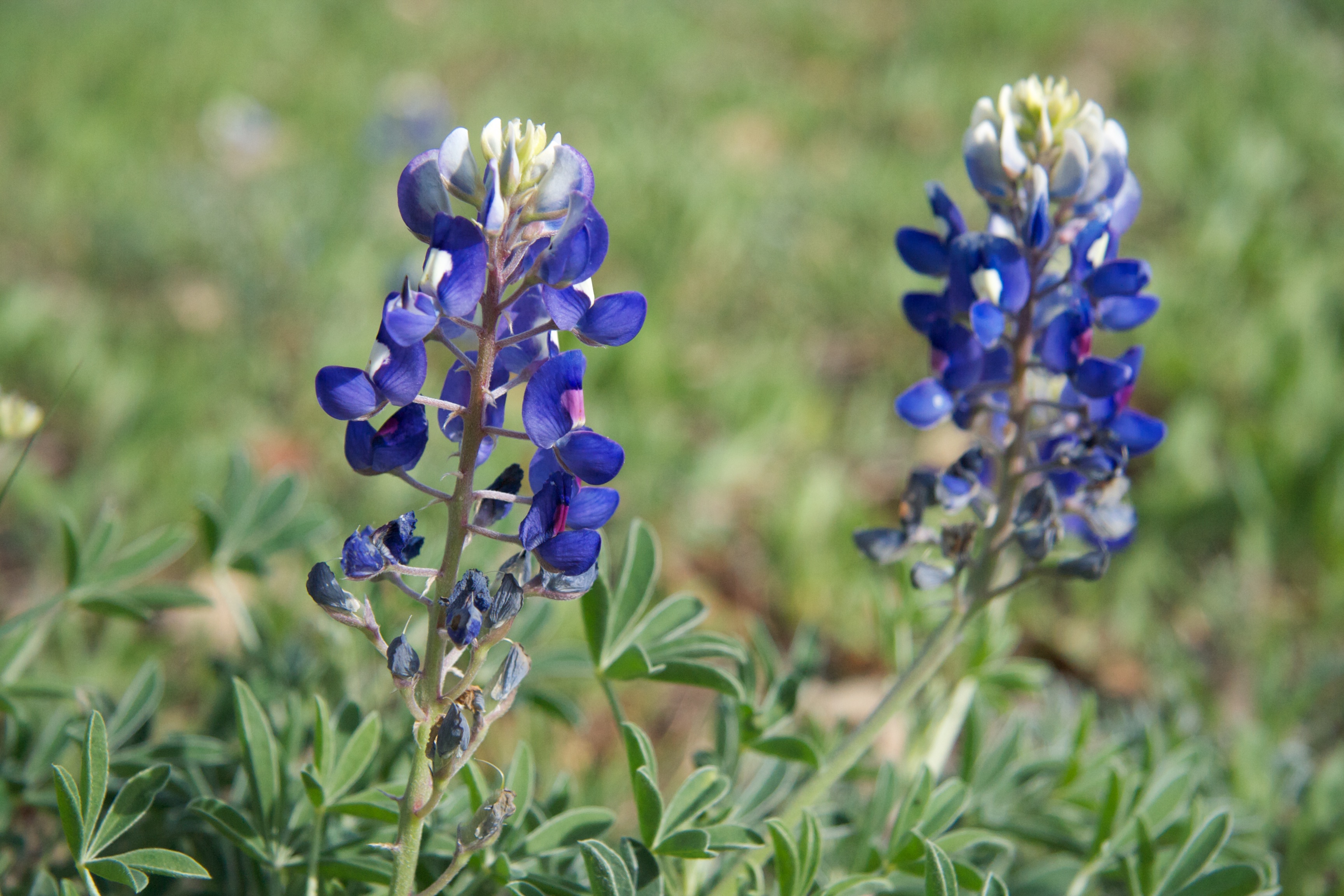 5. Take a wildflower or wildlife walk.
In Spring, the Central Texas Hills erupt into a riot of wildflowers: wind flowers, wood sorrel, bluebonnets, paint brush, prairie verbena, primroses, Mexican hat flowers, Texas star flowers, and firewheels, among many others. My family and I like to walk the trails at nearby McKinney Falls to soak up all the scents and colors. Our neighborhood parks put on a good show even closer to home. The Mexican free-tailed bats that make their summer home in Austin begin returning from Mexico this time of year. Cooper’s Hawks and Sharp-skinned hawks leave Austin for more northerly summer homes, while flycatchers, swallows, and summer tanagers are arriving. What’s blooming? Which birds are arriving? Which are leaving? Which animals are nesting and raising young? I like to take a long, mindful walk outside to find out.
What’s blooming where you live? How do you celebrate both the balance and the ebullience of Spring?
The Author

Anna Walther lives in Austin, Texas, where she practices place-based paganism, by honoring ancestors, observing the movements of the sun and the moon, collecting local stories, visiting trees, creeks and springs, and learning about the plants, animals, and minerals with which she shares her home. Anna is a student nurse, and she attends First Unitarian Universalist Church with her husband and children.
Vernal Equinox Music Mix by Bart Everson


Click the image above.
The Mix-Master

In addition to writing the A Pedagogy of Gaia column here at HumanisticPaganism, Bart Everson is a writer, a photographer, a baker of bread, a husband and a father. An award-winning videographer, he is co-creator of ROX, the first TV show on the internet. As a media artist and an advocate for faculty development in higher education, he is interested in current and emerging trends in social media, blogging, podcasting, et cetera, as well as contemplative pedagogy and integrative learning. He is a founding member of the Green Party of Louisiana, past president of Friends of Lafitte Corridor, sometime contributor to Rising Tide, and a participant in New Orleans Lamplight Circle. See Bart Everson’s other posts.

[Starstuff, Contemplating] “New Life on the Spring Equinox (Ostara)!” by Heather (and Jon) Cleland-Host
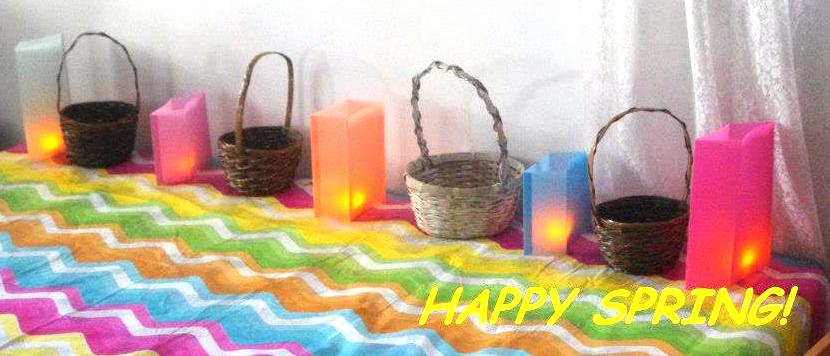
HAPPY SPRING! Winter’s icy grip is slipping! The Spring Equinox is almost here. On March 20, half the day will be light and half day will be dark. It is one of two days of perfect balance between light and dark, and it is also the day when light wins over darkness. From now until the Summer Solstice, the hours of light will be longer than the hours of darkness. And, happily, it is the first day of Spring: Ostara.
Icicles are dripping everywhere from the eaves of our roofs, from tree branches. At the same time the Earth is awakening. Maple sap is beginning to flow in the veins of the trees. Icicles dangling from maple tree branches are sweet with maple sugar. The first birds are returning from where they wintered. The first plants begin to poke up through the snow, and buds are beginning to form on the trees. We grasp these first signs of Spring with excitement and joy, but it does not compare to the joy of our Ancestors. The return of Spring was the end of the death in winter, the return of life. It was hope. It was not merely an end to the unpleasantness of icy roads and bitter cold days, but the end of the risk of starvation. To our Ancestors, an sweet maple icicle never tasted so sweet!

So the signs of the return of Spring and the fertility of the Earth were of great importance. It is why they persist to the modern day: the return of the robin, the melting snow, the first buds, the first plants poking through the snow, the first eggs, the newest life, and more. Our Ancestors noted everything that marked the end of winter and the beginning of Spring. The constellation of Orion is visible only in the winter. In Native American cultures like the Anishinaabe, this constellation was actually identified with Winter — Kabibonakka. As Spring approaches, Winter disappears even from the sky. Thus, Ostara celebrates the new life just starting to become visible. It corresponds to the energy and happiness of young children, when lives begin to take visible shape. This rebirth of life is celebrated with traditional symbols of emerging life, such as eggs.
Celebrating the Spring Equinox, Ostara
A lot of what we do as a family for Ostara is familiar to both Pagans and Christians. We decorate and fill baskets with small gifts and candies shaped like eggs, rabbits, and chicks to celebrate the sweetness of the gifts of Spring. We decorate and hide eggs to celebrate the promise of new life. We typically hide the eggs outside and spend a little time imagining our Ancestors going out and finding eggs in nature for the first “harvest” of the year, knowing that these eggs meant life for more than just the birds. We typically use natural dyes (described below) to connect more deeply with the process. The kids get to experiment with different colorful foods that they think might produce a color as well as a few staples that we know will work. The colors produced are typically more subtle and thus more closely resemble the eggs found in nature.
Here in Michigan, this is also the time when the maple trees are flowing with sap for making syrup and other sweet things. So we may do activities with the local nature center that annually makes syrup. Equinox pancakes made with half the circle light colored and half dark-colored are a lot of fun. One easy method is to make the pancake mix and then separate it into two bowls. Mix dark blue or green food coloring into one for the dark half. For each pancake, pour half light and half dark mix. This also works for cookies. Where you are, the first products of Spring may be different. We also plant seeds in flats or egg cartons. Over the weeks following Ostara, the kids watch the plants slowly emerge until they are planted outside at Beltane.
Because Easter grew out of the older Ostara celebrations (and other Spring holidays), many of the items needed to celebrate Ostara easy to find, such as baskets, colorful grass, egg dying kits, chocolate rabbits, marshmallow chicks, etc. Additionally, many of the “Easter” items explicitly celebrate Spring with the actual words of “Happy Spring”! Although Easter sometimes falls as much as a month later than Ostara, this is one time where the commercial tendency to put out Easter stuff as soon as Valentine’s Day is over actually works to our advantage.
Coloring Eggs Naturally
To color eggs, hard boil (or blow) the eggs ahead of time. Then, get large coffee mugs, one for each color. In separate saucepans, boil a small handful of the material for each color in a few cups of water. Pour out some of the colored water from each saucepan into a mug without pouring in the solid parts. If some of the solid material does go in, don’t worry. Sometimes having the actual solids can help with the dyeing. Add a tablespoon of vinegar and stir it in. Then dye the eggs by leaving each egg to soak for 10 to 30 minutes (longer is darker, of course). Note that only black rice quickly gives a deep color – we have sometimes left some eggs to soak overnight in the ‘fridge to give a strong color. This especially has worked well with red cabbage (blue color). When the mugs of dye cool to room temperature, warming them in the microwave helps. Another fun method is to place a little leaf on the egg, then put it in a section of cut pantyhose. Secure it with a rubber band. Then dye normally. This makes a white leaf on the dyed egg. Writing with clear wax (left over from Imbolc or a crayon) before dying leaves white writing on the eggs. Shredded crayons can be used for extra color. We usually color the eggs the day before Ostara so they can be hidden for the egg hunt.
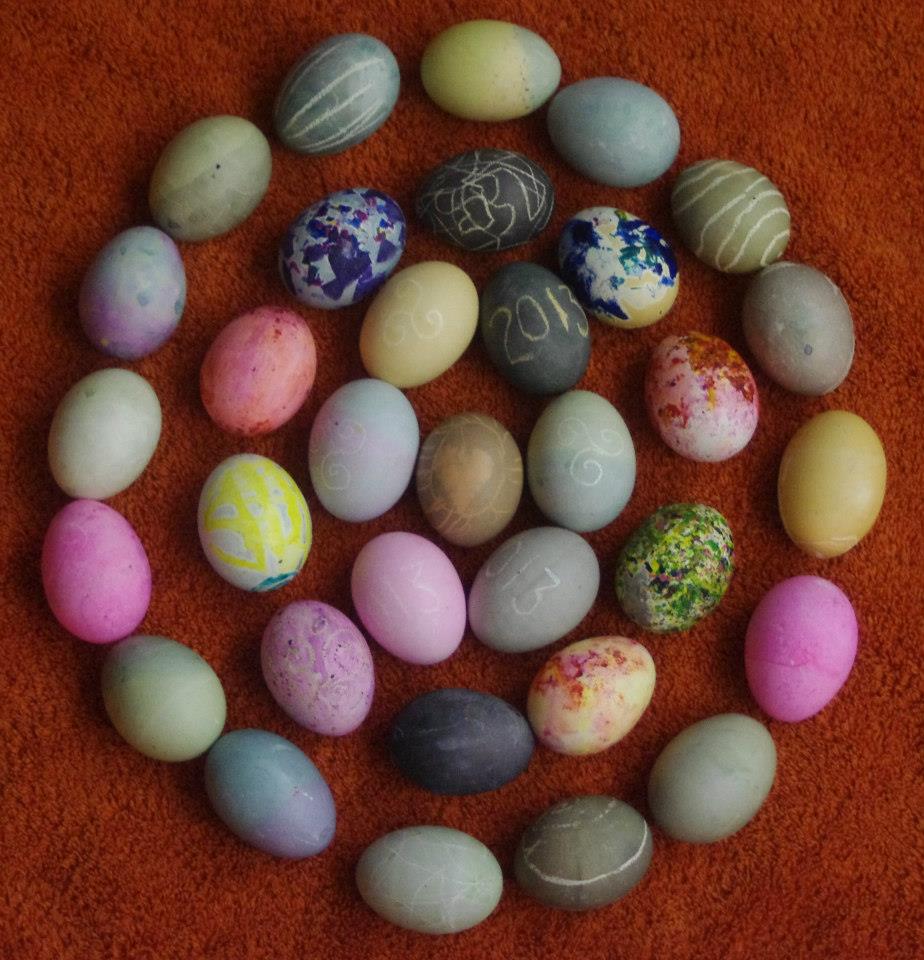 Natural Dyes (Turmeric dye not depicted):
- Black rice, Grey to Purple (very good natural dye, found in Asian markets)
- Black tea/coffee, Brown (moderately well)
- Red Onion, Green to Brown (moderate, can use the flaky outer skins)
- Red Cabbage, pale blue (moderate but light color)
- Beet juice (pale red – we haven’t had a lot of success with beets)
- Thai tea, light orange (light color, found in Asian markets)
- Turmeric, Yellow to Orange (Stains easily, only needs a teaspoon)
Others options shown:
- Leaf for pattern creation (center egg)
- Clear crayon for drawing pictures
- Shredded crayon for colorful textured eggs
- Store dyes: Pink (yes, I confess that occasionally we use them)
On the morning of the Spring Equinox, the kids are excited to run out and find the eggs, even if there is still snow on the ground. This can be tricky in years where it is very cold and we don’t want to accidentally freeze the eggs overnight, because we need to hide them right before they go out and not get caught! We also have a tradition of hiding the Ostara baskets inside the house, something that Jon’s family used to do when he was growing up. We also hide inside the house plastic eggs with stickers, candy or trinkets inside. To keep things fair, we color-code the plastic eggs, so that each child is looking for their own eggs, and we can hide the eggs of the younger kids in easier places than for the older ones. The eggs also contain hints about where the baskets are. Alternately, the baskets can be placed on the breakfast table the night before and magically filled overnight (something I fondly remember from my childhood). Either way, they emphasize the natural process of life beginning to emerge and allude to mystery of eggs laid in nests by birds, often unwitnessed by humans until after they are already in the nest.
This year as a special bonus, we have a full solar eclipse on Ostara. It will not be visible in North America, but for those who can see it, it will be extra special as it is by a moon when it is closest to Earth (a supermoon). This might be something to incorporate into your holiday, even if you cannot see it.
However you celebrate, blessings of the growing light to you and those you love —
The Authors
Heather is a parent and a scientist raising her four children to explore the world through scientific understanding and with spiritual appreciation of the Universe. She has a Master of Science degree in Physics from Michigan State University, a Bachelor of Science degree in Aerospace Engineering from the University of Michigan, and a Bachelor of the Arts degree in English Literature, also from the University of Michigan. She teaches physics as an adjunct instructor at Delta College, runs the Math Mania program at a local elementary school, has worked at Dow Corning as an engineer and at NASA as an intern, and she has led science outreach workshops for K-12 students through joint programs between NASA and the University of Michigan. She is a naturalistic non-theist, whose faith has been shaped by her childhood within the Episcopal Church, her adult membership in the Unitarian Universalist church, and through Buddhist meditation. She has a passion for bringing science and spirituality to everyone in a fun way, both for her own family and for the wider community of the Earth. She is a co-author with Jon Cleland-Host of Elemental Birthdays: How to Bring Science into Every Party.

Dr. Jon Cleland Host is a scientist who earned his PhD in materials science at Northwestern University & has conducted research at Hemlock Semiconductor and Dow Corning since 1997. He holds eight patents and has authored over three dozen internal scientific papers and eleven papers for peer-reviewed scientific journals, including the journal Nature. He has taught classes on biology, math, chemistry, physics and general science at Delta College and Saginaw Valley State University. Jon grew up near Pontiac, and has been building a reality-based spirituality for over 30 years, first as a Catholic and now as a Unitarian Universalist, including collaborating with Michael Dowd and Connie Barlow to spread the awe and wonder of the Great Story of our Universe (see www.thegreatstory.org, and the blog at evolutionarytimes.org). Jon and his wife have four sons, whom they embrace within a Universe-centered, Pagan, family spirituality. He currently moderates the yahoo group Naturalistic Paganism.
[A Pedagogy of Gaia] “Of Fathers and Daughters and Numbers and Stars” by Bart Everson

In honor of Hypatia Day
 I asked my daughter what she thought was the most important element of the story, and she cited the unusual freedoms that Hypatia enjoyed. At a time when most girls weren’t allowed to do such things, Hypatia rode a horse through the streets of Alexandria. She was also educated in mathematics, science, and philosophy, but I think the horse made the biggest impression on my daughter.
In all these things, Hypatia was encouraged by her father, Theon of Alexandria. He was a scholar, noted for his work in mathematics and astronomy. Though little is known about him, it seems he had an enlightened attitude toward the rights of women, or at least his own daughter. (One wonders how Theon regarded his wife. I hasten to add that my own wife is my partner in all things; I’m writing here from a personal perspective, but I suspect she’d agree with the spirit of this column.) Hypatia proved to be quite brilliant in her own right, suggesting a strong natural-born intellect, but without her father’s influence and advocacy, it’s doubtful she would have had much opportunity to develop these gifts or to pursue her career as the first female mathematician in recorded history.
As a committed feminist and as a father of a young girl, I see Hypatia as an inspiring figure, a role model of sorts. True, we’ve come a long way since 5th century. Women can now go horseback riding in public, to say nothing of the right to conduct their own affairs. And yet I’m aware that gender equity is hardly a done deal. The gains of recent history, such as they are, might be easily undone without continued vigilance, and moreover there are still plenty of serious challenges that must be confronted.
And what about Theon? He’s no less inspiring to me. Like Theon, I want my daughter to have every opportunity to develop her natural gifts, and not be unduly burdened by stilted societal expectations. I do my best to bring a feminist consciousness to my parenting. I’d never buy my daughter a Barbie, but I backed GoldieBlox on Kickstarter. I encourage her interest in all subjects, but if I emphasize science and mathematics a little more, it’s because I’m aware of our country’s gender gap in those areas. Above all, I want to bolster her confidence and self-esteem, to let her know she can accomplish much if she puts her mind to it.
As crucial as those issues are, I see something even more profound at work in the story of Hypatia and her relation to her father. Theon didn’t just advocate for his daughter’s equal rights. He also shared his love of logic, knowledge, and the natural world with her. In the story as told by D. Anne Love, and reflected so vividly in the illustrations by Pamela Paparone, Hypatia is clearly fascinated by the beauty of the universe, the manifold forms of life, the deep and abiding truths found in numbers and stars, and Theon is right there beside her, a guide, a teacher, a collaborator.
That’s who I want to be. It’s one of my most deeply cherished hopes that as my daughter grows up, her appreciation for nature will continue to increase, that she will remain sensitive to the aesthetics of existence. I want to help her grow and develop those faculties to the best of my ability.
Perhaps if I’d lived 1600 years ago I might have been a scientist, like Theon, but it was my fate to be born in a time when so many of our endeavors have become extremely particular. Stephen Hawking notes that “in the nineteenth and twentieth centuries, science became too technical and mathematical for the philosophers, or anyone else except a few specialists.” I’m not one of those specialists. It almost pains me to admit it! Still I think there’s great value in playing the scientist in everyday life. I have a broad array of interests and a general curiosity about things, and I try my best to share that with my daughter.
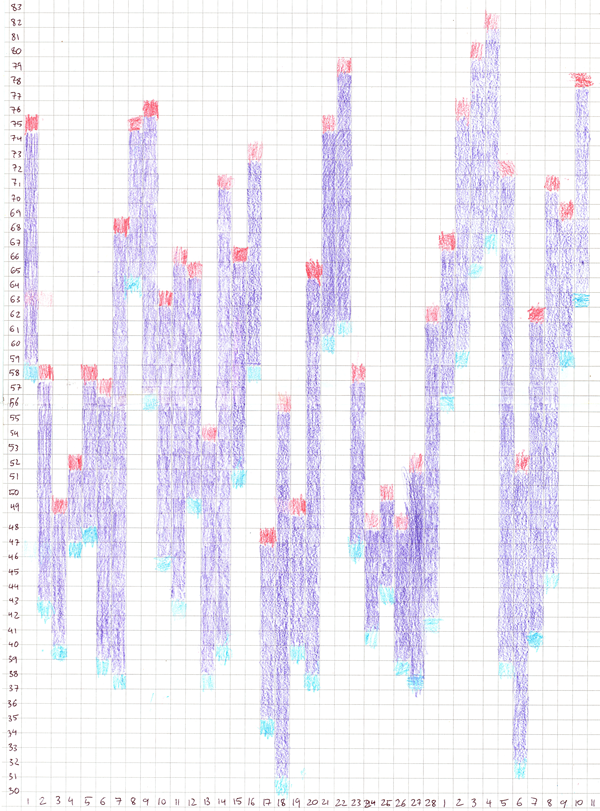 Recently, for example, we were curious about the coming of springtime. Could it be detected by observation of the temperature? So we started a chart of highs and lows for each day. It’s been gratifying to see the chart expand daily, and I’ve relished the abstract beauty of our colored pencil markings as they grow across the grid. It’s also revealed some truths about winter weather in the subtropics, as the graph is impressively jagged. We’ve enjoyed it so much that we’ve decided to keep it going for a while, and we fully anticipate a smoother graph in the summer.
It’s my hope that through this little project my daughter might learn a little something about science and mathematics and art, about observing the natural world, about collecting data and representing it visually, about seeing patterns and appreciating beauty.
In my daughter I see so much potential for the future. She might do great things. I don’t know if the world needs heroes anymore, but I’m pretty sure our society needs a major readjustment in how we relate to each other and the Earth. Perhaps my daughter will help to continue that process.
Even as I cherish such hopes, I’m also cognizant of the risks. The struggle for the future is contentious, and those who take an active role may pay a price. That price often seems higher for women. It’s worth remembering that Hypatia came to a very bad end. Love and Paparone don’t depict this in their book per se; it’s addressed sensitively in an author’s note. The preponderance of online reviews express some difficulty with this. It’s a painful and bitter pill to swallow, but I can’t conceive of a better way to handle it in a children’s book. We wish our children were growing up in a more just and humane world, but as adults we know it ain’t so. We shelter our children from such harsh realities to some extent, but we know they will confront injustice and cruelty in their own time. All we can do is equip them, nourish them, love them, and hope for the best.
A video of someone reading the book can be enjoyed below.
The Author

In addition to writing the A Pedagogy of Gaia column here at HumanisticPaganism, Bart Everson is a writer, a photographer, a baker of bread, a husband and a father. An award-winning videographer, he is co-creator of ROX, the first TV show on the internet. As a media artist and an advocate for faculty development in higher education, he is interested in current and emerging trends in social media, blogging, podcasting, et cetera, as well as contemplative pedagogy and integrative learning. He is a founding member of the Green Party of Louisiana, past president of Friends of Lafitte Corridor, sometime contributor to Rising Tide, and a participant in New Orleans Lamplight Circle.
Buy Godless Paganism (paperback)

Buy Godless Paganism (ebook)


Pagan Coming Out Day – May 2nd
 Naturalistic Paganism