 Naturalistic Paganism
“The Gaea Hypothesis: An Overview” by Dana Corby
This article was first published in The Crystal Well in Spring 1976.
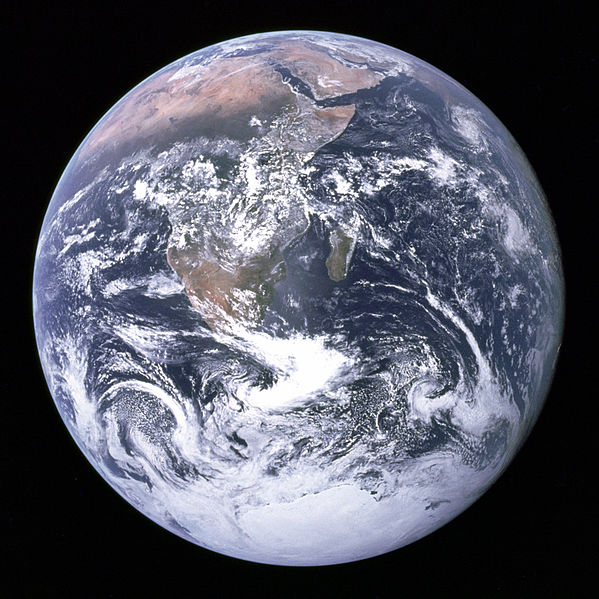
In the late 1960’s, a photograph appeared in magazines, on television screens, front pages and posters, all over the world. It was a photograph taken from space, of the Earth itself, and it radically changed the way human beings viewed this lovely planet of ours.
It is no coincidence that the ecology movements became “respectable” shortly afterwards. Never before had it been possible, except philosophically, to perceive the Earth as a whole. Never before had humans been brought so forcefully to awareness that there really wasn’t “someplace else” we could go to when we had thoroughly fouled our own nest. Read More
“Gaia Is Dead. Long Live Gaia!” by Bart Everson
This essay was originally published in 3 parts at Celebration of Gaia.
Gaia is dead.

On Gaia: A Critical Investigation of the Relationship Between Life and Earth by Toby Tyrrell is a devastating book. Devastating, that is, to the Gaia hypothesis. It’s also quite fascinating. This is recommended reading for anyone who lives on Earth and has a brain.
The author aims to investigate the hypothesis, formulated by James Lovelock in the 1970s, “that life has played a critical role in shaping the planetary environment and climate over ~3 billion years, in order to keep it habitable or even optimal for life down through the geological ages.” (from Q&A with Toby Tyrrell)
Tyrrell offers evidence and argument in roughly equal measure. The empirical evidence is drawn from a diverse array of sources, most notably evolutionary biology and Earth system science. The philosophical arguments include an extended meditation on the anthropic principle and its implications. Read More
“The Death of God and the Rebirth of the Gods” by John Halstead
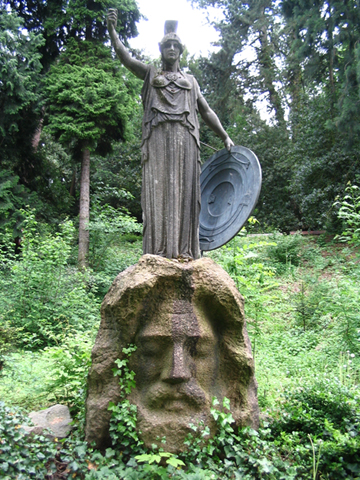
“God is dead. God remains dead. And we have killed him. How shall we comfort ourselves, the murderers of all murderers? What was holiest and mightiest of all that the world has yet owned has bled to death under our knives: who will wipe this blood off us? What water is there for us to clean ourselves? What festivals of atonement, what sacred games shall we have to invent? Is not the greatness of this deed too great for us? Must we ourselves not become gods simply to appear worthy of it?”
— Nietzsche, The Gay Science (1882)
In 1882, Friedrich Nietzsche declared those fateful words:
“God is dead.”
Almost 100 years later, David Miller declared, in The New Polythesism (1974),
“The death of God gives birth to the rebirth of the Gods.”
Sometimes the gods have to die in order for us to rediscover the gods. Read More
“On Being A Nietzschean Pagan” by Ashley Yakeley

This essay was originally published at Immanence.org. The introduction to this essay has been redacted.
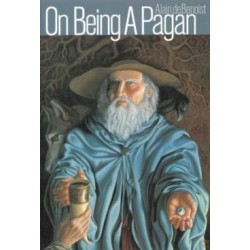 Here I take the ideas in Alain de Benoist’s On Being A Pagan and run with them, possibly to places he would not go, and possibly skipping over parts that make no sense to me. I identify four themes that characterise his view of paganism and how it differs from Christianity and Abrahamic religion in general: paganism attends to the immediate world (rather than a heaven); it is tied to geographic place and particular culture (rather than being universalist); it is broadly tolerant of other values (rather than insisting on a universal law-code); it calls us to great creation and achievement that surpasses the gods.
[A Pedagogy of Gaia] “After the Ritual” by Bart Everson
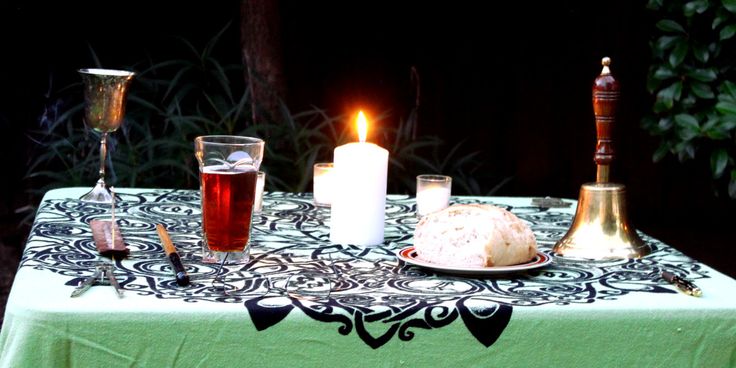
This is a follow-up piece to last month’s essay, “Preparing A Ritual”.
Before
Something always seems to die around Lammas. Last year it was our pet fish, Inky. The year before it was a raccoon under the house. This year it was my wife’s phone. As I whiled away a couple hours in the local Verizon shop, I couldn’t help reflecting on how we are turning into cyborgs; losing one’s phone is akin to losing a limb. Mainly, though, I was preoccupied with the black beans which a friend had given me from her father’s farm in Indiana. I’d soaked them overnight but hadn’t started cooking them yet. Would they be ready in time?
Eventually we got the new phone up and running, got back home, began cooking and gathering the necessary materials. When the hour arrived, we loaded up the car with several large boxes. I had to laugh at myself. How is it possible that a religious ceremony should require so much gear? The black beans were still not done, so we put the whole pot in the car and drove to the next neighborhood, just a mile away, to the house of our friend who graciously agreed to play host.
Arrival
We were almost on time, and a small crowd had already gathered. I encouraged people to chill in the air-conditioned apartment while I prepared the ritual space out back with a little help from my daughter. We’d decided the ritual would take place outdoors, even though Lammas in New Orleans can be suffocatingly hot and humid. For one thing, I wanted a bonfire; more importantly, it just makes intuitive sense that an Eco-Pagan ritual, which aims to foster a sense of reconnection with Earth, should take place outdoors. Read More
Buy Godless Paganism (paperback)

Buy Godless Paganism (ebook)


Pagan Coming Out Day – May 2nd
 Naturalistic Paganism