Naturalistic Paganism
“Atheist Paganism”
Translation: Non-Pagan Neo-Paganism
This illustrates why this anthology is so needed.


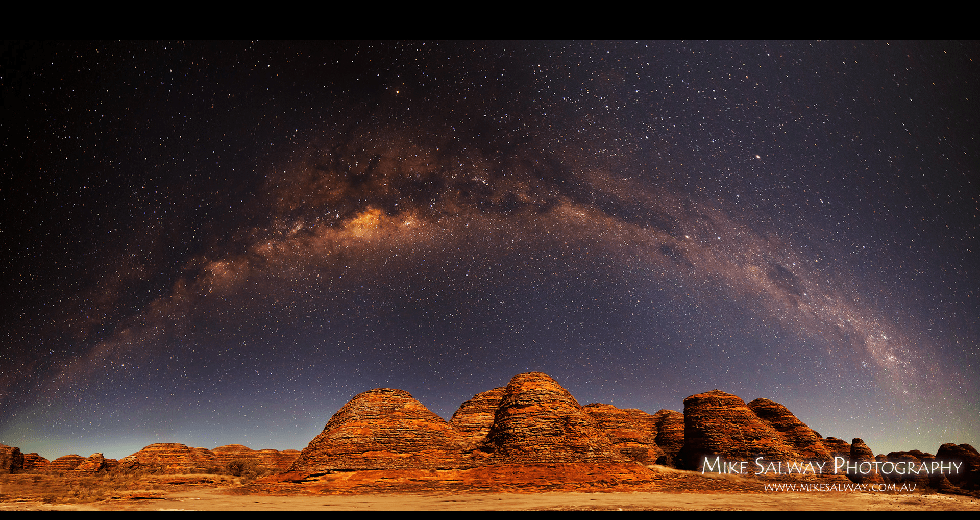
Full moons are rich with psychological and mythical associations. Men change into werewolves or go mad on the full moon (hence the word ‘lunacy’). Full moons are associated with high tides, the menstrual cycle, fertility, and insomnia. And farmers have been planting according to moon cycles for hundreds of years, as evidenced by The Old Farmer’s Almanac, published continuously since 1792. Many have claimed that human behavior varies with lunar cycles: that more births, more violent crimes, and more hospital admissions for bleeding occur during full moons. Controlled experiments have generally failed to find significant associations between lunar cycles and human behavior, but the lunar connection lives on in our collective imagination. Read More
Earlier this week, someone sent me this comment:
We’ve reached our initial funding goal, but we hope to collect $500 over our goal and place an ad for Humanistic Paganism at the Wild Hunt.org. All we need is 7 more supporters at the $45 level. You will get a copy of “Godless Paganism” (overseas shipping is now available) and your name or the name of the organization of your choice will appear on the acknowledgements page of the anthology! All profits over and above our funding goal will go to The Wild Hunt’s fall funding campaign! If we collect $500 over our goal, we can place a graphical ad at the Wild Hunt.

This essay was originally published at Many Hands House.
I am a Sagan Pagan. An atheist Pagan. This does not make me popular with either the Pagans or the Atheists. I understand why. I still cannot come to terms with “almost vegetarians” or “Christo-Pagans” (sorry – just can’t!)
I am a Pagan. I honor Pagan Gods and Goddesses. I tell their stories. I keep altars to them. I keep holy the Sabbats. I pilgrim. I participate in rituals. I am a Witch. I have sucked a goat’s teat. I spellcraft. I scry. I stay active in my Pagan community. I love Gerald Gardner and Margaret Murray. I have kissed Raymond Buckland. That’s right — give it to me old school baby.
 I am an atheist. Because I don’t believe any of it is REAL. Not real in that I don’t believe there is an actual being floating around us, caring about us, etc. I do not believe in “energy”. Maybe it’s because I have been Pagan for so long. Before Witchcraft blended with New Age or Neo-Paganism. Steven Posch’d Elder Gods* are awesome. They are true. They are REAL. You would think I would totally be on board. But I’m not. I mean, I do worship the Elder Gods. But I worship the Younger Gods too. Read More
Over at the Heathen blog, Jön Upsal’s Garden, the author of the blog has addressed “A Question for John Halstead”.
His question is essentially “Why the heck do you call yourself Pagan?” The author calls himself “Jön Upsal’s Gardener.” Gardener question is a genuine one, and it is one I have heard several times in the past. Gardener question is addressed not just to me, but to other atheist Pagans and Humanistic Pagans out there, so I encourage others to send their responses here to HumanisticPaganism [at] gmail [dot] com. The blogger, NaturalPantheist, and social media coordinator for HumanisticPaganism.com has already posted his response here.
So the question is: Why do we call ourselves “Pagan”? Why not just call ourselves atheists or humanists? What does the “Pagan” label add to our identity? Implicit in Gardener’s question is the assumption that the term “Pagan” implies a belief in the literal existence of gods. And it is that assumption that I need to address first. Read More
This essay was original published at Mud&Magic.
“Jön Upsal’s Garden” put out a challenging question: “… anyone who identifies as a pagan atheist, or humanistic pagan, or religious humanism, or whatever the heck they call themselves. Why do you include the word “pagan” in your self-identification?”
The post was mostly directed at The Allergic Pagan, who responded quite eloquently here, and another powerful response has already been put out by Nature is Sacred, but I thought it was an interesting question to engage with as someone from the middle.
Despite my skepticism, slippery beliefs, and uncertain faith, I am deeply committed to my identity as a Pagan. To me, it brings together things I can’t find together any where else: Read More