 Naturalistic Paganism
[The Dionysian Naturalist] “Dancing with Dionysus: Ecstasy and Religion in the Age of the Anthropocene, Part 3” by Wayne Martin Mellinger, Ph.D.

Continued from Part 2 …
SACRED JOURNEYS AND THE WESTERN MYSTERY TRADITIONS
Through years of deep study of the Western Mystery Traditions I have identified some “base elements” in the “Sacred Journey”, in which earlier paleolithic shamanic practices become “re-articulated” and re-adapted through subsequent traditions, including the Paganisms of the classical age (Greek, Roman, Celtic, Teutonic, Norse), Hermeticism, Alchemy, Medieval Witchcraft, as well as other so-called “esoteric traditions”. These base elements are also found within the western Christian mystical traditions (Hildegard von Bingen, Saint Francis, Mister Eckhart). Broad parallels in the underlying structure of this formulation might be seen in such diverse traditions as Carl Jung’s Archetypical Psychology, Joseph Campbell’s Hero’s Journey ( or “monomyth”), Ralph Metzner’s Green Psychology and Michael Harner’s Core Shamanism, although important substantive differences exist which I won’t discuss here due to space constraints. I believe these sacred practices are at the heart of Nature Religions as they serve to make the natural world a sacred place and strengthen our spiritual connections to our planet
Base Elements in the Sacred Journey
1. Individuals begin with an experience of psychological crisis verging on insanity. Included here might be intense feelings of isolation, fragmentation, nihilism, alienation and despair. In this state of misery ego blocks intuition, attempts at healing, wellness and wholeness are thwarted, and traditional ways of seeing prevent the new perspectives needed move forward or change. In this initial state people often feel separated from the natural world and thirst for a unifying wholeness.
2. Individuals partake a “Sacred Journey” in which they “travel” beyond the realms of their culture’s pre-established and accepted ways of knowing through an ecstatic state in which they reclaim a forgotten gnosis. This is a journey of death and re-birth, for the old Self shall die and a new Self will emerge. While physical pilgrimages to real places have long been essential forms of Sacred Journeys, other types of “travel” have equally long lineages. While many traditions in the Western Mystery Tradition see this journey as a literal voyage to another realm, for Religious Naturalists the notion of a journey is more symbolic and denotes more inner transformation than actual travel to another place.
3. All Sacred Journeys involve a change of consciousness. The techniques used to achieve such transformations are many, and might include the real-world trials and tribulations of a life lived, overcoming physical limitations through disciplined training, sensory deprivation, “shadow work” (in which psychological “demons” are confronted), entheogenic sacraments, mystical experiences, contemplative practices or other trance-inducing methods. Some of these transformational processes may be virtually unmotivated and spontaneous, while others involve intensely motivated effort, arduous study and greatly focused attention. Rejecting mind / body dualisms, I envision all these vision quests as involving the full human.
4. These processes of non-ordinary states of consciousness dissolve the subjective mind, deflate the ego and re-connect the human with nature. The outcome of these Sacred Journeys is a new way of viewing the world, other life forms and ourselves. Individuals enter a state of egoless becoming, personal integration and transcendence. A universal vision in which individuals experience themselves as part of ongoing humanity embedded in the very processes of creation may also result.
5. Having found their Holy Grail—a new way of seeing the world, a new and transcendent sense of identity, and new ways to bring healing to their community, individuals return to re-integrate into mundane social life with numerous gifts and forms of wisdom. The recovery of the numinous leads to a state of wholeness and health.
Humans have an innate need to alter states of consciousness. This need has evolved in our species over hundreds of thousand of years and serves evolutionary purposes. These purposes include the generation of new ideas and perspectives, psychological integration, health and wholeness, re-connection with nature and other living beings, and numerous other religious functions. These practices have been institutionalized and enculturated in diverse shamanic and other spiritual practices throughout history.
My focus has been on locating these practices in the traditions of my Northern and Western European ancestors, although clear parallels exist among other traditions, including those of indigenous people of the American, African and Asian continents. This focus on the spiritual traditions of my European ancestors avoids many of the ethical problems involved the cultural mis-appropriation of non-European practices, in which, for example, “white shamans” enormously profit from stealing Native American spiritual practices.
In the language of the soul, we might state that the individual, prior to the Sacred Journey, has lost contact with the sacred. To re-establish our connection to the soul, direct experiences of the sacred are necessary. The Sacred Journey is a form of soul retrieval. Everything, both animate and inanimate, is imbued with spirit. We need to re-populate the woods, rivers and mountains with numina, for our dis-ease is linked to our dissociation from the natural world. I hold that all of the Universe (by which I also mean “Nature”) is sacred. For me, this “sense of the sacred” is invoked by (1) the incredible mystery at the center of our understanding of the cosmos; (2) our absolute dependence on the natural world as a source for all life and for our very sustenance, survival, revelation and fulfillment; and (3) awareness of our humble human fragility in the face of nature’s awesome power.
Humans seem to naturally distinguish between that which is sacred and that which is profane, and to say that nature is sacred is to insist that it must be treated with respect and reverence and never violated. It is of utmost important. It is holy and ultimate. This conception of the natural world as sacred is intended to change our relationship to the planet and even if it is built upon a somewhat mythic metaphor, this radical leap of imagination can be a purposeful act which promotes ecological consciousness.
While elements of these Sacred Journeys are at the heart of most Nature Religions in the Western Mystery Traditions (such as Wicca, reclaimed Paganism, Druidry, etc), thusfar, Religious Naturalists have not embraced these “base elements” of the Sacred Journey. Enter Dionysian Naturalism.
To be continued …
About the Author
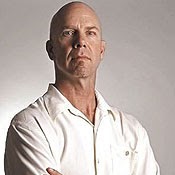 Wayne Martin Mellinger, Ph.D. is a Santa Barbara-based social justice activist, writer, and educator who uses spiritual practices to create a better world. Specifically, Wayne is very active in helping our neighbors of the streets transition into permanent housing and environmental issues. He has taught at the Santa Barbara, Santa Cruz, and Berkeley campus of the University of California, Ventura College, the Fielding Graduate University and Antioch University Santa Barbara.
[The Dionysian Naturalist] “Dancing with Dionysus: Ecstasy and Religion in the Age of the Anthropocene, Part 2” by Wayne Martin Mellinger, Ph.D.
Continued from Part 1 …
UNITARIAN UNIVERSALISM AND THE GROWTH OF RELIGIOUS NATURALISM
It is within the context of Unitarian-Universalism (UU) that I discover Religious Naturalism (RN). Many of the core theologians of RN are based in this denomination, including Donald Crosby, Jerome Stone, Robert Corrington and Michael Hogue. While not all UUs are Religious Naturalists, the faith does provide the growing movement somewhat of an institutional base. Religious Naturalists generally hold that:
1. The natural world is all that exists;
2. Science is a good way to know about that world, although not the only way;
3. There are religious aspects of this world.
Religious Naturalism fits with the overall UU concern for creating a more rational approach to religion ground in the reality of this world and supported by recent scientific discoveries. In the early part of the twentieth century both Unitarians and Universalists were already reading the Bible metaphorically and affirming the humanity of Jesus. Unitarians were particularly prominent as signers and backers of the original Humanist Manifesto (1933) which stated, among other things, that science and reason have important roles to play in the pursuit of religious belief and practice.
Unitarian Universalism (they merged in 1961) is a radically inclusive faith in which “all people of good will are welcome”. They tend to emphasize “deeds not creeds” and have what I would call a very thin unifying theology. My particular congregation in Santa Barbara has Buddhists, Christians, Jews, Pagans and a large non-theist /panentheist Humanist / Naturalist contingent. UUs proudly proclaim themselves a “liberal religion”, and have been instrumental in civil rights, marriage equality and environmental movements.
With the addition of a Seventh Principle in 1986 affirming and promoting “respect for the interdependent web of all existence” and of a Sixth Source in 1995 affirming the “spiritual teachings of Earth-centered traditions, which celebrate the sacred circle of life and instruct us to live in harmony with the rhythms of nature”, Unitarian Universalists increasingly opened themselves up to all Nature Religions, including Wiccans, Pagans, Druids and Religious Naturalists. The Bay Area feminist Wiccan and UU Starhawk played a central role in the adoption of this Sixth Source and is a frequent instructor at the UU Starr-King seminary associated with the University of California at Berkeley—one of the two exclusive UU theological training centers.
As implied above, Religious Naturalism is, in my opinion, a subset of the Nature Religions, in that it centrally regards the natural world as inherently sacred. Yet, ground in a scientific worldview, RN asserts that there is no ontologically separate realm which gives meaning to this world. Moreover, it claims that there are religious aspects of this world which can be understood within a naturalistic framework. We might say that Religious Naturalism is a Nature Religion without the supernatural “woo-woo”.
Naturalists do not suppose that all truths are scientific truths, what is sometimes called “scientism”. Rather, naturalists argue only that science offers the best way to understand the nature of reality. Naturalists believe that answers based in science are generally more reliable and universally acceptable than those derived from other ways. While many Naturalists are non-theists there are also those who are theist, pantheist and panentheists.
Our physical world consists of a space-time continuum composed of the basic elements as described by contemporary physics. The natural world is all that exists and there is no evidence of a special realm “out there” filled with angels, animal spirits nor deities. The “epic of evolution” is the story told by scientists and others about the various processes that have lead us from the “Big Bang” to our present moment—from hydrogen to humans, one might say. Included within that story are the processes of natural selection which have populated our world with various flora, fauna and other life forms. While firmly ground in a scientific cosmology, Religious Naturalism can be seen as a revival of ancient creation-based spirituality through its focus on cosmic evolution.
Naturalist spirituality posits an underlying unity and interconnectedness of all phenomena. It leads to mystery and wonder about why we are here or exist at all. It leads to a sense that Spirit and sacredness is at work in the cosmos. Increasingly, the scientific community refers to the Earth as if it is a sacred living organism—“the Gaia hypothesis”. It seems important to note that referring to this world by the name of a goddess acts to reclaim the sacred feminine, which had long been banished from western civilization.
To be continued …
About the Author
Wayne Martin Mellinger, Ph.D. is a Santa Barbara-based social justice activist, writer, and educator who uses spiritual practices to create a better world. Specifically, Wayne is very active in helping our neighbors of the streets transition into permanent housing and environmental issues. He has taught at the Santa Barbara, Santa Cruz, and Berkeley campus of the University of California, Ventura College, the Fielding Graduate University and Antioch University Santa Barbara.
[The Dionysian Naturalist] “Dancing with Dionysus: Ecstasy and Religion in the Age of the Anthropocene, Part 1” by Wayne Martin Mellinger, Ph.D.
“A religion, new or old, that stressed the magnificence of the universe as revealed by modern science might be able to draw forth reserves of reference and awe hardly tapped by the conventional faiths. Sooner or later, such a religion will emerge.” — Carl Sagan, Pale Blue Dot (1994)
My goal in this essay is to explore a form of “Godless Paganism” I refer to as Dionysian Naturalism—an approach to religion ground in scientific evidence but imbued with reverence and awe, and centered around spiritual ecstasy. I contextualize this “earth-centered” spirituality and search for sacred ways to experience altered states of consciousness within the contours of my autobiography. The importance of ecstatic experiences in religious behavior is highlighted and I briefly mine the history of what has been called the “Western Mystery Tradition” (by Caitlin and John Matthews) for shamanic elements, mystical experiences and consciousness-transforming practices to briefly summarize their “base elements”. The interests of Dionysian Naturalists in reclaiming embodied ecstatic rituals is not just to infuse intense pleasure and passion into their religious lives. Through such mystical experiences pre-established ways of seeing the world are dissolved, ego-less realms of becoming are entered and spiritual connections with the natural world are greatly enhanced. These new-found spiritual connections with nature and fresh ways of thinking are essential if we are to develop sustainable ways of living on our planet as we enter the age of the Anthropocene.
FROM SOMEWHAT PURITANICAL BEGINNINGS
The New England Congregationalism in which I was raised was rather staid and proper, and terribly emotionally restrained. The only time when a touch of theatricality entered my religious upbringing was during my grandfather’s festive Christmas pageants at his church in Chicopee, Massachusetts. Rev. Asa Wright Mellinger (1897-1976) was my idol as a child, with the booked-lined study of his colonial-era parsonage, degree from Harvard Divinity School and fluency in most of the Biblical languages (including Latin, Greek, Hebrew, Aramaic and Syriac). He and my grandmother lived radically simple lives inspired by the Great Depression and made necessary by his meager salary. He was a kind and loving shepherd to his dwindling Yankee flock in this small mill city along the Connecticut River, then being filled with Catholic immigrants. To be sure, when I came of age no shaman took me to the nearby Mount Sugarloaf for a vision quest or tribal initiation.
As a young adolescent I discovered science in general and ecology in particular. I put aside my childish ways (or so I thought) and embraced the secular life. Of course, I still loved my Grandfather dearly, yet had no need for his or any other religion (or so I thought). I was almost 12 years old when the first Earth Day was celebrated (1970), and even then, we knew the Earth was in grave trouble, and I had no doubt that serious and scientific minds were needed to face these environmental challenges. Much later, I entered the University of Massachusetts at Amherst with plans to study the biological sciences.
But while in Amherst I discovered the Arts (first performing and then visual) and was floored by the powerful emotional effects they had on me. Live theater and dance enthralled me. I fell in love with the visual arts (and much later became a painter). And music, which had long been a part of my life, became even more important as I played clarinet in the University’s symphony band. I spent my fifth undergraduate year at the University of Paris—Sorbonne studying theater and fine art.
Yet, the pressing problems of our social world also weighed heavily upon my heart and mind—economic inequality, environmental devastation, gender and racial oppression, psychological alienation. I decided I must do doctoral work in Sociology, although I had never taken a Sociology class before, because it was the only discipline able to bridge all these diverse topics. I moved to San Francisco in 1981 to gain California residency and access to the plum University of California system.
I am 22 years old, living in San Francisco, when I suddenly find myself surrounded by people calling themselves Witches, Pagans and shamans. Back in Massachusetts I had never met any people involved in what initially seem like bizarre pursuits. I am intrigued by their do-it-yourself approach to spirituality, their wholesome environmental integrity and their anarchic sensibilities to establishment religion. I am particularly interested in their quest to create a non-patriarchal approach to divinity and their new ways of conceiving of gender and sexuality. It is here in San Francisco that the Greek god of ecstasy, Dionysus, first enters my life. I read Starhawk’s The Spiral Dance, Margot Adler’s Drawing Down the Moon, Michael Harner’s The Shaman’s Way and Arthur Evan’s Witchcraft and the Gay Counterculture. I joined a group of Radical Faeries (a gay male variation of Pagan traditions founded by Harry Hay) active in the Haight-Ashbury neighborhood in which I live. I experiment with hallucinogens and see such mind-altering activities as Pagan sacraments—as “dancing with Dionysus”.
I decide that I have found a important and timely topic for my Master’s thesis in this Pagan resurgence and I enter the University of California at Santa Barbara in 1983 intending to do an ethnography of the emergence of feminist spirituality, reclaimed Paganism and Wicca in the Bay Area. After arriving at UCSB I learn that here in this program ongoing graduate school funding is dependent upon attaching oneself to a viable mentor who offers a employable methodology and research domain. To be unaffiliated is to risk loosing all the financial support one needs to do the 5-6 years of graduate study required for the Ph.D. After six months I realize that no veteran Sociology faculty support my planned study, and I accept that I must re-align myself with other academic interests in the department.
Many years later I am a successful young college professor (I specialized in Critical Social Theories, the Social Psychology of Everyday Life, and Qualitative Methodologies) buying a home in Ventura, California and settled into a suburban life with my partner of 19 years. When this relationship comes to a crashing end, I fall into a deep depression and experience a mental breakdown verging on suicide. While previously a pretty regular marijuana user (with some brief forays into the experimental use of other substances), I then begin using crack cocaine very heavily each day to numb the intense pain I feel. A middle-class white guy with no street smarts I enter a social world of gang members, felons and hard-core dysfunctional addicts. Within about six months I loose everything in my life—my good-paying teaching positions, my suburban house with the pool, my network of friends and colleagues, and my self-respect.
Eventually, I get off of crack cocaine. I start teaching again and resume a somewhat normal life. Episodes of depression still haunt me and I find that small doses of methamphetamine seem to ease my drastic mood swings and allow me the focused attention I need to paint glorious works of art. I consider myself a “functional user” because I successfully lead a double life of teaching eight very popular classes a year while smoking small amounts of crystal meth daily. I rationalize these practices as attempts to insert ecstasy into my otherwise overly rational life—a pattern I sometimes drift into off and on for a decade. In my mind I am still “dancing with Dionysus”.
But even $30 a day of meth adds up quickly and to cover my growing expenses I begin to sell to a small network of friends. This continues for about two years until one very fateful day. To get himself out of jail and to have a very minor possession charge dropped, an acquaintance sets me up for a police bust. On April 23, 2005 I am arrested on the streets of downtown Ventura for sales of methamphetamine. I again loose my teaching position and everything else in my life. I am devastated and very depressed. I move back to Santa Barbara to get treatment at the Rescue Mission—a year-long Christ-based recovery program centered around the Twelve Steps of Alcoholic Anonymous. I am forced to go to church each Sunday and after a couple months of church-shopping, in which I explore Episcopal, Quaker and other forms of liberal Christianity, I settle on the Unitarian Society of Santa Barbara, where I have happily made my religious home for more than ten years now. As a non-theist it was the option that made the most sense (although the liberal Quaker congregation in Santa Barbara was seemed open to religious rebels and non-theists like myself!). Subsequently I begin to get treatment for bi-polar disorder—a chronic and severe mental health challenge in which often wild and sudden fluctuations in moods create havoc to one’s life. I learn that between 40 – 60% of those with bi-polar disorder “self-medicate” with alcohol and street drugs.
To be continued …
About the Author
Wayne Martin Mellinger, Ph.D. is a Santa Barbara-based social justice activist, writer, and educator who uses spiritual practices to create a better world. Specifically, Wayne is very active in helping our neighbors of the streets transition into permanent housing and environmental issues. He has taught at the Santa Barbara, Santa Cruz, and Berkeley campus of the University of California, Ventura College, the Fielding Graduate University and Antioch University Santa Barbara.
“The Non-Theistic Pagan, Part 3” by Michele Briere
Continued from Part 2 …
So why are we alive and the table is not? I’m going to ignore the argument that everything vibrates at its own frequency. So does a vibrator, but that doesn’t mean I’m willing to grant equal rights. Read More
“The Non-Theistic Pagan, Part 2” by Michele Briere
Continued from Part 1 …
But what came before the polytheists?
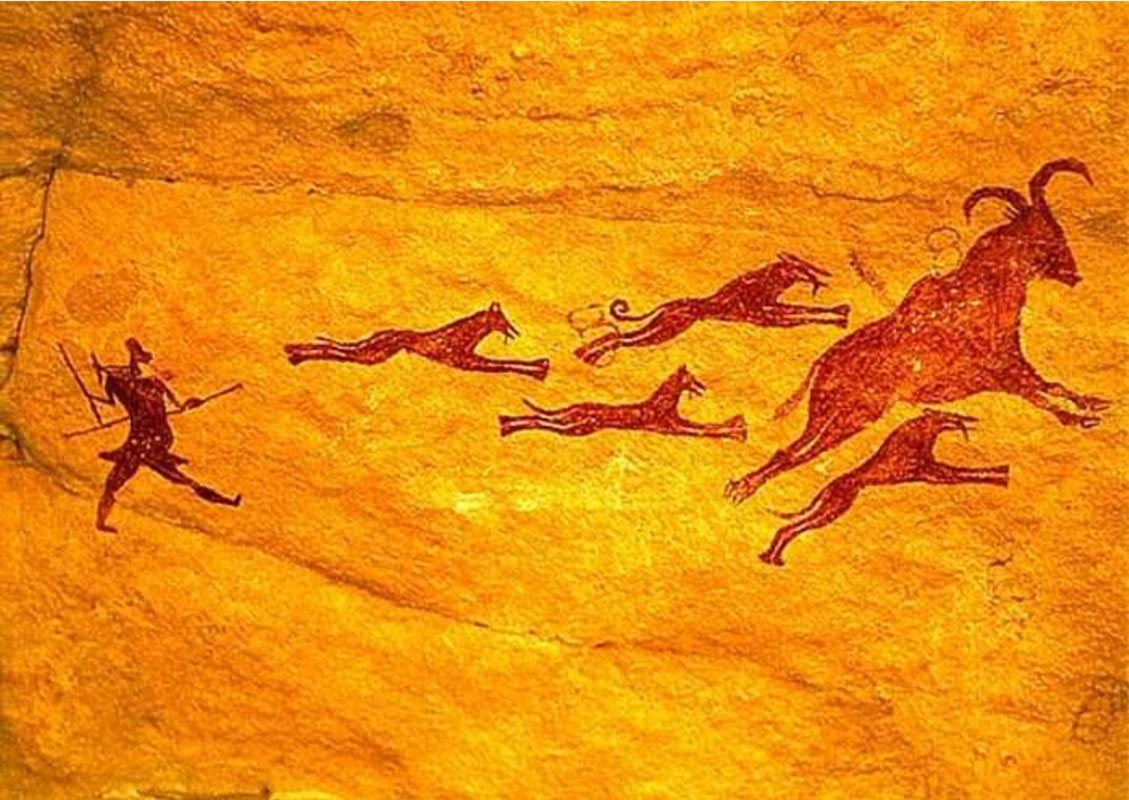
There is no evidence that humans were polytheist from the moment we left the trees. All we need to do is look around the planet at the dwindling tribes that are left in the forests. They live the land as all of our ancestors did thousands of years ago. We know this because of pictographs left behind by those ancients, by early writings when alphabets were new. Read the myths left to us by the more ancient cultures, remove the king aspects and the laws of mankind, and what is left over? Metaphors and allegories. The earth and her seasons, and the cultivation of crops and animals around those seasons. The primitive tribes that still exist continue to live in that world and they have shown no evidence of deity, only the respect for the earth and the ancestors which continue to be buried under it. The elders rule the tribe, so why shouldn’t they lay in the earth and continue to whisper their wisdom to their family? Read More
Buy Godless Paganism (paperback)

Buy Godless Paganism (ebook)


Pagan Coming Out Day – May 2nd
 Naturalistic Paganism