 Naturalistic Paganism
Early Spring Theme: Diversity
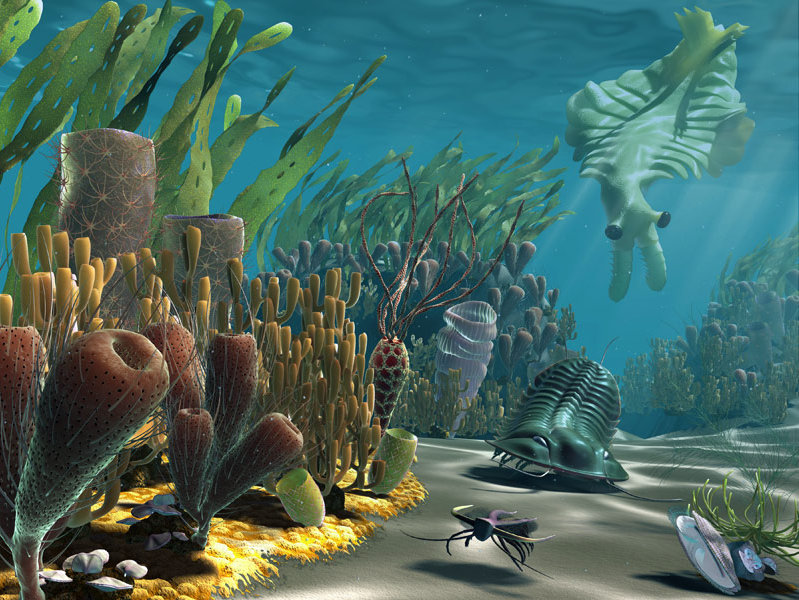
In Deep Time, early spring can match the time from the first animals to the diversification of life in the Cambrian. And what forms! Though many of the basic animals we are familiar with were just a glint in a simple eye (there were no fish, spiders, mammals, etc.), there were many new things – arthropods, jellyfish, chordates, etc. Our debut of the Godless Paganism book already highlights our Early Spring theme of Diversity. As with all themes, this just an optional muse.
Early Spring (March 20 – May 1)
Cosmic event: First animals to Diversification
Theme: Diversity
Questions: So many different kinds of any given category! What diversity do you see around you, enriching our lives?
The first review of Godless Paganism has been published!

Interested reviewers please send me an email inquiry about receiving a free .pdf copy.
Scholastic Paganism has posted the first review of Godless Paganism: Voices of Non-Theistic Pagans. If you’re wondering whether you should purchase a copy, check out the review here. It’s not unequivocally positive, but it is laudatory and insightful. Here are some excerpts: Read More
Inoculative Libations to the Land By Rua Lupa

Ritual
I’m a big fan of keeping my practices tangible so that I know what impacts I’m actually making in the world. I’m personally not interested in involving Deity-speak (my use of the word meaning including the mention or reference to deities as metaphors). I honestly feel hypocritical if I did do that as I personally don’t believe in the existence of deities and so feel no need to incorporate them. I find leaving them out makes things less confusing in interpretation and is a way of respecting those who do believe in them. However, all the rituals and ceremonies I share as a Saegoah are purely optional and can be freely redone by other Saegoahs who are theistic to suit their needs. Any rituals and ceremonies provided by any Saegoah is seen as a potential guideline to build upon rather than a writ in stone ritual or ceremony for what Saegoahs do, unless of course its an official ceremony or ritual written by and is intended only for their specific group within the Ehoah Path. We’re very open to sharing and trying new things to help one another in our quest for Ehoah (complete harmony within Nature). Below is one such optional custom and ritual.
Sacred Land
Whatever co mes from Nature is of Nature, no matter its form or its location. Nothing is separate from Nature. In knowing this we as Saegoahs choose to ensure our connections within Nature are harmonious and encourage life, instead of ignoring the workings of Nature and inadvertently cause disharmony. One such thing that can be done is vermicomposting (learn how you can do that here) and from vermicomposting comes an inoculate – a liquid fertilizer chock full of micro-organisms that are beneficial to a soil ecosystem. We can take this vermicomposting resource and put it to good use by providing it to the land. Either feeding it to our own gardens that we directly reap the benefits from, or we can make it a libation – a sacrificial offering that we personally don’t directly benefit from. This can be done by way of going to land that you don’t personally own and pouring these libations there. Or, you can set aside land that within our societal legal system you
  do own, but have made it to be its own place – being sanctified as land that belongs to itself. This can be of any size, be it a square meter (square yard) or hundreds of acres. This land grows in its own way, and it can be cared for in a way that benefits it further. It can be offered native seeds in compost and libations of inoculate to promote life. Such a place can be considered a sacred grove for ritual and ceremony that you, or your group, are dedicated to (to learn how you can establish a self-sustaining forest for this purpose go here).
Inoculative Libations To The Land
“In gathering what has been left from my toils in sustaining myself, and with the workings between species that share this land, this enriched liquid was cultivated.
Instead of keeping this enriched liquid for my personal gain, I offer it here, to this land so that this land may itself be enriched for its own benefit, and through it may all others of this land prosper.
pro solterrestriale vitae*”
*Latin, “for solar-earth life”
Rua Lupa
Rua Lupa is a Canadian Metis of Celtic and Anishinabek (Native peoples of the Great Lakes region) descent. Living on the ‘Great Whitestone Island of the Lake Seas’, Rua Lupa is a Permaculture Designer, Wildlife Technician Alumna, Founder of Ehoah, Saegoah, Naturalist (Both in studying Natural History & Naturalism), Bioregionalist, and Citizen of Earth. Their primary interests are Homesteading, Historical Craft (SCAdian in Ealdormere), Bushcraft and Forest Gardening.By studying what is being rediscovered about the Celts, and getting involved in the spiritual practices of the Anishnabek, she hopes to find out more about herself, bring to light valuable insights from these cultures, and maybe bring about a new way of being. Rua’s strong love of Nature has led to a passion for photography and Wildlife Technician degree. She dedicates her life to conserving what is left of our unaltered wilderness, and helping humanity regain balance within Nature through Ehoah, a naturalistic path. Rua founded the Sault Community Drum Circle, the Gore Bay Drum Circle on Manitoulin Island, and has been a board member of Bike Share Algoma. She also has a background in tandem canoe tripping, winter camping, lifeguarding, advanced wilderness first aid, and a myriad of other outdoor activities.
Godless Paganism: Voices of Non-Theistic Pagans is available for sale!
From the back cover:
“Those godless pagans!”
Even in pagan antiquity, there were individuals and groups who, while participating in the community’s religious life, did not believe in literal gods. In the centuries that followed the Christian domination of the West, the epithet “godless pagan” was leveled at a wide variety of people, from polytheists and indigenous peoples to heretics and atheists.
In the 1960s, though, there emerged a community of people who sought to reclaim the name “pagan” from its history of opprobrium. These Neo-Pagans were interested in nature spirituality and polytheism, and identified with the misunderstood and persecuted pagans of antiquity. Over the following decades, a stunning variety of spiritualities blossomed under the umbrella of contemporary Paganism.
While many Pagans today believe in literal gods, there are a growing number of Pagans who are “godless.” Today, the diverse assemblage of spiritual paths known as Paganism includes atheist Pagans or Atheopagans, Humanistic and Naturalistic Pagans, Buddho-Pagans, animists, pantheists, Gaians, and other non-theistic Pagans. Here for the first time, their voices are gathered together to share what it means to be Pagan and godless.
I am very pleased to announce that Godless Paganism: Voices of Non-Theistic Pagans is now available for purchase at lulu.com. (It will be available at Amazon and other sites soon, as well.) The anthology gathers together the voices of 40 atheistic, humanistic, and naturalistic Pagans, pantheists, Gaians, animists, and other non-theistic Pagans. Read More
By the Glow of a Pig…………..
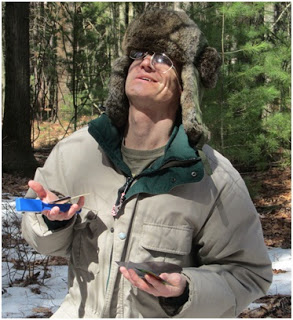
Log entry –
4:11 AM, 37 miles North East of Krasnoyarsk, Russia.
Nothing on the magnets. Darn. I’m going back to bed. Excitement from a dream about finally catching a meteor fragment woke me up, and it’s only a matter of time now until I catch one. Last week, I added 29 more magnets, bringing my total up to 472. I am a little concerned I might pull in a random car driving by, but back here in the woods I haven’t seen much traffic besides caribou and of course the mutant radioactive pigs.
Read More
Buy Godless Paganism (paperback)

Buy Godless Paganism (ebook)


Pagan Coming Out Day – May 2nd
 Naturalistic Paganism