 Naturalistic Paganism
[Rotting Silver] “Haiku Collection: Beetles” by B. T. Newberg

A struggling beetle
Emerging from the toilet
Slides into the piss
A beetle scurries
On the floor; an eye flashes
A shoe thunders down
A hounded beetle
Dashes madly for the wall
Almost, almost, al
A horn beetle rears
Its proud majestic weapon:
It’s crushed just the same
A righted beetle
Fleeing benefactor, falls
Again on its back
In a foul nook
Hides a dung beetle breathing
Single, soundless, safe
Image Credit: Mathews Sunny Kunnelpurayidom
Rotting Silver is a column devoted to this Earth in all its tarnished radiance: poetry, prose, and parables of ugliness alloyed with joy.
This piece was first published at The Witch’s Voice.
The Author

B. T. Newberg: Since the year 2000, B. T. has been practicing meditation and ritual from a naturalistic perspective. He currently volunteers as Education Director for the Spiritual Naturalist Society, where he created and now teaches an online course in naturalistic spirituality (including Naturalistic Paganism!). His writings can also be found at Patheos and Pagan Square, as well as right here at HP.
Professionally, he teaches English as a Second Language, and hopes to begin a PhD program in the psychology of religion soon. After living in Minnesota, England, Malaysia, Japan, and South Korea, he currently resides in Minneapolis, Minnesota, with his wife and cat.
After founding HumanisticPaganism.com in 2011 and serving as managing editor till 2013, he now serves as advising editor, and feels blessed to be a part of this community.
Hear Diverse Voices Reading a Pagan Community Statement on the Environment
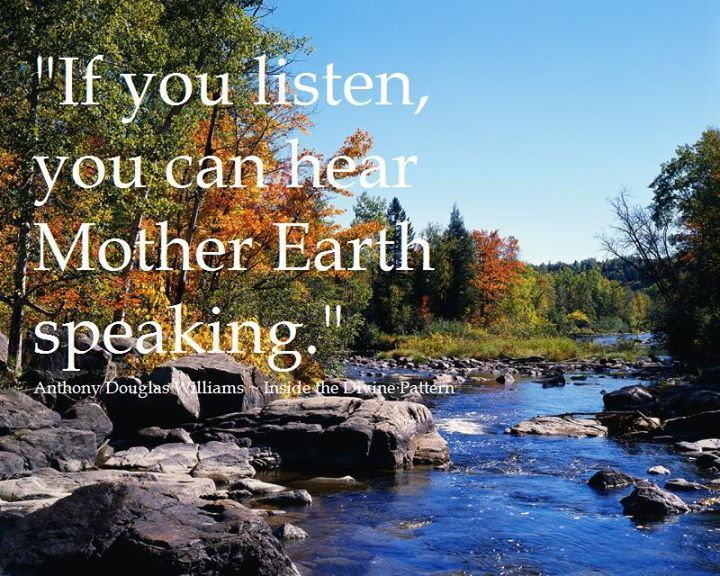
Happy Earth Day! Thanks to HP contributor, Bart Everson, you can now listen to a compilation of voices of various ethnicities, nationalities, ages, and genders reading “A Pagan Community Statement on the Environment.” There is also a Spanish language version spoken by different people which was created by Vaelia Bjalfi. It is a very different experience hearing the Statement, as compared to reading it. It brings home a slice of the diversity that the Statement represents. The Statement has been translated into 16 languages and has been signed by people and groups from over 80 countries around the world.
Hearing these many voices can be moving. If this calls to you, perhaps take your mobile device to the woods or by a stream, and place it out of your sight while you sit comfortably. Listen to the words, enmeshed in our web of life.
The Naturalistic Pagan Toolbox: Speaking of/to Nature
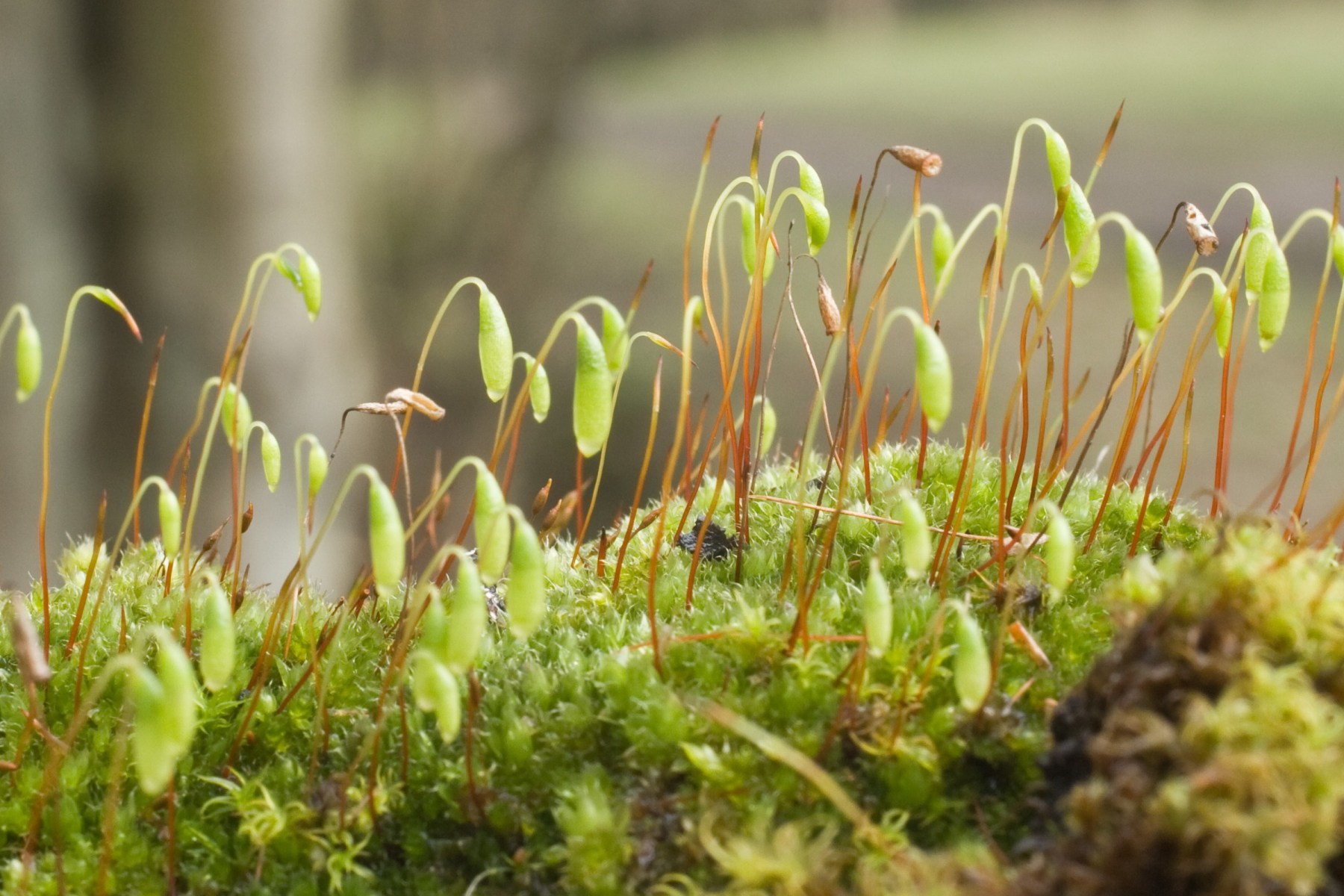
This column was conceived by Rua Lupa, who proposed gathering practical resources for Naturalistic Pagans in one place. This column is dedicated to sharing ideas for religious technologies which we might use or adapt to deepen our Naturalistic Pagan practices. It includes the ideas and experiences of others, as well as some of my own, and I welcome you to send me your ideas for sharing in future posts. If you have discovered a ritual technique which works for you that you would like to add to the Naturalistic Pagan Toolbox, click here to send me an email.
Language and Experience
Language shapes our experience. And this includes our experience of nature.
We tend to think of language as only reflecting your experience, but in reality is that language and experience interact in a cyclical fashion. To a certain extent, our experience is limited by what we can say about it. As Wittgenstein said, “The limits of my language mean the limits of my world.” For example, lacking words for certain colors or hues may limit our ability to see them.
Another example is peculiar to the English language. Although many other languages use gendered pronouns for non-human objects, English only has the gender-neutral “it”. “It” is not a neutral word. Referring to a human person as an “it”, for example, is insulting. Calling someone “it” is a refusal to recognize the subjectivity of the person, reducing them to an object. Read More
The May Cross-Quarter (Vernal Equitherm) is just two weeks away!

The Vernal Equitherm is coming! It is the midpoint between the spring equinox and the summer solstice. For those in the Northern Hemisphere, spring is well and truly coming and summer is around the corner. Flora is bursting to life even in the northern climes, and fauna frolicks in the verdure. Those in the Southern Hemisphere experience the opposite, as autumn passes into winter. Read More
“Naturalistic Polytheism and Our Patron Goddess” by Tom L. Waters

I wish Henry Nelson Wieman had been a polytheist. If he had been, UUs might have less of a “theological identity crisis” than we do today.
It seems Wieman is well known to most UU ministers, but is sadly obscure among the broader membership. A Presbyterian-turned-Unitarian, Wieman was an inventive theologian who worked within the tradition of religious empiricism, maintaining that a theology could be built up from human experience, in a manner analogous to the way science builds theory from observation and experiment. What type of experience forms the basis for theology? Wieman’s central insight on the subject was this: that human life may be transformed for the better, and if we can identify the agency of such transformation we have identified God.
An empirical definition of God such as this carries with it a very stimulating implication. For “that which transforms human life for the better” need not, upon investigation, turn out to be anything supernatural. In fact, the definition leads us (as it led Wieman) to see God as a natural process occurring within this world. God, in fact, becomes something we do. Although distanced from supernaturalism, Wieman’s naturalistic theism nevertheless preserves a religious aura around its God, because the transformative experience through which God is known is itself full of profundity and a bit of mystery. Read More
Buy Godless Paganism (paperback)

Buy Godless Paganism (ebook)


Pagan Coming Out Day – May 2nd
 Naturalistic Paganism