 Naturalistic Paganism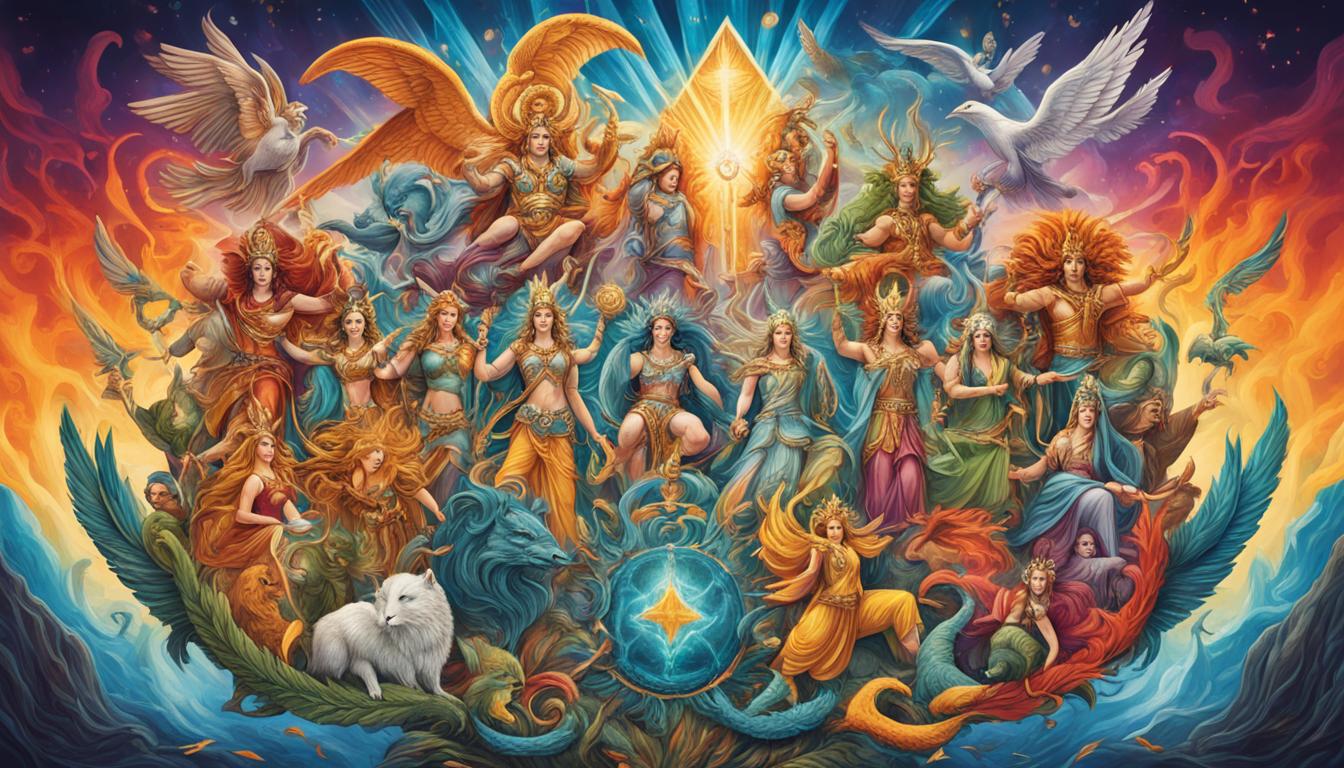
Do we yet again see the impact of the same feature of Paganism which was so important in the previous posts in this series – that in Paganism, the focal point of empowerment is you – and not the religion itself (or the authoritarian leader)? I think we do (see Part 1, Paganism Empowers You). But hold on. Isn’t this post about changing one’s beliefs, not about power?
As those who help people escape from abusive relationships know all too well, being able to leave a relationship at will is the fundamental basis of power and of escaping control. If you can’t leave, with leaving being explicitly prohibited, then there is no limit on the amount of abuse and exploitation you can be subject to. It’s also why conservatives have been trying for years to eliminate that freedom – with “covenant marriages” and soon for everyone with Project 2025 – putting women back under the thumb of the patriarchy. But if you can leave to go to another religion/belief/etc, then both you and those behind the religion know that you can’t be freely exploited without limit, or you’ll simply leave.
With all parts of this series, because religions are human creations, they can be complicated and don’t all fit in boxes, so all the differences pointed out are trends, not strict rules. Also as before, the main differences between Paganism and many other religions are interrelated, so there’ll be a lot of overlap. As we’ve seen, this, like others, links back to the basic difference that Paganism explicitly empowers you, instead of disempowering you (see Part 1, Paganism Empowers You). After all, if being able to leave is needed to preserve your power (and it is), then any religion that doesn’t allow you to leave is exploitation waiting to happen.
 Once I realized that, then the many times this is violated began to jump out at me again and again, because it’s openly a foundational part of so many religions around us. Few followers of these religions seem to mind. So many followers simply nod and submit – literally billions of people around the world. For instance, under Sharia Law, in country after country, leaving Islam is literally punishable by execution. One may quibble over how often this happens (it’s often by vigilante mobs, and many of the countries where this happens don’t keep official records of this anyway), but it’s shockingly real.
And the various bibles are no better. Anyone who has read a version of the Old Testament knows that not just verse after verse, but book after book are made up of threats against anyone leaving the faith. It’s not a coincidence that the very first and foremost of the 10 commandments (across the many different versions of the 10 commandments) is that it’s absolutely never acceptable to leave the faith (and it’s clear in many sections of the bibles that this is punishable by, you guessed it, death). The imagery of adultery is used again and again – and in the biblical context (where a wife is the property of the husband, worth more than a cow but worth less than a house), this shows that the point is control and literal ownership. Jesus too is clear on this too, answering that staying in the religion is the “greatest commandment”, above loving one’s neighbor.
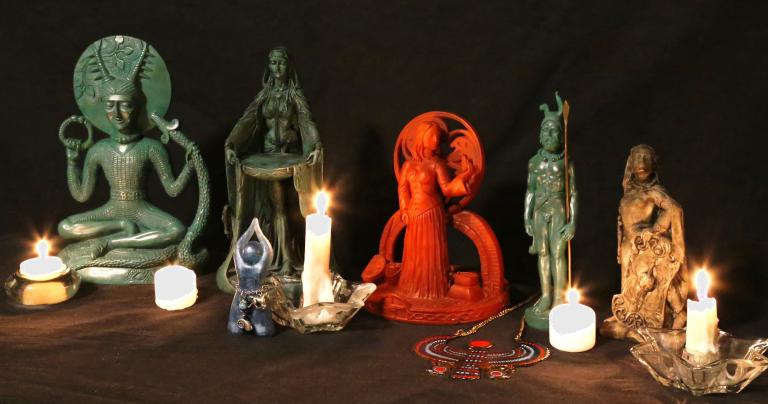 In Paganism, by contrast, there is little or no penalty for changing your belief system. If a worshipper of Isis in the Egyptian pantheon decides that she connects more with Freya (in the Norse pantheon), or with Horus (Egyptian), and announces that at the next Pagan convention, everyone is good with that. That goes for the leader holding the ritual, too. In fact, it’s pretty incredible to me that we can maintain this as Pagans when nearly all of us were raised in a Christian household, learning that the divine is by nature jealous – that’s a main point of Christianity. John Beckett explores how that childhood learning can resurface in our Paganism today, and shows that it’s wrong, pointing out that Our Gods are not Jealous Gods. Now imagine, by contrast, that Joel Osteen, at the start of his church service, announces that he is no longer Christian, and is instead worshipping Vishnu (or maybe worse – is now Muslim). That would not go over well – and certainly wouldn’t go over well for one of the church members to say that.
One reason for this is the doctrine of hell for apostates and non-believers. A deeper reason for that doctrine itself is that conformity to the religion (and especially submission to the authoritarian leader) is the reason for the doctrine of hell in the first place. This ties again to one’s basic freedom and rights – an aspect that comes up again and again in this series.
The whole idea of “apostasy” as a punishable crime is a tool of control, and is rejected in Paganism, where we all are encouraged to change our deities if we want to. As any divorce lawyer knows, the ability to leave a relationship is powerful protection against an abusive relationship – and that’s a lot why it’s so vehemently guarded in Paganism. And this is no doubt why apostasy and blasphemy were punishable by death in many regimes in history (and why many Pagans remember the Burning Times), and still are punishable by death in many places in the world today.
In Paganism, everyone is free, so few care too much if you change the goddesses or gods you worship. Indeed, the choice of which goddesses/gods to worship or otherwise pay attention to is deeply personal in Paganism – a clear statement that you are the one to decide which deities you’ll worship or be inspired by, and when. By contrast, in many systems, people are not free, and hence changing the goddesses or gods you worship is asserting freedom that you don’t have (or that they don’t want you to have), and hence can result in death or torture.
In fact, this freedom goes even farther in Paganism. Though there is some controversy (because Pagans are diverse on nearly every topic), many Pagans include goddesses/gods from multiple pantheons in their spirituality – and many more Pagans are OK with that. And this can go even further – not just to being inspired by deities from multiple pantheons, but even calling deities from different pantheons into the same group ritual! Objections are more often about feel and appearance than about anything being intrinsically wrong with invoking many different divinities. The fact that this is even discussed as possible shows the wide freedom of allegiance we Pagans enjoy. As John Halstead’s article on this says:
I agree that ritual participants should be warned in advance if a ritual planner intends to mix pantheons — precisely to minimize the cognitive dissonance — but this has more to do with the people involved than the gods. With a group of eclectic Neo-Pagans, this may not be problematic. But for others, it may be a real impediment to an creating a sense of authenticity in the ritual. But this as an aesthetic or psychological issue, not a metaphysical one. I think all this talk about the gods being uncomfortable with each other is us projecting our own cognitive dissonance onto them. If the gods are more than our projections, then they must be beyond such human limitations as xenophobia. Let’s own up to the real reason for our discomfort.
With every one of these “Paganism is different” posts, I’m reminded yet again of why I find Paganism so fulfilling and wholesome, and how it fits well into our modern world. This is true yet again for this post.
Blessed be!
The Author: Jon Cleland Host
Starstuff, Contemplating: We are assemblages of ancient atoms forged in stars – atoms organized by history to the point of consciousness, now able to contemplate this sacred Universe of which we are a tiny, but wondrous, part.

Dr. Jon Cleland Host is a scientist who earned his PhD in materials science at Northwestern University & has conducted research at Hemlock Semiconductor and Dow Corning since 1997. He holds eight patents and has authored over three dozen internal scientific papers and eleven papers for peer-reviewed scientific journals, including the journal Nature. He has taught classes on biology, math, chemistry, physics and general science at Delta College and Saginaw Valley State University. Jon grew up near Pontiac, and has been building a reality-based spirituality for over 30 years, first as a Catholic and now as a Unitarian Universalist, including collaborating with Michael Dowd and Connie Barlow to spread the awe and wonder of the Great Story of our Universe (see www.thegreatstory.org, and the blog at evolutionarytimes.org). Jon and his wife have four sons, whom they embrace within a Universe-centered, Pagan, family spirituality. He currently moderates the yahoo group Naturalistic Paganism.



 Naturalistic Paganism
Pingback: New Series! Paganism is Different! Part 0 [Stardust, Contemplating] | Naturalistic Paganism