 Naturalistic Paganism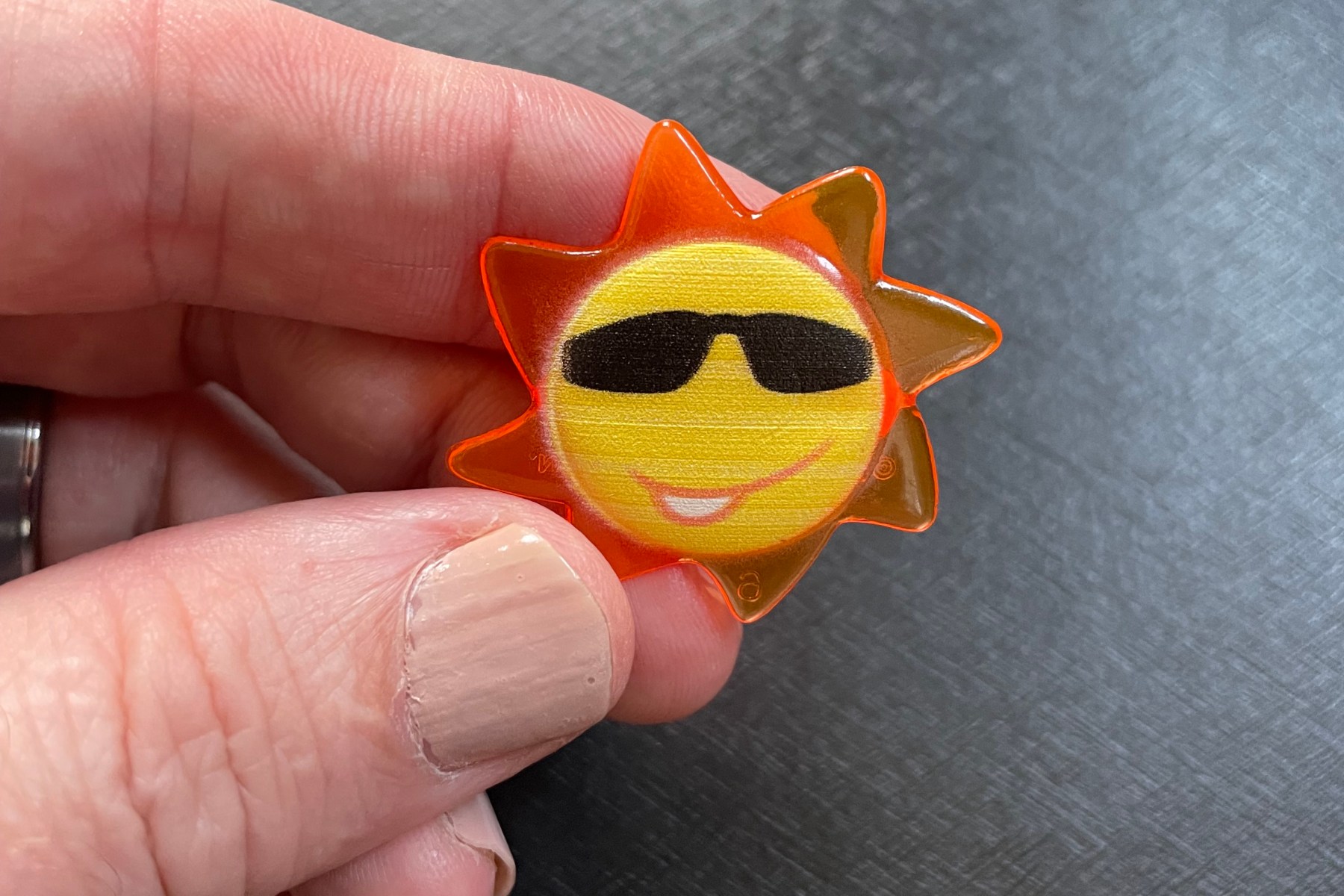
In this series, “No-Nonsense Paganism”, I have been striving to strip Paganism down, take away its ancient or faux-ancient terminology, its mythological and legendary pretensions, its foreign (to wherever you are) folk practices, its superstitious and pseudo-scientific justifications, and its esoteric ritual structures, and get down to the phenomenological core of pagan experience: our interaction with the earth and the other-than-human beings who we share it with. You can check out previous posts in this series here.
Recently, I’ve been very critical of the Pagan services at my Unitarian Universalist congregation. To some extent, this is unfair. The people who organize and lead these services are volunteers and have the best intentions. I know from experience that planning and leading services for my Unitarian congregation can be challenging and can feel vulnerable. But, still, it’s important to turn the critical gaze inward now and then, or we stop growing.
We have a new minister in our UU congregation, and he has elected to do the standard eight Pagan Wheel of the Year observances on the Sundays closest to those dates. For these services, he draws heavily on materials provided by the Unitarian Universalist Association, which provide a plethora of readings, hymns, stories, and litanies to choose from.
One such service, for the summer solstice, consisted of six hymns/songs, four litanies/responsive readings, two additional readings, one story, and a mini-sermon by our minister—all drawing from different pagan cultures, decontexualized, oversimplified, and loosely tied together by a “sun” theme. One responsive reading invoked no less than ten ancient pagan deities, reducing them facilely to some supposed sun-related aspect.
In my experience, this is typical of UU Pagan services. But it’s also not unlike many public rituals conducted by eclectic Pagans, the most significant difference being the latter stand in circles instead of sitting in pews.
I have not enjoyed these services. And they have become increasingly intolerable for me. As both a pagan and as a UU, I find them to be very problematic. The biggest problem is the decontextualized and reductive references to other cultures’ practices and religious beliefs. Simply put, it’s cultural appropriation under the guise of multiculturalism.
Then this past Sunday, plastic mass-manufactured swag (most of which will soon be in a landfill) was handed out as part of the service—sun rings and star wands. I found this to be wildly inappropriate, especially under the guise of an ostensibly “pagan”-themed (and therefore nature respecting) service. I had to leave the room at this point, I was so disturbed (though I continued to watch online).
I recognize that avoiding cultural appropriation can be a fraught business in practice. But, as I understand it, the basic principle is respect of other cultures. And to me, that means trying as much as possible to understand a culture before speaking about it or using its practices as part of our religion. It also means letting representatives of a culture (living or dead) speak for themselves as much as possible. And it means not being reductive about or decontextualizing another culture’s practices in order to make it convenient to our eclectic religious wants/needs—which is another form of White colonialism.
Examples of what I’m talking about include saying that ancient pagans believed their rituals made the sun rise, speaking about ancient or modern pagans as if they were/are a monolith, and reducing a pagan deity to a single aspect, like saying so-and-so was/is the god of wine or art or war or whatever. If I said the Christian god is a god of bread and wine or olive trees and mustard seeds, I’m pretty sure every Christian would find that reductive and insulting. The notion that pagan (or indigenous) deities were/are any less complex is both factually wrong and profoundly problematic.
I believe these principles should apply to living as well as “dead” cultures—especially cultures which are dead because of White colonialism. While it’s true that the dead are perhaps not harmed by modern appropriation (your mileage may vary), I believe we are ourselves harmed when we fail to understand and respect those cultures we assume authority to speak about, regardless of whether there are surviving members of that culture. James Baldwin wrote and spoke about how White racism diminishes White people, and I believe the same is true of colonialism and cultural appropriation—all forms of White supremacy.
I admit that I am more relaxed about the private and personal religious practices of individual eclectics (including myself), though I do think individuals need to be conscientious of these issues as well. But I am less concerned about policing individuals’ private behaviors than I am about groups and public performances, where the importance of avoiding cultural appropriation is multiplied, because the risk of harm is so much greater.
I think most of our UU services do avoid cultural appropriation. But when we do Pagan services, something changes. I think it’s because we’re trying to represent contemporary Paganism, but contemporary Pagans (who are overwhelmingly White) are are often guilty of cultural appropriation themselves. For example, it’s a common literary form and ritual practice among contemporary Pagans to recite lists of ancient pagan deities, from different times and places, supposedly united by some common attribute. And so we end up replicating that appropriation in our UU services.
I say all of this as a White pagan who has been guilty of cultural appropriation myself. In fact, some of the things I’ve written online about this topic over the years, I now see as deeply flawed.
I know from own studies that some of the things that have been said about other cultures in our UU Pagan services are factually inaccurate. I suspect that many others are as well. I know there’s no intent to misrepresent these cultures. It’s just that we cannot do them the justice (and I use that word intentionally here) that they deserve when we are pulling from so many different cultural sources for one service. We’re going broad instead of deep.
I also see this dynamic in discussions where UUs or other liberal religionists say that all religions can be boiled down to the Golden Rule or whatever. Comments like that are terribly reductive, not to mention problematic when we’re talking about minority religions. Reducing all their difference and all their uniqueness to a watered down universalism is itself a form of White cultural appropriation.
I think the reason why we Pagans often feel the need to appropriate other cultures arises from a feeling that, because contemporary Paganism is a new religion and is an invented religion, we need to draw on ancient historical sources or indigenous religions for legitimacy. From my perspective, all religions are invented, and age does not lend them legitimacy; it only obscures their sources. What does give a religion legitimacy, to my mind, is a connection to some deep-rooted human experience. Different religions may focus on different human experiences. Much of Christianity focuses on the experience of alienation or separation, for example. While much of contemporary Paganism focuses on the experience of connection.
So in lieu of pulling haphazardly from other peoples’ religions, I think we Pagans—and UUs doing Pagan services—would be better served by focusing on the connection to that experience which is common to both contemporary and ancient pagans (as well as many non-Pagans): the experience of communion with the more-than-human, wild, natural world.* And we can speak of that in our own language, without resort to terminology or practices which we have extracted from other cultures.
And I think it’s precisely because our UU Pagan services lost sight of the experience of that connection, distracted by a preoccupation with other peoples’ cultures, that we ended up handing out plastic swag as part of an ostensibly nature-honoring service. I’m not suggesting avoiding all references to other cultures’ beliefs or practices. But when considering incorporating such references, especially in public or group rituals, I think we need to ask ourselves these questions:
- Would this be acceptable/seem right in a non-Pagan context?
- Would this be acceptable/seem right if there were living representatives of the culture?
- Would a member of the culture in question recognize their own culture in the way we have described it?
- Have we invested the time necessary to truly understand the cultural context of this belief or practice?
- Do we have the time in our ritual to do justice to this belief or practice?
- Is there a fundamental human experience that we are trying to invoke that we can point to without reference to other peoples’ cultures?
- Is the culture in question one which has historically been oppressed, exploited, or exterminated by White people?
* Note: As I wrote in my book, Neo-Paganism: Historical Inspiration and Contemporary Creativity: “A living relationship with the wild natural world is our birthright as human beings. But centuries of civilization, patriarchy, transcendental monotheism, reductionist science, and capitalism have broken the connection between humankind and nature. To be Neo-Pagan today is to reclaim our original relation with the world. It is nothing more and nothing less than to be fully human again. To (re-)learn what this means, we need to strip away the layers of estrangement that have accreted to our collective soul over the centuries. So we look back to our pagan ancestors. Though separated by time, there is a connection between us and them. We carry it in our flesh and blood. At our most fundamental, we are still the same human beings we were then. We can be pagan again today because we live under the same Sun and on the same Earth, we feel the same wind blowing through our hair and the same rain falling on our skin.”
JOHN HALSTEAD

John Halstead is a native of the southern Laurentian bioregion and lives in Northwest Indiana, near Chicago. He is one of the founders of 350 Indiana-Calumet, which worked to organize resistance to the fossil fuel industry in the Region. John was the principal facilitator of “A Pagan Community Statement on the Environment”. He strives to live up to the challenge posed by the statement through his writing and activism. John has written for numerous online platforms, including Patheos, Huffington Post, PrayWithYourFeet.org, Gods & Radicals, now A Beautiful Resistance. He is Editor-at-Large of HumanisticPaganism.com. John also edited the anthology, Godless Paganism: Voices of Non-Theistic Pagans. He is also a Shaper of the Earthseed community which can be found at GodisChange.org.



 Naturalistic Paganism
Excellent article, John. I completely agree with all of it, and that is why, when developing Atheopaganism, i didn’t include any references to other cultures, past or present.
Of course, individual practitioners may include cultural references, especially of cultures in their heritage if they derive from colonized and oppressed people, but the core framework is about, as you say, our universal connection with the Earth.